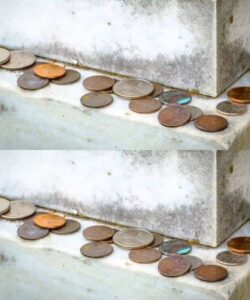
You may have noticed coins resting on a gravestone and wondered why someone would leave money at a person’s grave. At first glance, a few coins might look like nothing more than loose change. In military cemeteries, however, coins can sometimes carry a much deeper meaning. They may represent remembrance, respect, friendship, shared military service, or a personal connection between the visitor and the person who has died.
The tradition is particularly associated with the graves of military service members. Although the exact origins and development of the practice are not completely clear, leaving coins at graves has become a recognized form of remembrance in some military and veteran communities. The practice is often described as a quiet way of telling the deceased’s family that someone visited the grave and remembered their loved one.
The meaning of the coin can depend on its denomination. A penny is generally understood to have the simplest meaning. It traditionally indicates that someone visited the grave and wanted to acknowledge the person who is buried there. In other words, the visitor may not have known the deceased personally but still wanted to show respect.
For a family visiting a military cemetery, finding a penny on a loved one’s gravestone can therefore have a special significance. It can indicate that another person stopped, read the name, recognized the person’s service or sacrifice, and took a moment to remember them. The visitor may have been a veteran, another military family, a friend, or simply someone who wanted to pay their respects.
A nickel traditionally carries a more specific meaning. It can indicate that the person who left it went through military training with the deceased. The two individuals may have attended boot camp or another stage of military training together. Training experiences can create strong relationships because service members often share demanding physical, emotional, and practical challenges.
Leaving a nickel can therefore represent a connection based on those shared experiences. It can be a small reminder that the deceased was not forgotten by someone who knew them during an important period of their military life.
A dime traditionally represents another level of connection. According to the commonly described tradition, a dime indicates that the person leaving it served with the deceased. The two individuals may have belonged to the same unit, served during the same period, or shared military experiences beyond initial training.
For veterans who leave a dime, the gesture can be particularly meaningful because it may reflect memories of time spent together in military service. The coin itself is small, but the relationship it represents can be significant. It can serve as a quiet acknowledgment between people who experienced military life together.
The quarter is traditionally associated with the most personal connection in this coin tradition. It is often described as representing someone who was present when the service member died. This could mean that the person witnessed the death or was present during the circumstances surrounding the service member’s final moments.
Because of that association, a quarter can carry an especially emotional meaning. It may represent a person who shared the final chapter of the service member’s life and wanted to leave a private sign of remembrance. However, it is important to understand that this interpretation is part of a tradition rather than a universal rule.
Not every coin found on a military gravestone necessarily follows this system. People leave coins for many different reasons, and not everyone who places one is familiar with the traditional meanings associated with the denominations. Someone might leave a coin simply because they wanted to honor the deceased, commemorate a visit, or express personal respect.
The practice also does not necessarily mean that every coin was left by a military veteran. Visitors to military cemeteries can include relatives, friends, fellow service members, veterans from different generations, members of the public, and people who have never served themselves. The meaning depends partly on the person who left the coin and the significance they personally attach to the gesture.
The tradition is sometimes connected in popular accounts with military remembrance practices and particularly with the Vietnam War era. However, explanations of its exact origins vary, and it is difficult to establish one single starting point for the practice. Traditions surrounding graves, coins, and military remembrance have developed over time, and different communities may understand them differently.
What is consistent is the broader idea behind the gesture: remembrance. A person visiting a grave may not have words to express what they feel, or may not know the family personally. Leaving a small object can become a simple way of acknowledging the life of the person buried there.
The coins can also provide comfort to surviving family members. When relatives visit a grave and discover that other people have left coins, they may be reminded that their loved one’s life and service were noticed by others. A small collection of pennies, nickels, dimes, or quarters can become evidence of continued remembrance.
There is also something significant about the simplicity of the tradition. No formal ceremony is required. A visitor can approach the gravestone, read the name, pause for a moment, and leave a coin. The gesture takes only a few seconds, yet it can represent a much larger message of respect.
If you see coins on a military gravestone, therefore, they may be more than loose change. A penny may traditionally indicate that someone visited and remembered the deceased. A nickel may represent shared military training. A dime may indicate that the visitor served alongside the deceased. A quarter may traditionally signify that the visitor was present at the time of the service member’s death.
These meanings should be understood as customary interpretations rather than strict rules. There is no universal requirement that visitors use coins in this way, and a coin’s presence does not prove a particular relationship between the visitor and the deceased.
Ultimately, the tradition is about remembering a person who has passed away and recognizing the life they lived. Whether the visitor knew the service member personally or simply wanted to show respect, a coin can serve as a quiet message that someone stopped, remembered the name on the stone, and cared enough to leave a small token behind.