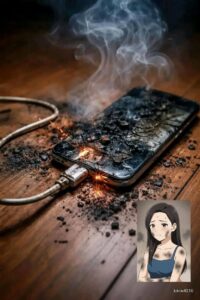
Never put the charger like this. The image of a charred smartphone engulfed in smoke with sparks flying from a damaged cable is more than a dramatic warning—it reflects a real and growing safety concern in modern households. Millions of people charge their phones every day without considering the conditions under which lithium-ion batteries operate, yet small mistakes in charging habits can escalate into serious fire hazards.
Today’s smartphones rely on advanced Lithium-ion Battery systems, which are efficient but highly sensitive to heat, physical damage, and electrical instability. When these batteries are stressed beyond safe limits, they can enter a dangerous condition known as thermal runaway—a chain reaction where rising temperature triggers further heat production, potentially leading to fire or explosion.
One of the most common risks comes from damaged or low-quality charging equipment. Frayed cables, bent connectors, or unverified third-party adapters can create unstable electrical flow. In some cases, exposed wiring may cause short circuits, producing sparks exactly like those seen in the alarming image described above. These sparks can ignite nearby materials, especially if the phone is resting on fabric or cluttered surfaces.
Improper placement during charging is another major factor. Many people place phones on beds, sofas, or under pillows while charging, unaware that soft materials trap heat and block ventilation. This prevents the device from cooling properly, increasing internal temperature. Over time, even modern devices with built-in safety systems can struggle to compensate for these external risks.
Manufacturers such as Apple and Samsung regularly issue safety guidelines emphasizing the importance of proper charging habits. Yet reports from safety organizations continue to show incidents involving overheating phones, melted cables, and household fires linked to charging misuse. These cases are often preventable, highlighting the gap between user behavior and device capability.
The risks are not only physical but also financial. A damaged smartphone can result in the loss of valuable personal data, photos, and documents. In severe cases, fires caused by faulty charging can extend beyond the device itself, damaging furniture, property, and even entire rooms. Insurance providers increasingly scrutinize such incidents, sometimes classifying them as preventable negligence.
Beyond immediate damage, there is also an environmental cost. Burned or discarded electronics contribute to electronic waste, releasing toxic substances into the environment. As smartphones become more widespread, even small percentages of failure translate into significant global impact.
Safe charging begins with awareness and consistent habits. Using certified charging accessories is essential. Look for safety standards such as UL certification or CE marking, which indicate compliance with electrical safety regulations. Avoid using visibly damaged cables or chargers, even if they still appear functional.
Equally important is how and where you charge your device. Phones should always be placed on hard, flat, non-flammable surfaces such as desks or countertops. Adequate airflow around the device allows heat to dissipate naturally. Charging under blankets, pillows, or inside enclosed spaces should always be avoided.
Modern phones include built-in battery management systems, but these systems depend on users following safe practices. They can regulate charging speed and temperature, but they cannot prevent hazards caused by physical damage or extreme external conditions.
From a technical perspective, the safe operating range of a Lithium-ion Battery is typically between 20°C and 40°C. When temperatures rise beyond this range, internal chemical reactions become unstable. Fast charging, while convenient, can further increase heat output, requiring even greater attention to safety conditions.
Wireless charging systems also require caution. Misalignment or foreign objects between the device and charging pad can generate excess heat. Regular software updates are equally important, as manufacturers continuously improve thermal regulation and battery performance through system optimization.
The dramatic scenario of a burning phone with smoke and sparks is not just theoretical—it reflects real-world failures that often begin with small, preventable mistakes. A single frayed cable or blocked ventilation point can be enough to trigger a dangerous chain reaction.
To reduce risk, experts recommend creating a dedicated charging area in the home, away from sleeping spaces and flammable materials. Overnight charging should be managed carefully, ideally with devices that automatically stop power delivery once the battery is full.
Looking ahead, emerging technologies such as solid-state batteries promise significantly improved safety and stability. These next-generation systems are designed to reduce fire risk while increasing energy density and lifespan. However, until they become mainstream, safe habits remain the most effective protection.
Ultimately, responsible charging is not about fear—it is about awareness. Modern smartphones are powerful tools, but like all electrical devices, they require respect for their limitations. By adopting safe charging practices and using certified equipment, users can protect their devices, their homes, and their safety.
Never put the charger like this. What seems like a small habit can make the difference between everyday convenience and a preventable disaster.