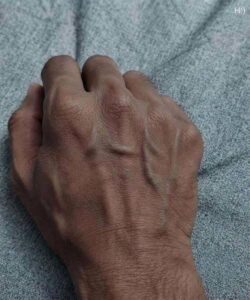
Have you ever looked down at your hands and suddenly noticed that the veins seem much more visible than usual?
For some people, prominent veins are completely normal.
They may have been visible for years, especially on the backs of the hands, wrists, arms, or feet.
For others, however, a noticeable change in the appearance of a vein can understandably cause concern.
The important distinction is between veins that are naturally prominent and veins that have suddenly changed.
Visible veins by themselves are usually not enough to indicate that something is wrong.
The surrounding symptoms, the person’s overall health, and whether the change happened gradually or suddenly are much more important.
Why Are Some Veins More Visible?
Veins carry blood back toward the heart and can become easier to see when they are closer to the surface of the skin.
Several ordinary factors can make them more noticeable.
One is body composition.
People with relatively little body fat may have less tissue covering superficial veins, making them easier to see.
Exercise can also temporarily make veins more prominent.
During physical activity, blood flow increases and muscles become more active. This can make veins appear larger or more defined for a period of time.
Age can play a role as well.
As people get older, the skin generally becomes thinner and loses some of its elasticity. Changes in the tissues beneath the skin can also make superficial veins more visible.
Temperature may influence their appearance too.
Warm conditions can cause blood vessels near the skin to widen, which can make veins easier to notice.
Your Hands Are Naturally Veiny
The backs of the hands contain many superficial veins.
Because there isn’t a large amount of tissue between these veins and the skin, they can be quite visible.
This is especially common in people who are lean, physically active, or older.
In some individuals, prominent hand veins are simply part of their normal anatomy.
If your veins have looked similar for a long time and you don’t have other concerning symptoms, their visibility alone generally isn’t a reason to assume something is wrong.
When a Change Deserves Attention
The situation is different when a vein suddenly looks noticeably different.
A new change in appearance can have many possible explanations, most of which require considering the entire picture rather than the vein alone.
Pay attention if a vein becomes newly swollen, painful, tender, unusually hard, or associated with swelling in the surrounding area.
Changes that develop quickly are generally more important than veins that have always been visible.
The goal isn’t to become alarmed by every change.
It is simply to recognize when a new symptom deserves professional evaluation.
Varicose Veins and Venous Problems
Some veins become enlarged and twisted when blood has difficulty returning efficiently through the veins.
This is commonly seen in the legs and can lead to varicose veins.
People with venous problems may experience symptoms such as aching, heaviness, swelling, or discomfort, particularly after standing for extended periods.
Chronic venous insufficiency is one condition that can contribute to these symptoms.
However, problems involving the veins of the legs are not the same thing as simply having visible veins on the backs of your hands.
The location of the vein and the other symptoms matter.
What About Blood Clots?
A deep vein thrombosis, commonly called DVT, occurs when a blood clot develops in a deep vein.
DVT most often affects the leg.
Possible symptoms include swelling, pain or tenderness, warmth, and changes in skin color.
Importantly, symptoms can vary, and some people may have few symptoms.
A visible vein on the hand by itself does not mean that a person has DVT.
That is an important distinction because internet health posts can sometimes make ordinary physical features sound much more dangerous than they actually are.
A medical diagnosis cannot be made simply by looking at how prominent a vein appears.
Other Reasons Veins May Stand Out
There are many temporary reasons veins can become more noticeable.
Exercise is one.
Heat is another.
Changes in hydration can also affect how the body looks and feels.
Weight loss may make veins easier to see because there is less tissue covering them.
Even lighting can make a vein appear darker or more prominent than it normally does.
This is why comparing your hands under different conditions can sometimes create unnecessary worry.
A photograph taken under bright lighting may make veins look dramatically different from how they appear under ordinary indoor light.
The Importance of Other Symptoms
When evaluating a visible vein, appearance alone tells only part of the story.
Consider whether there is:
-
Pain or tenderness
-
Swelling
-
Redness or warmth
-
A sudden change in appearance
-
A hard or unusual area along the vein
-
Changes in skin color
-
Numbness or weakness
-
Symptoms affecting an entire arm or leg
These details provide much more useful information than simply asking whether a vein is visible.
A person who has prominent veins without symptoms is in a very different situation from someone who develops sudden swelling and pain alongside a new vascular change.
When Shortness of Breath Matters
Some symptoms require particularly prompt attention.
If a person develops unexplained shortness of breath, chest pain, fainting, rapid breathing, or coughing—especially if there are also symptoms suggesting a blood clot—urgent medical evaluation is appropriate.
These symptoms should not be attributed to visible veins alone.
The important issue is the combination of symptoms and the possibility of a serious underlying condition.
Don’t Diagnose Yourself From Appearance
One of the problems with health information online is that a normal physical characteristic can easily be presented as a warning sign.
A headline may suggest that visible veins reveal a hidden illness.
In reality, the human body varies enormously from person to person.
Some people naturally have prominent veins.
Others barely see them.
Neither appearance automatically tells you how healthy someone is.
A visible vein is a physical observation, not a diagnosis.
When to Talk to a Doctor
If a vein suddenly changes and you don’t know why, discussing it with a healthcare professional can provide reassurance and help determine whether further evaluation is needed.
This is particularly sensible when the change is persistent or accompanied by pain, swelling, warmth, tenderness, or other new symptoms.
A clinician can consider your medical history, examine the area, and decide whether additional testing is appropriate.
That is much more reliable than trying to identify a condition from a photograph or social media post.
Pay Attention Without Panicking
There is a useful balance between ignoring symptoms and becoming frightened by every normal variation.
You don’t need to worry simply because the veins on your hands are visible.
If they’ve always looked that way and you feel well, prominent veins may simply be part of your normal anatomy.
At the same time, you shouldn’t dismiss a sudden unexplained change, particularly when other symptoms appear.
The key is to notice patterns rather than isolated appearances.
Your Body Changes Naturally
The human body isn’t static.
Veins can become more visible with age.
Exercise can temporarily change their appearance.
Weight changes can alter how much of them can be seen.
Temperature can affect blood vessels.
These changes are often completely ordinary.
Understanding that can prevent unnecessary anxiety.
At the same time, knowing which accompanying symptoms deserve attention can help you recognize when professional medical advice is appropriate.
The Bottom Line
Visible veins in your hands are not automatically a warning sign.
For many people, they are simply a normal result of anatomy, genetics, body composition, age, exercise, or other everyday factors.
What deserves more attention is a new or unexplained change, particularly if the vein becomes painful, swollen, warm, tender, or associated with other symptoms.
And if serious symptoms such as sudden shortness of breath or chest pain occur, seek urgent medical care rather than trying to interpret the appearance of a vein yourself.
Your hands may naturally show the network of veins beneath your skin.