The first thing any potential buyer would need to understand is that the $50,000 asking price may represent only the beginning of the investment. Historic homes can be appealing because of their character, craftsmanship, and architectural details, but the cost of bringing one back to a comfortable and safe condition can be substantial.
Inside the house, the condition of the floors, ceilings, walls, electrical system, plumbing, and heating would need to be carefully evaluated. Years of neglect can allow relatively small problems to develop into major structural concerns. Water intrusion, for example, can damage wooden framing, flooring, ceilings, and exterior siding. If moisture has been entering through the roof or around windows for an extended period, hidden deterioration may exist behind surfaces that appear relatively solid from the outside.
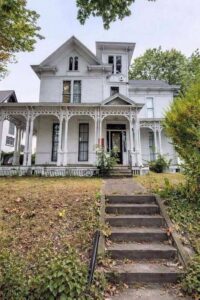
The roof would be one of the first areas worth examining. The steep rooflines and multiple gables are among the home’s most recognizable features, but they also contain numerous joints, edges, and transitions where water can potentially enter. Missing shingles, damaged flashing, deteriorated wood, or blocked drainage systems could all contribute to moisture problems.
The distinctive tower would deserve particular attention as well. Towers are visually impressive, but their unusual shape can make maintenance and restoration more complicated. Windows, roofing materials, exterior trim, and structural connections would all need to be inspected by qualified professionals before major restoration work begins.
The porch is another major feature of the property. Its wrap-around design, decorative spindles, brackets, and intricate woodwork give the house much of its Victorian identity. Unfortunately, exterior wood that has been exposed to years of rain, snow, and sunlight can deteriorate significantly.
Some pieces may be repairable, while others could require careful reproduction. Replacing historic details with generic modern materials might be less expensive, but doing so could permanently change the appearance of the house. A restoration-minded owner would likely want to preserve as much of the original craftsmanship as possible.
The front staircase also raises questions. The concrete steps appear to lead directly toward the elevated porch, but their condition and connection to the structure should be examined. Cracks, settlement, drainage problems, or shifting soil could indicate issues that need to be addressed before the entrance can safely be used.
Inside, the five-bedroom layout could provide considerable space for a future owner. A two-bathroom configuration may also be practical for a large household, although the existing plumbing and fixtures would need to be inspected carefully.
Older homes frequently have electrical systems that require modernization. Even if electricity is currently available, wiring may not meet modern safety requirements or the demands of contemporary appliances. An inspection could reveal whether the electrical panel, wiring, outlets, grounding, and other components need replacement or upgrading.
Plumbing is another major consideration. Aging pipes can develop leaks, corrosion, or reduced water flow. If the home has been vacant for a long period, the plumbing system may require additional inspection before being returned to regular use.
Heating and cooling would also need to be considered. A historic house of this size may require significant energy to heat and cool, particularly if insulation has deteriorated or the original windows remain in place. Improving insulation and air sealing could make the property more comfortable, but any changes would need to balance modern efficiency with preservation of the home’s historic features.
The windows themselves are especially interesting. The tall, narrow designs contribute strongly to the Victorian appearance. Instead of automatically replacing them with modern windows, a restoration project might investigate whether the original units can be repaired. Historic windows can sometimes be restored by repairing frames, replacing damaged glass, and improving weather sealing.
The interior finishes could provide some of the property’s greatest surprises. Beneath worn flooring or layers of paint, there may be original woodwork, decorative trim, doors, staircases, fireplaces, or other architectural details. Of course, there is no guarantee that these features remain, and their condition would have to be determined during an inspection.
The surrounding property also deserves attention.
The overgrown yard gives the house a neglected appearance, but landscaping can often be addressed after more important structural and safety issues have been resolved. Trees and vegetation growing too close to the building should be evaluated because roots, branches, and trapped moisture can contribute to property damage.
The location near a lake could make the home particularly attractive to buyers looking for a historic property with access to natural surroundings. However, proximity to water also makes it important to understand local drainage, flooding history, groundwater conditions, and insurance requirements. These factors can vary considerably from one property to another.
Another important consideration is whether the home has any historic designation or preservation restrictions. If it is officially protected, certain exterior alterations may require approval. That could affect decisions involving windows, siding, roofing, paint colors, porches, and other visible architectural elements.
Before purchasing a property like this, buyers would benefit from a comprehensive inspection rather than relying on photographs or the home’s exterior appearance. A qualified inspector can help identify visible and potential problems, while specialists such as electricians, plumbers, structural engineers, roofers, or preservation professionals may be needed for more detailed evaluations.
The low purchase price is certainly attention-grabbing, but the true value of the property would depend on the relationship between acquisition cost, restoration expenses, location, future usability, and the home’s remaining architectural integrity.
For someone who loves historic architecture, however, the opportunity could be about more than simply buying a house. Restoring a Victorian property can mean preserving craftsmanship that is increasingly difficult to find in newer construction.
The decorative brackets, fretwork, porch details, tower, gables, and tall windows all tell a story about the period in which the house was built. Even after years of neglect, those elements appear to give the property a distinctive identity.
The biggest question is what lies beneath the surface.
A $50,000 historic home may sound like an extraordinary opportunity, but the price alone cannot tell the whole story. The condition of the foundation, roof, structure, electrical system, plumbing, interior, and exterior would ultimately determine whether the project is manageable or requires a much larger investment.
For now, the house remains a striking reminder of an earlier era. With the right assessment, careful planning, and substantial restoration work, its original architectural character could potentially be preserved for another generation.
But before anyone picks up a paintbrush, clears the yard, or starts planning renovations, one step comes first: finding out exactly what this beautiful old Victorian has been hiding.