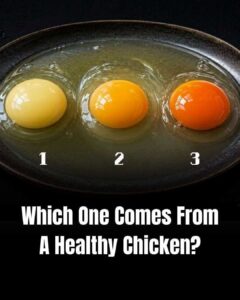
Crack open several eggs and you may notice something surprisingly different.
One yolk is pale yellow.
Another is golden.
A third is deep orange.
At first glance, it seems logical to assume that the darkest yolk must have come from the healthiest chicken or the most nutritious diet.
But yolk color doesn’t tell that story by itself.
The biggest factor influencing yolk color is usually much simpler:
What the hen ate.
Natural pigments in feed can dramatically change the appearance of a yolk without necessarily indicating that one chicken was healthier than another.
So if you’ve ever stood in your kitchen comparing two eggs and wondering which one is “better,” the answer is more complicated than color.
Why Do Egg Yolks Have Different Colors?
Yolk color is strongly influenced by pigments in a hen’s diet.
Carotenoids are among the important natural pigments involved.
Feed ingredients such as corn, alfalfa, grasses, leafy plants, and other pigment-rich foods can contribute to yellow, golden, or orange yolks.
If a hen’s diet contains fewer of these pigments, the resulting yolk may be noticeably paler.
That means two hens can both be healthy and receive nutritionally adequate diets while producing eggs with very different-looking yolks.
The difference doesn’t necessarily indicate a difference in health.
It may simply reflect what each bird consumed.
Does a Deep Orange Yolk Mean a Healthier Chicken?
Not necessarily.
A chicken’s health depends on many factors.
Nutrition matters, but so do access to clean water, appropriate housing, hygiene, disease prevention, veterinary care, environmental conditions, and overall management.
None of those factors can be reliably determined simply by looking at the color of an egg yolk.
A deep orange yolk primarily indicates that the hen consumed pigments capable of producing that color.
It doesn’t provide a complete picture of the animal’s health.
This is an important distinction because people sometimes treat yolk color as a visual health certificate.
It isn’t.
A bright orange yolk can look impressive while telling you very little about how the hen was raised.
Likewise, a pale yolk doesn’t automatically indicate a problem.
Can Producers Influence Yolk Color?
Yes.
Yolk pigmentation can be influenced through the hen’s feed.
Different feed ingredients naturally contain different amounts and types of pigments.
In some production systems, permitted pigment sources may also be used to achieve particular yolk shades.
That means an intensely orange yolk isn’t proof that the hen spent her days outdoors eating grass and insects.
Color can be influenced by diet regardless of the production system.
This is one reason it’s risky to make assumptions about farming practices based solely on appearance.
If the way hens are raised matters to you, look for reliable information about the producer and applicable labeling rather than using yolk color as a substitute.
Are Darker Yolks More Nutritious?
This question is more complicated.
Eggs naturally provide a range of nutrients, including high-quality protein, choline, vitamin B12, selenium, and other vitamins and minerals.
A hen’s diet can influence certain characteristics of the egg, including its fatty-acid profile and concentrations of some nutrients and pigments.
A darker yolk may contain more of particular carotenoid pigments.
However, that doesn’t mean that darker automatically equals nutritionally superior.
Egg nutrition involves many different components.
One yolk may contain more of a particular pigment while another egg may have a different nutritional profile.
Therefore, comparing yolk color alone isn’t a reliable way to determine which egg provides greater overall nutritional value.
A Pale Yolk Isn’t Automatically a Bad Egg
This is one of the most common misconceptions.
A pale yellow yolk can come from a perfectly healthy hen.
The lighter color may simply reflect the types and amounts of pigments present in the hen’s feed.
There is no simple rule stating that pale yolks come from unhealthy chickens.
In fact, if you placed several eggs from healthy hens raised under different feeding programs side by side, you could see a wide range of yolk colors.
Appearance can vary considerably without indicating that something is wrong.
So don’t automatically reject a pale yolk because it doesn’t have the dramatic orange color often associated with premium eggs.
Can Yolk Color Tell You Whether an Egg Is Fresh?
This is another important distinction.
Yolk color and freshness are not the same thing.
A bright orange yolk isn’t necessarily fresher than a pale yellow one.
Freshness is influenced by factors such as how long the egg has been stored and how it has been handled.
As eggs age, their physical characteristics change.
The white can become thinner, and the yolk can become less firm.
Those changes are more relevant to freshness than the basic shade of the yolk.
So if you’re trying to determine whether an egg is fresh, don’t rely on color alone.
Storage conditions and the egg’s physical characteristics provide more useful information.
Can Yolk Color Reveal Free-Range Eggs?
Not reliably.
This is where assumptions about farming practices can become especially misleading.
Hens with outdoor access may encounter grasses, plants, insects, and other sources of natural pigments.
Those foods can potentially contribute to darker yolks.
But that doesn’t mean every free-range hen produces an orange yolk.
At the same time, feed can contain pigment-rich ingredients that produce deeper yolk colors without requiring outdoor access.
In other words, yolk color isn’t a dependable indicator of whether a chicken lived outdoors.
If animal welfare or farming methods are important to you, producer information and recognized labeling are more meaningful than yolk appearance.
What Actually Makes an Egg High Quality?
Quality isn’t determined by a single visible characteristic.
Several factors matter.
The condition of the shell is relevant.
Proper handling and storage matter.
Freshness matters.
The hen’s nutrition can influence the egg.
Food-safety practices matter enormously.
And depending on what you’re looking for, the cooking characteristics of the egg may also be important.
For example, someone who wants eggs for baking may care about different qualities than someone eating them for breakfast.
The yolk’s color can certainly be interesting.
But it shouldn’t be treated as a complete quality score.
Why Do Orange Yolks Look More Appealing?
There may also be a psychological component.
Humans often associate richer colors with richness or abundance.
A deep orange yolk can look more flavorful and substantial than a pale yellow one.
That visual impression can influence our expectations before we even taste the egg.
Food companies and producers understand the importance of appearance.
Color can affect how consumers perceive freshness, quality, and desirability even when the visual difference doesn’t necessarily correspond to a major difference in overall nutritional value.
That’s why it’s useful to separate what an egg looks like from what it actually contains.
What Should You Look For Instead?
If you’re choosing eggs, consider the information that actually answers your questions.
If nutrition is your priority, examine the nutritional information and consider the overall dietary context.
If animal welfare matters, look at the relevant production claims and certifications.
If freshness is important, pay attention to dates, storage, and handling.
If food safety is your concern, follow appropriate storage and cooking guidance.
And if you simply prefer darker yolks because you enjoy their appearance, that’s perfectly reasonable.
Just don’t assume the color proves something it cannot prove.
The Bottom Line
A pale yellow yolk isn’t automatically unhealthy.
A golden yolk isn’t automatically better.
And a deep orange yolk isn’t proof that the chicken was healthier, lived outdoors, or received superior care.
The primary influence on yolk color is the pigments in the hen’s diet.
Those pigments can come from a variety of feed ingredients, and yolk pigmentation can vary substantially among otherwise healthy hens.
The color may tell you something about the hen’s diet, but it cannot tell you the complete story of the animal, the egg’s freshness, or its overall nutritional quality.
So the next time you crack an egg and see a bright orange yolk, enjoy it.
If you see a pale yellow yolk, don’t assume something is wrong.
The real lesson is simple:
An egg’s appearance can provide clues, but color alone cannot tell you the whole story.
When it comes to nutrition, freshness, farming practices, and animal health, look beyond the yolk.