Leaving home for a vacation usually means thinking about luggage, travel documents, appliances, pets, security, and everything else that needs attention before departure. Plumbing, however, is rarely at the top of the checklist. Yet one small plumbing issue can become an unpleasant surprise when you return.
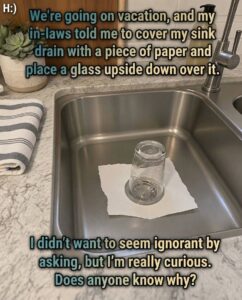
A popular household trick circulating online involves placing an upside-down glass over a sink drain with a piece of paper underneath it. The idea is simple: cover the drain before leaving home so sewer odors, insects, or other unwanted visitors cannot make their way into the house.
It sounds reasonable, and visually, the setup can look surprisingly convincing. But there is a problem. A glass and piece of paper generally do not create an airtight plumbing seal. More importantly, they do not address the actual mechanism that normally prevents sewer gases and insects from entering through the drain.
The real protection is already built into your plumbing.
Underneath most sinks is a curved section of pipe known as a P-trap. Its design is simple but extremely useful. After water flows down the drain, some of it remains inside the curved section of the pipe. That standing water creates a barrier between the interior of your home and the drainage system.
This water barrier helps prevent sewer gases from traveling backward through the drain. It can also make it more difficult for insects and other pests to enter through the plumbing.
Under normal circumstances, you probably never think about the P-trap. Every time you use the sink, shower, or bathtub, fresh water passes through the drain and replenishes the trap.
The situation changes when a home is left empty for an extended period.
If no one uses a sink or other fixture for days or weeks, the water inside its trap can gradually evaporate. How quickly this happens depends on factors such as temperature, humidity, ventilation, the particular fixture, and how frequently it is used.
Eventually, a trap that loses enough water may no longer provide an effective water barrier.
That is when problems can begin.
A dry trap can allow unpleasant drain or sewer odors to enter the home. In some situations, it can also provide a pathway for insects or other unwanted pests. The problem may be especially noticeable in bathrooms, guest rooms, basements, laundry areas, garages, or other parts of a house containing drains that are rarely used.
This explains why simply covering the top of a drain may not be the best solution. The important question is not only whether the drain opening is covered, but whether the plumbing trap underneath still contains water.
Fortunately, addressing the issue is relatively simple.
Before leaving for vacation, one of the easiest steps is to run water through the plumbing fixtures that may not be used while you are away. Turn on sinks, showers, and tubs for several seconds so their traps are filled with fresh water.
It is easy to remember the kitchen and primary bathroom while forgetting other fixtures around the property. Take a moment to check guest bathrooms, basement sinks, laundry-room drains, utility sinks, and other less frequently used fixtures.
Toilets should also be flushed before leaving. Their plumbing contains a water barrier as well, and making sure the bowl and trap contain water is part of normal household maintenance.
Floor drains deserve particular attention. A basement or utility-room floor drain may sit unused for long periods, making it more vulnerable to evaporation. Because these drains are often out of sight, homeowners may not notice a problem until an odor develops.
For a short vacation, simply replenishing the water in the traps may be sufficient in many homes. Longer absences require a little more thought.
Properly fitted drain covers or stoppers can help reduce evaporation by limiting airflow across the drain opening. Unlike a makeshift glass-and-paper arrangement, a purpose-designed cover can provide a more consistent barrier. However, homeowners should choose products appropriate for the specific fixture and use them correctly.
There are also situations in which homeowners consider adding a small amount of mineral oil to a filled trap. Because mineral oil evaporates much more slowly than water, it can form a layer over the water and potentially reduce the rate at which the water evaporates.
However, this should be approached carefully. Not every drain or plumbing system is suitable for every product, and homeowners should follow manufacturer recommendations or seek advice from a qualified plumber rather than pouring unfamiliar substances down household drains.
The length of the trip also matters.
Someone leaving for a long weekend generally does not need to take the same precautions as someone leaving a property vacant for several weeks. The longer a house remains unoccupied, the greater the opportunity for evaporation, unnoticed leaks, appliance problems, or other maintenance issues to develop.
For extended trips, having a trusted person check the property periodically can provide an additional layer of protection. A house check can reveal unusual odors, visible leaks, water damage, heating or cooling problems, or other issues before they become significantly worse.
Another precaution some homeowners take before an extended absence is shutting off the home’s main water supply. Doing so can reduce the risk of certain plumbing leaks while the property is unattended. However, whether this is appropriate depends on the home, its plumbing system, heating requirements, appliances, fire-sprinkler systems if present, and local conditions.
If you are considering shutting off the water, it is wise to understand how doing so affects the home’s other systems and to follow the recommendations of qualified professionals when necessary.
The larger lesson is that viral household hacks are not always as effective as they appear. A clever-looking trick can spread quickly because it is inexpensive, simple, and easy to demonstrate. But household plumbing relies on specific mechanisms, and understanding those mechanisms is usually more useful than copying an internet trend.
In this case, the P-trap does most of the important work.
That curved piece of plumbing underneath the sink is a small but essential part of the home’s drainage system. Its water barrier helps separate indoor living spaces from the drainage network. Keeping that trap filled is therefore more important than placing an ordinary glass over the drain.
Before your next vacation, take a few minutes to walk through the house. Run water through sinks, showers, tubs, and other infrequently used fixtures. Flush the toilets. Check basement and utility-room drains. Consider appropriate drain covers if you will be away for an extended period, and arrange for someone to inspect the property if necessary.
These steps may not be as visually interesting as a viral plumbing hack, but they address the actual issue.
When you return home, the last thing you want is to open the door and discover an unpleasant odor throughout the house. A few minutes of basic preparation before leaving can help reduce the chances of that happening.
The most useful household solutions are often the simplest ones. Rather than relying on an improvised glass and paper barrier, understand how your plumbing works, keep drain traps filled with water, protect rarely used drains appropriately, and take additional precautions when your home will be empty for an extended period.
A little preparation before departure can make coming home from vacation considerably more pleasant.