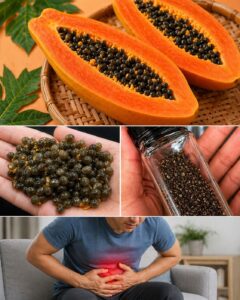
When you open a papaya from Carica papaya, most people instinctively scoop out the seeds and throw them away. But those small black seeds inside the fruit have attracted growing attention as a “functional food” with possible digestive, antioxidant, and wellness-related properties.
Still, it’s important to separate interest from exaggeration, and traditional use from confirmed science.
🥭 What Papaya Seeds Actually Are
Papaya seeds come from the fruit of Carica papaya and are:
- Small, round, black seeds
- Covered in a gelatinous coating when fresh
- Strongly bitter and peppery in taste
They are not just “waste”—they contain plant compounds, fats, fiber, and bioactive substances that differ from the sweet fruit pulp.
🧪 Key Compounds Inside Papaya Seeds
Papaya seeds contain:
- Polyphenols (plant antioxidants)
- Flavonoids (plant compounds linked to oxidative stress support)
- Fatty acids
- Enzymes related to digestion
- Trace minerals
These compounds are the reason they’re often discussed in wellness circles.
🍽️ Digestive Support: Why People Use Them
One of the most common traditional uses is for digestion.
Papaya fruit itself contains papain, a protein-digesting enzyme. The seeds are different in composition, but they are still believed to:
- Support protein digestion indirectly
- Help regulate gut balance in small amounts
- Act as a mild digestive stimulant in some traditional systems
However:
👉 Scientific evidence in humans is still limited
👉 Effects vary widely between individuals
They should be seen as a complement, not a treatment.
🛡️ Antioxidant Potential
Like many plant-based foods, papaya seeds contain compounds that may help the body manage oxidative stress.
Antioxidants are important because they:
- Help neutralize free radicals
- Support cellular health
- Contribute to overall dietary balance
While papaya seeds show antioxidant activity in lab studies, they are not a primary or essential antioxidant source compared to fruits like berries, leafy greens, or citrus.
🧫 Liver Health: Traditional Use vs Evidence
In some traditional wellness systems, papaya seeds have been used to support liver function.
Early experimental studies suggest:
- Possible protective effects in animal models
- Potential influence on liver enzyme activity
But important limitations:
⚠️ Human evidence is still insufficient
⚠️ No official medical recommendation supports papaya seeds for liver treatment
So while interesting, this area remains research-based, not proven therapy.
🌶️ Why Papaya Seeds Taste So Strong
If you’ve ever tried them, you know:
- Extremely bitter
- Pepper-like heat
- Slight mustard or horseradish note
This is why they’re sometimes dried and used as a pepper substitute in small amounts.
Culinary uses include:
- Salad seasoning
- Spice blends
- Marinades
- Grinding into powder
But always in very small quantities.
⚖️ The Most Important Principle: Moderation
Papaya seeds are potent—not neutral.
Overconsumption may lead to:
- Digestive discomfort
- Nausea in sensitive individuals
- Strong physiological effects due to bioactive compounds
General guidance:
👉 Start very small (a few seeds)
👉 Do not consume in large daily amounts
👉 Treat them like a spice, not a food source
⚠️ Who Should Be Careful or Avoid Them
Papaya seeds are not suitable for everyone.
Extra caution is recommended for:
- Pregnant individuals (traditional caution due to strong compounds)
- People with digestive sensitivity
- Individuals with ongoing medical conditions
If unsure, consulting a healthcare professional is the safest approach.
🌿 Traditional Use vs Modern Science
Historically, seeds from Carica papaya have been used in:
- Folk remedies
- Digestive practices
- Culinary seasoning in some cultures
Modern science is now exploring:
- Bioactive compounds
- Antioxidant activity
- Possible antimicrobial properties
But the key takeaway remains:
👉 Interest is growing
👉 Evidence is still developing
🧠 Are Papaya Seeds a “Superfood”?
Not exactly.
They are better described as:
- A functional plant food
- A spice-like ingredient with bioactive compounds
- A traditional wellness element under scientific study
They are not essential for health, nor a replacement for balanced nutrition.
🥗 How to Use Them Safely
If you want to try them:
- Scoop seeds from ripe papaya
- Rinse and dry thoroughly
- Air-dry or oven-dry at low heat
- Grind into powder (optional)
- Use sparingly as seasoning
Start with:
- A pinch in food
- Not more than a few seeds at first
🧭 The Bigger Perspective
The interest in papaya seeds reflects a broader trend:
- Re-evaluating food waste
- Exploring traditional knowledge
- Looking for plant-based functional ingredients
But the most balanced approach is:
👉 Curiosity + moderation + realistic expectations
✨ Final Takeaway
Papaya seeds from Carica papaya are:
- Nutrient-containing
- Flavor-intense
- Traditionally used
- Scientifically interesting, but not fully proven as therapeutic
They may offer small supportive benefits within a healthy diet, but they are best viewed as a minor addition—not a health solution.
Sometimes the most valuable insight isn’t that a “hidden superfood” exists—but that real health still comes from the basics: