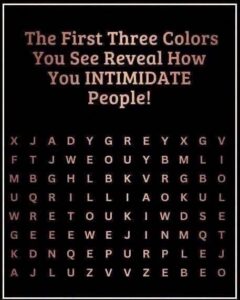
Have you ever wondered why certain colors immediately catch your eye while others barely register? Perhaps you notice bright yellow before anything else, or maybe your attention goes straight to deep purple, calming gray, or bold red.
According to popular color psychology, the shades people are drawn to can carry symbolic meanings associated with emotions, moods, and personality traits. Many personality quizzes use color preferences as a playful way to explore confidence, creativity, optimism, and how people perceive themselves.
Although these tests are not scientifically validated methods of determining personality, they can encourage self-reflection in an entertaining way.
The exercise is simple: look at a group of colors and notice which one catches your attention first. Don’t spend too much time thinking about your choice. Then read the interpretation and see whether it resonates with you.
Remember, there are no right or wrong answers. Your first color preference may be influenced by your surroundings, recent experiences, visual contrast, and individual taste.
1. Gray: The Calm and Practical Thinker
If gray is the first color you notice, popular color interpretations associate it with balance, composure, and practicality.
Gray sits between black and white, making it a common symbol of neutrality and moderation. People who prefer it may appreciate understated styles, quiet environments, or situations where they can think before acting.
You might relate to being someone who values logic and prefers to examine a situation before making a decision. You may also appreciate privacy and dislike unnecessary drama.
Others might interpret your calm demeanor as a sign of reliability or emotional control. However, being drawn to gray doesn’t necessarily mean you are reserved or less emotional than other people. It may simply be a color you find visually appealing.
Reflection question: Do you prefer to observe a situation carefully before deciding how to respond?
2. Purple: The Creative Original
Purple is often associated with imagination, individuality, and artistic expression.
Historically, purple has also been linked with luxury, mystery, and royalty. In modern color symbolism, it frequently represents people who appreciate originality and enjoy looking beyond conventional ideas.
If purple catches your attention first, you might enjoy creative hobbies, unusual designs, imaginative stories, or conversations about possibilities that other people haven’t considered.
You may also appreciate having the freedom to express yourself rather than following every trend.
People sometimes associate purple lovers with sensitivity and a rich inner world, although these are symbolic interpretations rather than established psychological findings.
Reflection question: Do you enjoy expressing yourself in ways that make you feel different from everyone else?
3. Yellow: The Optimistic Energy Seeker
Yellow is bright, noticeable, and commonly associated with sunshine, warmth, and happiness.
In popular color psychology, yellow represents optimism, enthusiasm, curiosity, and mental energy. It is often connected with people who enjoy new experiences and approach everyday life with a hopeful attitude.
If yellow is the first color you see, you might appreciate cheerful surroundings, lively conversations, and opportunities to learn something new.
You may also be the person who tries to find a positive possibility when a situation becomes difficult.
However, liking yellow doesn’t guarantee that someone is naturally optimistic. Color preferences are influenced by many things, and even cheerful people experience stress, sadness, and uncertainty.
Reflection question: When something goes wrong, do you usually look for a possible solution before giving up?
4. Blue: The Trustworthy and Thoughtful Personality
Blue is frequently associated with calmness, stability, and trust. It appears in nature in the sky and ocean, which may contribute to its familiar connection with peaceful surroundings.
Popular interpretations suggest that people who gravitate toward blue may value dependable relationships, clear communication, and a sense of security.
You might appreciate having time to think, prefer meaningful conversations over unnecessary arguments, or feel most comfortable when life has a predictable rhythm.
Blue is also widely used in professional and commercial settings because it can communicate reliability and competence, although the way a color is perceived depends on context and culture.
Reflection question: Do you value trust and consistency more than excitement and unpredictability in your relationships?
5. Red: The Bold and Passionate Go-Getter
Red is one of the most visually striking colors. It is often associated with energy, passion, urgency, confidence, and determination.
If red catches your attention first, a playful personality interpretation might describe you as someone who enjoys taking action and isn’t afraid to make your presence known.
You may appreciate challenges, enjoy competing against yourself, or feel motivated by ambitious goals.
Red can also communicate warning or danger in certain contexts, demonstrating that colors do not carry a single universal meaning. Their effects depend on where they appear and how people interpret them.
Not everyone who loves red is outgoing or competitive. A person may simply enjoy its warmth, richness, or visual intensity.
Reflection question: Do you feel energized when you have a challenging goal to work toward?
6. Green: The Balanced and Grounded Individual
Green is strongly associated with plants, growth, renewal, and the natural world.
In popular color symbolism, it can represent balance, patience, harmony, and a desire for stability. People who prefer green may enjoy spending time outdoors or appreciate environments that feel peaceful and restorative.
You might value steady progress rather than dramatic changes, or prefer building relationships gradually instead of rushing into them.
Green is also connected with growth, making it a useful symbol for people who enjoy learning from experience and developing new skills.
Still, your favorite color cannot establish whether you are patient, environmentally conscious, or emotionally balanced.
Reflection question: Do you feel most comfortable when you have time to grow, learn, and make decisions at your own pace?
7. Orange: The Sociable and Adventurous Spirit
Orange combines the warmth of red with the brightness commonly associated with yellow. It is often linked with enthusiasm, friendliness, creativity, and adventure.
If orange is the first color you notice, a playful interpretation might suggest that you enjoy lively experiences and appreciate opportunities to connect with other people.
You may like experimenting with new ideas, visiting unfamiliar places, or bringing energy into a group setting.
Orange can also represent warmth and informality, making it a popular choice in designs intended to feel inviting.
However, enjoying orange doesn’t necessarily mean you are highly social. Introverted people can love bright colors, just as outgoing people can prefer quiet shades.
Reflection question: Do you enjoy trying something new simply because you are curious about what might happen?
8. Black: The Independent and Mysterious Individual
Black is commonly associated with elegance, strength, sophistication, and mystery.
In fashion, it is valued for its versatility and understated appearance. In other contexts, it may symbolize seriousness, authority, or mourning.
Popular personality descriptions sometimes associate a preference for black with independence and a desire for personal boundaries.
You might appreciate simple designs, value privacy, or prefer expressing yourself through subtle details rather than drawing attention to yourself.
But black is also a practical and widely used color. Choosing it may reflect fashion preferences rather than any particular personality trait.
Reflection question: Do you prefer deciding what to share about yourself rather than feeling pressured to explain everything?
What Does Your First Color Really Say About You?
The most interesting part of a color test isn’t whether a description perfectly matches your personality. It’s whether the questions encourage you to think about your habits, preferences, and values.
Scientific research on color psychology examines how colors may influence perception, attention, and emotions in particular situations. However, there is no reliable evidence that the first color you notice can accurately reveal your complete personality or predict how other people see you.
Your choice may depend on brightness, contrast, surrounding colors, cultural associations, personal memories, and even what you happen to be thinking about that day.
For a more meaningful self-reflection exercise, consider asking yourself why a particular description feels accurate. Think about real examples from your life rather than assuming that a color determines who you are.
Final Thoughts
Whether gray, purple, yellow, blue, red, green, orange, or black catches your attention first, each color offers a different symbolic lens through which to explore your preferences.
Treat the result as a fun conversation starter, not a psychological diagnosis or a definitive judgment about your character.
After all, your personality is shaped by far more than your favorite shade. Your experiences, decisions, relationships, values, and the way you treat others tell a much richer story.
So, which color did you notice first—and which part of its description, if any, felt surprisingly familiar?