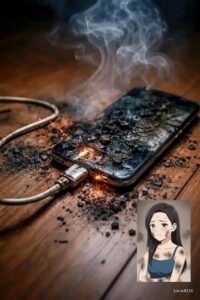
What’s Really Happening Inside Your Phone
Modern smartphones use lithium-ion batteries, which are efficient but sensitive to heat, damage, and electrical instability. When something goes wrong, a process called thermal runaway can occur.
That’s when heat triggers chemical reactions that create even more heat—potentially leading to smoke, melting, or ignition.
But this doesn’t just happen randomly. It usually requires specific risk factors.
The Most Dangerous Charging Mistakes
1. Damaged or Cheap Charging Cables
Frayed wires or poorly made chargers can cause:
- Electrical sparks (arcing)
- Inconsistent power delivery
- Heat buildup at the connector
Certified accessories from companies like Apple or Samsung (or properly certified third-party brands) include safeguards that cheap knockoffs often lack.
2. Charging on Soft Surfaces
Putting your phone on:
- Beds
- Pillows
- Couches
blocks airflow and traps heat. Batteries rely on passive cooling—so when heat can’t escape, internal temperature rises quickly.
3. Charging Under Covers or While Sleeping
This is one of the biggest real-world risk factors:
- Heat accumulates unnoticed
- You can’t react if something goes wrong
- Flammable materials are nearby
It’s not common—but when incidents happen, this is often involved.
4. Using the Phone Intensively While Charging
Gaming, video streaming, or heavy apps while plugged in:
- Increases internal heat
- Stresses the battery
- Speeds up wear and instability
5. Ignoring Warning Signs
If your phone:
- Gets unusually hot
- Smells like burning plastic
- Has a swollen battery
- Charges inconsistently
Stop using it immediately. These are early failure signals.
How Fires Actually Start (Realistically)
Despite viral images, most cases aren’t sudden explosions. Instead, they follow a pattern:
- Heat builds up (blocked airflow or bad cable)
- Battery chemistry becomes unstable
- Internal damage escalates
- Smoke, melting, or ignition occurs
Organizations like the Consumer Product Safety Commission and National Fire Protection Association have documented incidents—but they’re rare compared to total users.
Still, “rare” doesn’t mean “impossible.”
The Real Consequences
When things do go wrong, the impact can be serious:
- Device destruction (often total loss)
- Property damage (beds, furniture, walls)
- Minor burns or smoke inhalation
- Insurance complications if negligence is involved
The biggest risk isn’t just the phone—it’s what’s around it.
Safe Charging Habits That Actually Matter
You don’t need paranoia—just consistency.
Do this:
- Charge on a hard, flat surface (desk, table)
- Use certified cables and adapters
- Keep the phone uncovered and ventilated
- Replace cables at the first sign of damage
- Keep software updated (better thermal management)
Avoid this:
- Charging under pillows or blankets
- Leaving damaged cables in use
- Using ultra-cheap, uncertified chargers
- Charging in hot environments (sunlight, heaters)
What About Overnight Charging?
Modern phones are designed to handle it:
- They stop charging at 100%
- They regulate voltage automatically
But the environment still matters.
If you charge overnight:
- Keep the phone away from your bed
- Place it on a non-flammable surface
- Avoid clutter around it
A More Realistic Take
The viral framing—“this will turn your phone into a fire hazard overnight”—leans heavily on fear.
A better way to think about it:
- Safe setup → very low risk
- Bad habits + damaged gear → increased risk
It’s not about one mistake—it’s about patterns over time.
Bottom Line
Your phone isn’t a ticking time bomb—but it’s also not something to treat carelessly.
The biggest takeaway is simple:
Heat + damage + poor airflow = danger
Avoid those three, and you’ve eliminated nearly all realistic risk.