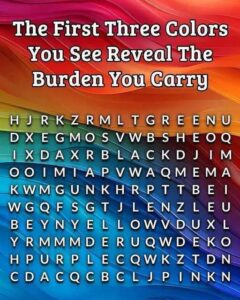
Have you ever looked at a collection of colors and felt unexpectedly drawn to certain shades? A popular color-selection exercise is encouraging people to do exactly that. The idea is simple: choose three colors that immediately catch your attention and explore what they might reveal about your emotions, worries, and personal experiences.
At first, it may seem like an ordinary personality game. However, the exercise can become an interesting opportunity to pause, examine your feelings, and think about things that may have been weighing on your mind.
Although this activity is not a scientifically validated psychological test, it can provide a useful starting point for self-reflection. The most important part is not which colors you select but what those colors mean to you personally.
1. Why Are People Choosing Three Colors?
Colors are part of everyday life, but they can also influence how we experience our surroundings. Certain shades may remind us of childhood memories, important relationships, difficult experiences, or particularly happy moments.
For example, someone might associate blue with peaceful summer evenings, while another person might connect the same color with loneliness or sadness.
This is why the three-color exercise has attracted attention online. Instead of asking complicated questions about emotions, it encourages people to make three simple choices and reflect on their reactions.
The activity can be completed in just a few minutes. There are no complicated rules, special equipment, or correct answers.
2. Red: The Color of Strong Emotions
<text color=”secondary” size=”xs”>Possible personal associations, not fixed psychological meanings.</text>
Red is often associated with powerful feelings, including passion, excitement, love, frustration, and anger.
If red is one of the first colors you notice, consider whether something in your life has been creating strong emotional reactions.
Perhaps you have been holding back your feelings during a difficult conversation. Maybe you are excited about a new opportunity but afraid of taking the next step.
Red can also remind people of courage, determination, and the desire to protect someone they love.
Ask yourself: Is there something I need to express? Am I frustrated about something I have been avoiding? Or am I simply ready for a new beginning?
Your answers matter more than any general interpretation of the color.
3. Blue: The Need for Peace and Balance
Blue is frequently associated with calmness, stability, trust, and reflection.
For some people, this color brings to mind peaceful surroundings, clear skies, and relaxing moments. For others, it may represent responsibility, emotional distance, or a desire for reassurance.
If blue catches your attention, consider whether you have been looking for more balance in your everyday life.
Have you been working too much? Are you spending enough time relaxing? Do you feel that other people’s expectations are taking up too much of your energy?
Sometimes, the simplest reminder is that you deserve time to rest.
Blue can be a useful starting point for thinking about the importance of emotional balance and creating more peaceful routines.
4. Black: Protection, Boundaries, and Uncertainty
Black is a color with many possible associations. Some people connect it with elegance, strength, independence, and protection. Others associate it with sadness, uncertainty, or difficult memories.
Choosing black does not automatically mean that someone is experiencing emotional problems.
Instead, consider what the color represents in your own life.
Perhaps you value privacy and prefer keeping personal matters to yourself. Maybe you have been protecting your feelings after a disappointing experience.
It could also represent confidence, independence, or a desire to establish stronger boundaries.
Ask yourself whether you have been protecting your emotional well-being or avoiding situations that deserve your attention.
There is no need to judge your answer. The purpose is simply to understand yourself a little better.
5. Yellow: Happiness, Hope, and Pressure
Yellow is commonly associated with sunshine, optimism, creativity, and happiness.
It can remind people of warm afternoons, childhood memories, friendships, and exciting possibilities.
However, emotions are rarely simple. Even a cheerful color can bring up complicated thoughts.
For example, someone may feel pressure to appear happy even when they are struggling privately. Another person may associate yellow with a happier period of life that they miss.
If yellow attracts your attention, consider whether you have been making enough room for enjoyment and relaxation.
Are you doing things because they make you happy, or because you feel expected to do them?
Sometimes, remembering that happiness does not need to be constant can make everyday life feel less demanding.
6. Green: Growth, Change, and Personal Development
Green is often connected with nature, renewal, balance, and new beginnings.
It may remind you of peaceful landscapes, fresh opportunities, or a time when your life felt more stable.
If green catches your attention, you might reflect on whether you are experiencing a period of personal change.
Perhaps you want to develop a new skill, improve a relationship, or make healthier decisions.
You might also be feeling stuck and wishing something would change.
Rather than treating green as a prediction about your future, use it as an opportunity to consider what growth means to you.
What would you like to improve? What have you learned recently? Is there something you need to leave behind to move forward?
7. Purple: Creativity, Reflection, and Individuality
Purple is frequently associated with imagination, creativity, mystery, and individuality.
Some people connect it with artistic expression, while others associate it with spirituality or personal reflection.
If purple is one of your chosen colors, consider whether you have been giving yourself enough opportunities to explore your interests.
Perhaps you have an idea you want to pursue but keep postponing it. Maybe everyday responsibilities have left little room for creativity.
This color can also encourage you to think about your identity and the things that make you feel unique.
What activities make you feel most like yourself? When was the last time you did something simply because you enjoyed it?
8. How to Try the Three-Color Exercise
You can complete this activity whenever you have a few quiet minutes.
- Find a colorful picture, look at a group of colored objects, or observe the colors around you.
- Choose the first three colors that naturally attract your attention.
- Write down each color without changing your choices.
- Think about the memories, emotions, or experiences associated with each shade.
- Consider whether any of your thoughts connect with something currently happening in your life.
- Write down one small action that could help you address a concern or improve your well-being.
Try not to force an interpretation. If a color does not bring up a particular feeling, that is perfectly fine.
9. What Your Three Choices Really Mean
The most valuable part of this exercise is understanding that colors do not have universal emotional meanings.
Your personal history, cultural background, memories, and current circumstances can all influence how you respond to different shades.
Two people can choose exactly the same three colors and have completely different reasons for selecting them.
That is why the exercise should not be treated as a diagnosis, personality assessment, or scientific measurement of emotional health.
Instead, think of it as a conversation with yourself.
If your reflections bring up difficult feelings that continue affecting your everyday life, consider speaking with someone you trust or a qualified mental health professional.
Final Thoughts
Choosing three colors may seem like a simple online activity, but it can encourage something valuable: taking a moment to understand how you feel.
Whether you choose red, blue, black, yellow, green, purple, or another shade, remember that there are no wrong answers.
Your colors cannot reveal your entire personality or diagnose hidden emotional burdens. However, the memories and thoughts they inspire may help you recognize concerns that deserve attention.
Sometimes, understanding yourself begins with something surprisingly simple: slowing down, paying attention, and honestly asking yourself how you are doing.