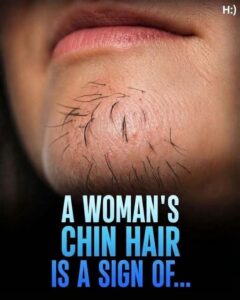
A few chin hairs can be surprising, especially for women who have never noticed facial hair before. One morning, a woman might look in the mirror and discover a dark strand beneath her chin. She removes it, only to notice another one appearing a few weeks later. For some women, this becomes a regular part of their grooming routine. For others, it creates questions about their hormones, health, and appearance.
The truth is that facial hair in women is much more common than many people realize. It is a natural part of human biology, and experiencing it does not automatically mean something is wrong.
Understanding why chin hair develops can help women feel more comfortable with their bodies and recognize when changes deserve medical attention.
Why Do Women Develop Chin Hair?
Hair grows across almost every part of the human body, although its thickness, color, and length vary depending on the location.
Women naturally produce small amounts of androgens, a group of hormones that includes testosterone. These hormones play important roles in several bodily functions, including maintaining bone health, supporting normal reproductive processes, and influencing hair growth.
Hair follicles respond differently to hormones. Some follicles produce fine, almost invisible hair, while others develop darker, thicker strands known as terminal hair.
When hormone levels change or hair follicles become more sensitive to androgens, certain facial hairs may become more noticeable.
This explains why some women have only a few fine chin hairs while others experience more substantial facial hair growth.
The Role of Genetics
Genetics can influence how much facial hair a woman develops.
If a mother, grandmother, or other female relatives have noticeable chin hair, similar patterns may appear in younger generations.
Family background can influence hair color, thickness, distribution, and sensitivity to hormones.
This means that two women with similar hormone levels may experience very different amounts of facial hair.
For some women, a few dark chin hairs are simply part of their inherited characteristics rather than a sign of a medical problem.
Understanding this can reduce unnecessary worry and remind women that bodies naturally differ.
How Aging and Menopause Affect Facial Hair
Age is another important factor.
As women grow older, their hormone levels change. During perimenopause and menopause, estrogen levels decline, changing the balance between different hormones in the body.
These changes can make existing facial hairs more noticeable.
Some women discover their first coarse chin hairs during their forties or fifties. Others notice that a few previously fine hairs gradually become darker and thicker.
This is a common experience and does not necessarily indicate illness.
However, sudden or unusually rapid changes in facial hair growth should not automatically be attributed to aging.
Could Chin Hair Be Related to PCOS?
One medical condition associated with excessive facial hair growth is polycystic ovary syndrome, commonly known as PCOS.
PCOS is a hormonal condition that can affect women during their reproductive years.
Some women with PCOS have increased androgen activity, which can contribute to thicker hair growth on the chin, upper lip, chest, abdomen, and other areas.
Other possible symptoms include irregular menstrual periods, acne, thinning scalp hair, and difficulties with ovulation.
Not every woman with PCOS experiences the same symptoms, and having chin hair alone does not mean someone has the condition.
A healthcare professional can assess symptoms and determine whether further investigation is appropriate.
The Emotional Side Nobody Talks About
There is another reason chin hair can become difficult for women: the pressure to look a certain way.
Many beauty standards suggest that women should have completely smooth skin and no visible facial hair.
Advertisements, social media, and beauty filters often reinforce this unrealistic expectation.
As a result, something completely natural can become a source of embarrassment.
Some women feel uncomfortable allowing others to see their chin without first checking for unwanted hairs. Others constantly carry tweezers or magnifying mirrors because they worry about being judged.
This emotional pressure can be exhausting.
The important thing to remember is that facial hair does not determine femininity, attractiveness, confidence, or personal worth.
Women do not need to apologize for their natural appearance.
Removing chin hair is a personal choice, not an obligation.
Does Removing Chin Hair Make It Grow Back Thicker?
One common misconception is that shaving or plucking facial hair causes it to grow back thicker and darker.
Shaving does not change the structure of the hair follicle or increase the number of hairs growing from the skin.
However, shaving cuts the hair at its thickest point, creating a blunt tip. When the hair begins growing again, it may feel rougher or appear more noticeable.
Plucking removes the hair from its root, but it does not permanently prevent the follicle from producing another strand.
Repeated plucking may sometimes cause irritation, ingrown hairs, or small areas of inflammation.
For women who prefer removing unwanted chin hair, gentle methods and appropriate skincare can help reduce irritation.
Safe Ways to Manage Unwanted Facial Hair
There are several options for women who wish to manage chin hair.
Tweezing is useful for removing a small number of individual strands. It is inexpensive and can be done at home, although clean tools and gentle technique are important.
Shaving offers a quick and convenient option. Facial razors designed for women can remove hair without changing how it grows back.
Depilatory creams formulated specifically for facial skin may also be an option, but they should be patch-tested and used according to their instructions.
For longer-term reduction, professional laser hair removal may help reduce hair growth over multiple sessions. Results depend on hair color, skin type, and the technology used.
Electrolysis is another option that can permanently remove individual hair follicles when performed correctly by a qualified professional.
Women should choose the approach that suits their preferences, skin sensitivity, and budget.
When Should You Speak With a Doctor?
Although a few chin hairs are usually nothing to worry about, certain changes deserve medical attention.
Consider speaking with a healthcare professional if facial hair develops rapidly, becomes significantly thicker, or appears alongside other symptoms.
Additional signs worth discussing include irregular periods, persistent acne, scalp hair thinning, unexplained weight changes, or difficulty becoming pregnant.
Sudden severe hair growth accompanied by a deeper voice, increased muscularity, or other signs of masculinization requires prompt medical assessment.
A doctor may review medical history, examine symptoms, and recommend hormone testing or other investigations when appropriate.
Early evaluation can help identify underlying conditions and provide suitable treatment.
Learning to Feel Comfortable in Your Own Skin
Perhaps the most important truth about women’s chin hair is that it is not something women should feel ashamed of.
Bodies change throughout life. Hormones fluctuate, genetics influence appearance, and aging brings natural differences.
Some women choose to remove every visible hair, while others prefer to leave their skin untouched. Both choices deserve respect.
There is no single correct way for a woman to look, and a few strands beneath the chin do not make anyone less beautiful or feminine.
The next time you notice a chin hair in the mirror, remember that you are not alone. It is a common experience, influenced by ordinary biological processes.
Understanding your body, recognizing unusual changes, and making personal grooming decisions without shame are far more important than meeting unrealistic beauty expectations.
After all, confidence should never depend on having perfectly smooth skin.