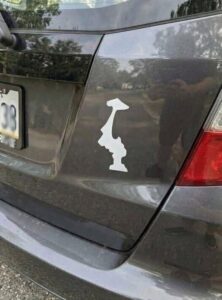
Across Washington State, a curious little symbol has found its way onto car windows, water bottles, laptops, stickers, and everyday accessories. At first glance, it looks like an ordinary outline of Washington, but something about it appears unusual. The familiar state shape has been turned upside down, creating a playful design that catches the attention of people who recognize it. Although it may seem like a simple graphic, this inverted outline has developed an interesting cultural appeal, connecting regional humor, personal identity, and a shared appreciation for life in the Pacific Northwest.
A Small Design with a Distinctive Personality
State outlines have long been popular ways for people to celebrate where they live or where they grew up. They appear on clothing, souvenirs, vehicle decals, and travel accessories, allowing individuals to carry a small reminder of home wherever they go.
The upside-down Washington outline takes this familiar idea and gives it an unexpected twist. Instead of presenting the state in its usual orientation, the design changes its appearance just enough to make people look twice. Its recognizable shape remains, but the unusual positioning introduces an element of curiosity and humor.
Part of its appeal comes from its simplicity. It does not require elaborate artwork, bright colors, or complicated explanations. A basic outline is enough to communicate a connection to Washington while offering something slightly different from traditional state-themed designs.
The Humor Behind the Inverted Outline
One popular interpretation connects the upside-down design with Washington’s reputation for rainy weather. The playful suggestion is that the state experiences so much rain that turning it upside down might somehow change the situation.
Whether understood as a joke, a local observation, or simply a clever visual idea, this interpretation reflects the familiar relationship many residents have with the region’s weather. Rain jackets, cloudy mornings, wet sidewalks, and evergreen landscapes are common parts of everyday life in western Washington.
Rather than treating the weather as something that defines the region negatively, residents often incorporate it into local humor. The upside-down outline offers a simple way to acknowledge this experience without making a serious statement.
Its appeal comes from the fact that people can interpret it differently. Some may immediately connect it with rainy days, while others simply enjoy the unusual appearance of a familiar state shape.
A Connection to Washington’s Natural Landscape
Washington is known for its mountains, forests, waterways, and diverse outdoor environments. From the Cascade Range to the Olympic Peninsula, the region offers landscapes that strongly influence local lifestyles and personal memories.
The inverted state outline can also invite visual interpretations connected to mountain peaks and natural scenery. Some viewers may associate its shape with the dramatic silhouettes of the surrounding mountains or the broader outdoor identity of the Pacific Northwest.
Mount Rainier, in particular, remains an important visual landmark for Washington. Its distinctive presence is familiar to residents and visitors alike, representing the region’s natural beauty and outdoor culture.
For people who enjoy hiking, camping, photography, and exploring forest trails, small regional symbols can carry personal meaning. They may remind someone of a favorite mountain drive, a weekend spent outdoors, or the peaceful atmosphere of a familiar landscape.
Everyday Objects Become Expressions of Identity
One reason small regional designs remain popular is their ability to turn ordinary objects into personal expressions. A sticker on a vehicle, a graphic on a laptop, or a decal on a reusable water bottle can communicate something about the owner’s interests and connections.
The upside-down Washington outline fits naturally into this everyday culture. It can appear on practical belongings without demanding attention or becoming an overwhelming display of regional pride.
For some people, it represents their hometown. For others, it recalls childhood memories, friendships, family connections, or years spent exploring the state.
People who have moved away from Washington may also appreciate regional symbols as reminders of home. Seeing a familiar outline on an everyday object can bring back memories of rainy afternoons, evergreen forests, neighborhood cafés, and scenic road trips.
The Appeal of Quiet Regional Pride
Regional pride does not always need to be expressed through large flags, prominent slogans, or elaborate souvenirs. Sometimes, a small graphic can communicate a meaningful connection more naturally.
The upside-down Washington outline offers this understated quality. It is recognizable to people familiar with the state, but it may appear unusual or mysterious to someone encountering it for the first time.
That difference creates an interesting social experience. Someone might notice the design, ask about it, or recognize it immediately because they have seen it elsewhere.
These small interactions demonstrate how visual symbols can encourage connection. They create opportunities for conversation without requiring people to explain their entire personal history.
The design also leaves room for individual interpretation. Not everyone who displays it necessarily attaches the same meaning to it, and that flexibility is part of its appeal.
How Small Symbols Develop Cultural Meaning
Many popular visual symbols begin with simple ideas. A graphic may initially be created as a joke, a decorative variation, or an alternative to a familiar design. As more people encounter it, the image can gradually develop associations beyond its original purpose.
The upside-down Washington outline illustrates how a recognizable shape can become more interesting through a small visual change. Its meaning can grow through personal experiences, repeated exposure, and conversations among people who appreciate the design.
However, its precise origin and the reasons behind its popularity should not be treated as universally established without reliable historical documentation. Different people may have encountered it through different artists, shops, or online communities.
Rather than requiring one official explanation, its cultural appeal can be understood through the meanings people attach to it.
A Symbol That Travels Beyond Washington
Regional symbols often become especially meaningful when people relocate. Someone who grew up in Washington but now lives elsewhere may use familiar imagery to maintain a connection with their home state.
A small upside-down outline can become part of that connection. It might appear on a suitcase during travel, a laptop at work, or a water bottle carried to the gym.
These everyday reminders offer a simple way to preserve memories and express personal history. They also allow people from different backgrounds to discover shared experiences through familiar imagery.
Even outside the Pacific Northwest, the design can inspire curiosity and introduce others to a small piece of Washington’s visual culture.
The Lasting Appeal of a Simple Idea
The upside-down outline of Washington State demonstrates how a small design variation can encourage humor, recognition, and personal expression. Its appeal does not depend on an elaborate explanation or a single universally accepted meaning.
Instead, it offers an open-ended symbol that people can connect with in their own ways. For some, it represents rainy-weather humor. For others, it suggests mountains, outdoor adventures, regional pride, or memories of home.
Ultimately, its significance comes from the experiences people associate with it. Whether displayed on a vehicle, a favorite accessory, or an everyday household item, the inverted Washington outline offers a subtle reminder that identity can be expressed through the smallest details.
Sometimes, the most recognizable symbols are not the ones that demand attention. They are the ones that quietly bring people together through shared memories, familiar places, and a little bit of humor.