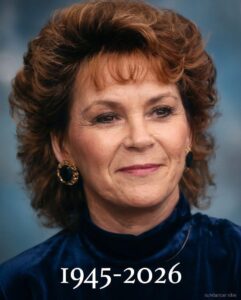
The passing of Lauren Ann Chapin on February 24, 2026, at the age of 80 marked the end of a life that was as complex as it was memorable. To millions, she would forever remain the bright-eyed, quick-witted Kathy “Kitten” Anderson from Father Knows Best, a show that helped define the golden age of television. Yet beyond that cheerful on-screen persona existed a deeply human story—one shaped by early fame, personal hardship, spiritual renewal, and ultimately, resilience.
Her death, following a reported battle with cancer, prompted an outpouring of tributes across generations. For many, it was not simply the loss of an actress, but the closing of a chapter tied to childhood memories, family traditions, and a simpler era of storytelling. Her legacy, however, extends far beyond nostalgia. It is a story of transformation, one that continues to resonate in conversations about child stardom, identity, and redemption.
Early Life and Sudden Stardom
Lauren Ann Chapin was born on May 23, 1945, at a time when television itself was still in its infancy. By the early 1950s, the medium was rapidly evolving, becoming a central fixture in American households. Chapin entered the entertainment industry as a child, joining a generation of young performers who would shape this new cultural landscape.
Her breakthrough came when she was cast in Father Knows Best, a show that would become synonymous with the idealized American family. Starring Robert Young as Jim Anderson and Jane Wyatt as Margaret Anderson, the series presented a warm, orderly vision of domestic life. Chapin’s role as Kathy, affectionately called “Kitten,” completed the family dynamic.
From the very first episodes, Chapin stood out. Her portrayal of Kathy was lively and authentic, capturing the spontaneity and emotional honesty of childhood. Whether she was causing mischief or delivering heartfelt moments, she brought a natural charm that made her character unforgettable.
Audiences embraced her immediately. At a time when television families were meant to reflect aspirational values, Kathy Anderson represented innocence, curiosity, and emotional sincerity. Chapin’s performance ensured that she was not merely a supporting character, but a central emotional anchor of the show.
The Cultural Impact of Father Knows Best
To understand Chapin’s significance, one must consider the broader context of Father Knows Best. Airing from 1954 to 1960, the show became a defining example of mid-century American television. It reflected post-war optimism, emphasizing family unity, moral clarity, and everyday life lessons.
In this environment, child actors like Chapin played a crucial role. They humanized the stories, grounding them in relatable experiences. Kathy Anderson, in particular, often embodied the emotional core of episodes. Her innocence allowed writers to explore themes of honesty, responsibility, and growth in a way that felt genuine rather than preachy.
The show’s enduring popularity ensured Chapin’s continued visibility long after its original run. Through reruns and syndication, new audiences discovered her performance, allowing her work to transcend generations. Even decades later, viewers could recognize the authenticity she brought to the role.
Work Beyond Her Signature Role
Although Father Knows Best defined her career, Chapin’s talents extended beyond a single show. She appeared in various productions during her early years, including a small role in A Star Is Born, starring Judy Garland. While her role in the film was modest, it demonstrated her ability to adapt to different formats and genres.
She also made appearances in other television programs, showcasing versatility that hinted at a potentially broader career. However, like many child actors, Chapin found it difficult to escape the shadow of her most iconic role. The public’s strong association between her and Kathy Anderson made it challenging to redefine herself professionally.
The Hidden Struggles of Child Stardom
Behind the warmth and laughter of Father Knows Best, Chapin’s personal life was far more complicated. The pressures of early fame, combined with family difficulties and the challenges of growing up in the public eye, took a significant toll.
As she transitioned into adulthood, Chapin faced a period of instability. The shift from beloved child star to an uncertain adult identity is one that many performers struggle with, and Chapin was no exception. Without the structure and validation provided by her television career, she found herself navigating a world that felt unfamiliar and often overwhelming.
In later years, she spoke candidly about these struggles. Her openness shed light on the often-overlooked realities of child stardom—the emotional strain, the loss of normalcy, and the difficulty of forming a stable sense of self. Her story became part of a broader conversation about how the entertainment industry treats its youngest performers.
A Journey Toward Healing and Redemption
What makes Chapin’s story particularly compelling is not just the hardship she endured, but the way she chose to confront it. Over time, she found strength through faith and personal reflection, embarking on a journey of healing that reshaped her life.
She became involved in ministry work and began speaking publicly about her experiences. Her message was one of hope and resilience, emphasizing that even those who face deep struggles can find a path forward. Rather than hiding her past, she used it as a tool to connect with others.
This period of her life marked a significant transformation. No longer defined solely by her childhood role, Chapin emerged as a figure of inspiration. Her willingness to speak honestly about her challenges resonated with many, particularly those who had faced similar difficulties.
Reconnecting with Fans and Legacy
In her later years, Chapin maintained a connection with fans of Father Knows Best. She attended events, participated in interviews, and engaged with audiences who continued to cherish her work. For many, seeing her as an adult—reflective, candid, and resilient—added a new dimension to their appreciation of her.
The character of Kathy Anderson remained a beloved figure, but Chapin’s personal story gave that character greater depth. Fans came to see not just the cheerful child on screen, but the real person behind the performance.
This dual legacy—fictional and real—became one of the defining aspects of her life. She was both a symbol of television’s golden age and a testament to the complexities of life beyond it.
The Final Chapter
Chapin’s passing in 2026 brought renewed attention to her life and career. News of her death spread quickly, accompanied by tributes that highlighted both her contributions to television and her personal journey.
Social media was filled with images of her as Kathy Anderson—smiling, playful, and full of life. At the same time, many reflected on her later years, acknowledging the courage it took for her to share her story openly.
Her family described her passing as peaceful, emphasizing the love that surrounded her in her final days. Their statements also highlighted the impact she had on others, both through her work and her personal outreach.
A Lasting Influence on Television History
Lauren Ann Chapin’s place in television history is secure. As part of Father Knows Best, she helped shape the early identity of the medium, contributing to a show that remains a cultural touchstone.
Her performance as Kathy Anderson continues to be celebrated for its authenticity and charm. It represents a time when television sought to reflect idealized values while still capturing the nuances of everyday life.
Beyond her acting, Chapin’s story has become an important example of the challenges faced by child actors. Her willingness to speak about her experiences has contributed to a broader understanding of the industry’s impact on young performers.
Remembering a Life of Complexity and Meaning
It would be easy to remember Chapin solely as the cheerful child who brought joy to millions. But doing so would overlook the richness of her life story. She was more than a character; she was a person who experienced both triumph and hardship.
Her journey—from early fame to personal struggle, and ultimately to redemption—offers a powerful narrative about resilience. It reminds us that the lives behind familiar faces are often far more complex than they appear.
Conclusion
The story of Lauren Ann Chapin is one of contrasts: light and shadow, innocence and experience, struggle and renewal. Her work on Father Knows Best ensured her a place in the hearts of audiences, but it is her personal journey that gives her legacy its depth.
As fans reflect on her life, they remember not only the laughter she brought into their homes, but also the strength she demonstrated in her later years. Her story continues to inspire, serving as a reminder that even in the face of adversity, transformation is possible.
Though she is gone, her impact endures—in the episodes that continue to air, in the memories of those who watched her, and in the lives she touched through her honesty and resilience.