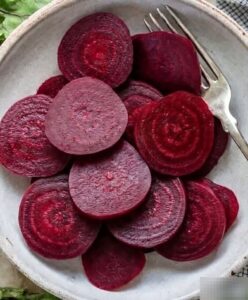
Beetroot has moved from a simple root vegetable to a widely discussed nutritional food not because of marketing hype alone, but because modern research has repeatedly confirmed that its compounds interact with the body in measurable, beneficial ways. Unlike many “superfoods” that rely on exaggerated claims, beetroot’s effects are grounded in well-understood biological processes—especially those related to blood flow, oxygen efficiency, and cellular function.
At the center of its value is a naturally occurring group of compounds called dietary nitrates. These nitrates are not active on their own; instead, they undergo a transformation in the body that produces one of the most important signaling molecules in human physiology: nitric oxide.
Nitric Oxide: The Core Mechanism Behind Beetroot’s Effects
When you consume beetroot, bacteria in the mouth and enzymes in the body convert dietary nitrates into nitrites and then into nitric oxide. This molecule plays a crucial role in vascular health by relaxing and widening blood vessels—a process known as vasodilation.
Wider blood vessels mean:
- Improved blood flow
- Lower resistance in the circulatory system
- More efficient delivery of oxygen and nutrients
This is why beetroot is often associated with cardiovascular support. By reducing the strain required to circulate blood, nitric oxide indirectly supports heart function and overall vascular efficiency.
For individuals with mildly elevated blood pressure, this mechanism may contribute to small but meaningful reductions when beetroot is consumed regularly as part of an overall healthy diet. However, it is important to emphasize that beetroot is not a substitute for medical treatment—it functions as a supportive dietary factor, not a medical intervention.
Why Athletes Pay Attention to Beetroot
One of the most widely studied applications of beetroot is in endurance performance.
Because nitric oxide improves oxygen delivery to muscles, it can enhance efficiency during sustained physical activity. This means muscles require slightly less oxygen to produce the same amount of energy, which can delay fatigue.
Research involving endurance athletes such as runners, cyclists, and rowers has shown that beetroot consumption may improve:
- Time to exhaustion
- Exercise efficiency
- Overall stamina during prolonged activity
Even outside of athletic performance, these effects translate into everyday experiences such as:
- Reduced fatigue during physical tasks
- More stable energy levels
- Improved stamina during long work or activity periods
There is also emerging evidence suggesting that improved blood flow may support cognitive function by increasing oxygen delivery to the brain, potentially contributing to better focus and mental clarity in some individuals.
Fiber and Digestive Function: The Often Overlooked Benefit
While beetroot is often discussed for its circulatory effects, its fiber content plays an equally important role in overall health.
Beetroot contains both soluble and insoluble fiber, each serving a different function:
Soluble fiber:
- Slows digestion
- Helps regulate blood sugar absorption
- Reduces spikes and crashes in energy levels
- Supports metabolic stability
Insoluble fiber:
- Adds bulk to stool
- Promotes regular bowel movements
- Supports intestinal transit and digestive efficiency
Together, these fibers contribute to a healthier gut environment. Modern nutrition science increasingly recognizes the gut microbiome as a central factor in digestion, immune function, and even mood regulation. By supporting regular digestion and microbial balance, beetroot indirectly contributes to broader systemic health.
Betalains: The Pigments With Antioxidant Power
The deep red-purple color of beetroot comes from a class of compounds called betalains. These pigments are responsible not only for its appearance but also for many of its protective properties.
Betalains act as antioxidants, meaning they help neutralize unstable molecules known as free radicals. When free radicals accumulate in excess, they can contribute to oxidative stress, which is associated with cellular damage over time.
By helping manage oxidative stress, betalains may:
- Support cellular integrity
- Reduce internal inflammatory burden
- Assist the body’s natural detoxification processes
This does not mean beetroot “cleanses” the body in a dramatic or immediate sense. Rather, it supports normal physiological systems—especially those involved in liver function and cellular repair—by reducing unnecessary oxidative load.
Essential Nutrients in Beetroot
Beyond its specialized compounds, beetroot also provides a range of essential nutrients that support everyday bodily functions.
Key nutrients include:
- Folate: Important for DNA synthesis, cell repair, and growth
- Potassium: Helps regulate fluid balance and supports healthy blood pressure
- Manganese: Supports metabolism and bone formation
- Iron: Contributes to oxygen transport in the blood (especially when combined with vitamin C for better absorption)
These nutrients work together in overlapping systems rather than in isolation. For example, improved circulation from nitric oxide enhances nutrient delivery, while fiber supports digestion and absorption efficiency.
Whole Beets vs Beet Juice: Why Form Matters
One important distinction in beetroot consumption is the difference between whole beets and beet juice.
Whole beets:
- Retain fiber
- Provide balanced nutrient absorption
- Support digestion and satiety
- Offer slower, steadier release of sugars
Beet juice:
- More concentrated nitrates
- Faster absorption of active compounds
- Lacks most fiber
- Can contain higher sugar density per serving
While beet juice is often used in sports performance contexts due to rapid nitrate delivery, whole beets generally offer a more balanced nutritional profile for everyday health.
Beeturia and Other Normal Reactions
One harmless but often surprising effect of beet consumption is beeturia—the reddish coloration of urine or stool after eating beets.
This occurs because betalain pigments are not fully broken down in some individuals and are excreted unchanged. It is not a sign of illness, toxicity, or digestive problems.
Most people experience no adverse effects from beet consumption, though individuals with certain conditions, such as kidney stone risk or those taking specific blood pressure medications, may benefit from moderating intake or consulting a healthcare professional.
The Importance of Consistency Over Intensity
One of the most misunderstood aspects of beetroot’s benefits is the expectation of immediate or dramatic effects.
Beetroot does not function like a stimulant or medication. Its benefits are cumulative and depend on regular consumption over time.
Small, consistent intake can support:
- Gradual improvements in vascular function
- Steady digestive regulation
- Long-term metabolic balance
- Ongoing antioxidant support
This aligns with broader nutritional principles: long-term dietary patterns matter more than short-term interventions.
Beetroot and Cardiovascular Health in Context
While beetroot supports nitric oxide production and vascular function, it should be viewed as part of a larger cardiovascular strategy that includes:
- Regular physical activity
- Balanced diet rich in whole foods
- Adequate hydration
- Stress management
- Sleep quality
Beetroot can complement these factors, but it does not replace them. Its value lies in enhancing existing physiological systems rather than overriding them.
The Myth of “Superfoods” and the Reality of Nutrition
Beetroot is often labeled a “superfood,” but this term can be misleading. No single food can provide complete health protection or transformation.
Instead, beetroot is best understood as a nutrient-dense food that contributes beneficial compounds to a balanced diet.
Its effects are:
- Subtle rather than dramatic
- Supportive rather than corrective
- Cumulative rather than immediate
This perspective helps ground expectations in realistic science rather than marketing language.
Practical Ways to Include Beetroot in Daily Life
Beetroot is versatile and can be incorporated in many forms:
- Roasted with olive oil and herbs
- Blended into smoothies with fruit
- Grated raw into salads
- Added to soups and stews
- Used in dips and spreads
Cooking method can slightly influence nutrient retention, but overall benefits remain present across most preparations.
Conclusion
Beetroot is a scientifically supported, nutrient-rich food that influences multiple systems in the body through well-understood biological pathways. Its dietary nitrates support nitric oxide production, improving blood flow and cardiovascular efficiency. Its fiber supports digestion and metabolic stability, while betalains provide antioxidant and anti-inflammatory effects.
Combined with essential vitamins and minerals, beetroot offers broad nutritional support that contributes to long-term health rather than short-term effects.
However, its true value lies in perspective. Beetroot is not a miracle solution, but a consistent dietary ally. When integrated into a balanced lifestyle, it supports circulation, energy, digestion, and overall physiological function in a steady, sustainable way.
In the end, beetroot demonstrates a simple truth of nutrition: the most powerful health benefits often come not from extreme interventions, but from ordinary foods used consistently and intelligently over time.