 Introduction
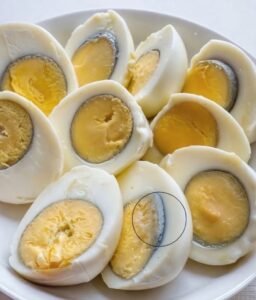
Hard-boiled eggs are one of the simplest and most widely consumed foods in kitchens around the world. They are affordable, rich in protein, easy to prepare, and highly versatile in meals ranging from breakfast plates to salads, sandwiches, and snacks. Despite their simplicity, however, they are also one of the most frequently overcooked foods. A common result of this overcooking is the appearance of a faint green or gray ring around the yolk. While harmless from a food safety perspective, this discoloration often surprises and disappoints home cooks who expect bright yellow yolks and soft, tender whites.
This visual change is more than a cosmetic flaw. It is a clear indication that heat exposure has gone beyond the optimal range for egg preparation. In other words, it reflects a breakdown in timing, temperature control, and cooling technique. Understanding why this happens—and how to prevent it—can significantly improve not only the appearance of boiled eggs but also their flavor, texture, and overall eating quality. The green ring becomes a teaching moment in basic food science, revealing how even simple cooking processes rely on precise chemical balance.
The Science Behind the Green Ring
The formation of the greenish-gray ring around the yolk is caused by a chemical reaction between sulfur and iron compounds naturally present in eggs. The egg white contains sulfur-rich proteins, while the yolk contains iron. Under normal cooking conditions, these compounds remain stable and separated, preserving the egg’s familiar appearance and texture.
However, when eggs are exposed to excessive heat for too long, the sulfur in the egg white begins to break down and release hydrogen sulfide gas. This gas migrates toward the yolk, where it encounters iron. The reaction between hydrogen sulfide and iron produces iron sulfide, a compound responsible for the green or gray discoloration seen around the yolk’s surface.
This reaction is not instantaneous. It requires sustained heat exposure, which is why timing plays such a critical role in boiling eggs. Even after the heat is turned off, the residual temperature inside the egg can remain high enough to continue the reaction. This is why eggs that are left in hot water without immediate cooling are especially prone to developing the green ring. The process is entirely predictable, which means it is also entirely preventable with proper technique.
Understanding this chemical process transforms what might seem like a cooking mistake into a clear example of food chemistry in action. It demonstrates how heat alters protein structures and how small variations in cooking time can significantly change the final result.
Texture, Flavor, and Nutritional Impact
Although the green ring does not make eggs unsafe to eat, it does signal a decline in quality. One of the most noticeable effects of overcooking is texture degradation. A properly cooked egg yolk should be soft, slightly creamy, and smooth. When overcooked, however, it becomes dry, crumbly, and sometimes chalky. The egg white also suffers, becoming rubbery and dense instead of tender and firm.
Flavor is also affected. Overcooked eggs often develop a faint sulfuric taste, which can overpower their natural richness. This is especially noticeable in dishes where eggs are the main ingredient, such as egg salad or deviled eggs. Instead of contributing a creamy, balanced flavor, they can introduce a slightly bitter or metallic note.
Nutritionally, eggs remain a valuable food even when overcooked, but some heat-sensitive nutrients may be reduced in availability. While the protein content remains intact, certain vitamins can degrade under prolonged heat exposure. This means that while the egg still provides energy and essential nutrients, its overall nutritional efficiency is slightly diminished.
Many people unintentionally overcook eggs out of caution, believing that longer cooking ensures safety. However, properly cooked eggs are both safe and more enjoyable when timing is carefully controlled. The green ring serves as a visual reminder that excess heat does not improve safety—it only reduces quality.
Common Misconceptions
There are several misconceptions surrounding the green ring that often lead to confusion. One of the most common is the belief that the ring indicates spoilage or that the egg is unsafe to eat. In reality, the egg remains perfectly safe as long as it has been stored and cooked properly. The discoloration is purely a chemical reaction, not a sign of contamination.
Another misconception is that the green ring is caused by old eggs. While freshness can influence peeling difficulty and texture, it has little to do with the formation of iron sulfide. Even the freshest eggs can develop a green ring if they are overcooked. Conversely, older eggs can be perfectly cooked without any discoloration if handled correctly.
Some people also assume that the color change is unavoidable or random. In truth, it is highly predictable and directly linked to heat exposure and cooling speed. This misunderstanding often prevents people from adjusting their cooking methods, leading to repeated frustration.
By correcting these misconceptions, cooks can approach egg preparation with greater confidence. Instead of relying on guesswork or assumptions, they can focus on measurable factors like time, temperature, and cooling methods.
Preventing the Green Ring
Preventing the green ring is relatively simple and relies on controlling heat exposure and stopping the cooking process at the right moment. One of the most effective methods begins with placing eggs in a single layer in a pot and covering them with cold water. Starting with cold water allows the eggs to heat gradually, reducing the risk of uneven cooking.
Once the water reaches a gentle boil, the pot should be removed from heat and covered. The eggs are then left to sit in the hot water for a specific amount of time depending on their size. Typically, nine to twelve minutes is sufficient for fully cooked yolks without overcooking.
The most critical step comes immediately after cooking: rapid cooling. Transferring the eggs to an ice bath stops the internal cooking process instantly. This prevents residual heat from continuing the chemical reaction that forms iron sulfide. It also improves texture and makes peeling significantly easier by loosening the membrane from the shell.
Another effective technique is controlling boiling intensity. A vigorous boil increases the likelihood of overcooking the outer layers before the center sets properly. A gentle simmer or off-heat steaming method produces more consistent results.
These methods may seem small, but they have a major impact on quality. Precision in timing and temperature transforms boiled eggs from inconsistent to reliably perfect.
Advanced Tips for Better Results
Beyond basic techniques, there are additional strategies that can further improve boiled egg quality. One approach is steaming instead of boiling. Steaming provides more even heat distribution and reduces the risk of overcooking the exterior while the yolk finishes cooking internally.
Another technique involves using slightly older eggs for boiling rather than very fresh ones. While freshness is desirable for frying or poaching, eggs that are a few days old tend to peel more easily after boiling, improving presentation.
Adding a small amount of salt or vinegar to the water does not significantly prevent the green ring, but it can help with shell separation and texture consistency. However, the most important factor remains strict control of cooking time and rapid cooling.
Consistency also improves with practice. Keeping a simple timing routine ensures that eggs are not left in hot water too long, which is the most common cause of overcooking. Even a difference of one or two minutes can noticeably affect the final result.
Culinary Applications and Final Thoughts
Properly cooked eggs are more than just a breakfast item; they are a foundational ingredient in countless dishes. From salads and sandwiches to ramen toppings and appetizer platters, their texture and flavor play a crucial role in overall dish quality. A perfectly cooked egg enhances visual appeal with its bright yolk and clean white, while an overcooked egg can detract from even the most carefully prepared meal.
The green ring, while harmless, serves as an important reminder of how delicate cooking processes can be. It highlights the relationship between heat, time, and chemical transformation in food. By understanding this relationship, cooks gain more control over their results and can consistently produce better meals.
Ultimately, mastering boiled eggs is not about complexity but about attention to detail. Small adjustments in timing and cooling can completely change the outcome. What begins as a simple breakfast food becomes an opportunity to practice precision and improve overall cooking skill. The green ring is not just a flaw—it is a lesson in how to cook with intention, care, and understanding.