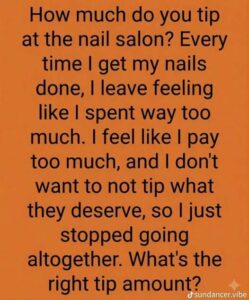
Tipping at a nail salon seems simple until the moment arrives to actually decide how much to leave. Many people confidently choose their manicure style, nail color, or spa treatment, yet suddenly feel uncertain when the payment screen appears. Questions begin to surface immediately. Is 15% enough? Should gel nails require a higher tip? What if the service was expensive already? Is it rude to tip less if the experience was disappointing? And how much should someone leave for complicated nail art or luxury spa services?
These questions are far more common than many people realize. Nail salon etiquette can feel confusing because salon visits combine beauty services, hospitality, personal care, and customer service all at once. Unlike buying a product at a store, a nail appointment involves direct interaction and individualized attention. Nail technicians spend extended periods focusing carefully on one client, often performing detailed and physically demanding work that requires skill, patience, sanitation knowledge, creativity, and precision.
For that reason, tipping has become a deeply established part of salon culture in many countries, especially throughout the United States. Gratuity is generally viewed not only as an optional reward for excellent service, but also as a normal acknowledgment of the technician’s labor and professionalism.
Understanding how tipping works can remove anxiety from salon visits and help clients feel more comfortable and respectful during every appointment.
In most nail salons, the standard recommended tip falls between 15% and 20% of the total service price. This guideline closely mirrors tipping customs in industries such as restaurants, hair salons, spas, and personal grooming services. If a manicure costs $35, for example, a typical tip would usually range from about $5 to $7. If someone spends $100 on acrylics, nail art, and a deluxe pedicure package, a gratuity between $15 and $20 would generally be considered appropriate.
Many clients choose to tip closer to 20% when they regularly visit the same technician or receive especially detailed services. Intricate nail art, hand-painted designs, ombré effects, sculpted acrylics, corrective shaping, and lengthy appointments often involve substantial technical skill and concentration. What may appear effortless during the appointment is usually the result of years of practice and professional experience.
Even basic nail services require more work than many clients initially realize.
A standard manicure may seem quick, but it involves sanitizing tools, preparing the nails properly, trimming cuticles, shaping evenly, applying polish carefully, correcting imperfections, and maintaining a clean workstation throughout the process. Pedicures can require even more physical effort because technicians spend long periods bent over while performing detailed work on feet and lower legs. Spa services may additionally include massage, exfoliation, paraffin wax, moisturizing treatments, or callus removal, all of which increase the time and physical demands of the appointment.
Because of this, tipping is generally expected for nearly all salon services, not only luxury treatments.
Some customers wonder whether tipping is still necessary when salons already charge premium prices. The answer depends partly on how the salon operates, but in many cases technicians do not keep the full amount clients pay for services. Some technicians work on commission structures, while others rent booths or share earnings with salon owners. In many salons, gratuities make up a meaningful percentage of a technician’s total income.
That reality helps explain why tipping carries emotional significance beyond the actual dollar amount itself.
A tip communicates appreciation. It tells the technician that their time, effort, attention to detail, and professionalism were noticed and valued. Over time, consistent tipping can also help strengthen positive relationships between clients and technicians. Many salon customers become loyal to specific nail artists because they trust their work, personality, reliability, and ability to consistently produce satisfying results.
For regular clients, nail appointments often become part of a long-term routine rather than occasional beauty treatments. Some people visit salons every two weeks for years. Familiarity naturally develops through repeated conversations and shared time together. Tipping respectfully becomes part of maintaining that professional relationship.
Of course, not every appointment feels identical, and gratuity often reflects the quality of the experience.
For average or satisfactory service, most clients remain within the standard 15–20% range. Exceptional service may inspire larger gratuities. If a technician accommodates a last-minute appointment, stays late to finish a design carefully, repairs broken nails patiently, or creates especially intricate artwork, many clients feel comfortable tipping above 20%.
Generous tips are also common when technicians demonstrate outstanding customer care. A friendly attitude, attention to comfort, thoughtful communication, and patience with indecisive clients can significantly improve the overall experience. Some customers especially appreciate technicians who remember personal preferences, favorite colors, nail shapes, or sensitivities from previous visits.
At the same time, difficult situations sometimes arise.
Clients occasionally receive rushed services, uneven polish application, poor shaping, chipped nails shortly after an appointment, or uncomfortable interactions with staff. In these situations, many people feel uncertain about what to do regarding gratuity.
Etiquette experts generally recommend handling disappointing experiences calmly and directly whenever possible. If the issue is minor and fixable, politely mentioning the concern often gives the technician an opportunity to correct the problem immediately. Many salons genuinely want customers to leave satisfied and are willing to make adjustments.
If the experience remains poor despite attempts to resolve the issue, reducing the tip may feel appropriate. Some clients choose to leave a smaller gratuity rather than no tip at all, particularly if the technician still spent significant time performing the service. However, severe problems involving rudeness, unsafe sanitation practices, injuries, or extremely poor work may justify withholding gratuity entirely.
Communication matters in these situations.
Leaving without explanation can create confusion, while respectful feedback allows salon staff to understand what went wrong. Calm conversations are often more productive than silent frustration or public confrontation.
Regional culture can also influence salon tipping expectations.
In large metropolitan areas where beauty services are expensive and tipping culture is deeply ingrained, clients may routinely tip above 20%, especially in luxury salons. In smaller towns or regions with lower service pricing, gratuity expectations may feel slightly more relaxed. Internationally, customs vary even more dramatically. Some countries include service charges automatically, while others do not emphasize tipping as strongly as North America does.
Within the United States, however, nail salon tipping remains widely expected and culturally normalized.
Another common question involves splitting gratuities among multiple technicians. Some salons assign separate staff members for manicures, pedicures, massages, waxing, or nail art. In those cases, clients typically divide the tip proportionally between the individuals who contributed to the appointment.
Some salons pool tips collectively among employees, while others allow technicians to keep individual gratuities separately. Clients uncertain about salon policy can simply ask at checkout how tips are handled.
Holiday tipping is another topic that frequently appears among loyal salon clients.
Customers who visit the same technician consistently throughout the year sometimes provide additional holiday gratuities as a seasonal gesture of appreciation. There is no universal rule for the amount, but many clients choose to give the equivalent cost of one appointment or provide a larger-than-usual tip during the holiday season. Others may pair smaller cash tips with handwritten cards, gift cards, or thoughtful presents.
These gestures are rarely required, but they are often appreciated because they recognize the long-term relationship built over repeated visits.
Technology has also changed modern tipping culture significantly.
Many salons now use digital payment systems that automatically display suggested gratuity percentages during checkout. These screens can feel convenient for some customers but uncomfortable for others. Suggested tip amounts may appear surprisingly high, especially after expensive services involving multiple treatments.
Clients should remember that gratuity remains voluntary, even when payment systems create social pressure. The purpose of tipping is to express appreciation thoughtfully and fairly, not to force customers into financial discomfort or guilt.
Budgeting ahead can help eliminate awkwardness entirely.
Many people underestimate the final cost of salon visits because they forget to include gratuity when planning expenses. Someone budgeting $60 for nails may feel stressed if the total unexpectedly rises to $72 after tip. Factoring gratuity into the expected cost beforehand allows clients to relax and enjoy the experience without financial anxiety at checkout.
This becomes especially important for luxury services such as acrylic sets, detailed nail art, spa pedicures, or combined beauty appointments that can become expensive quickly.
Interestingly, tipping culture also reflects something deeper about human interaction and personal care.
Beauty appointments often involve vulnerability in subtle ways. Clients place their hands and feet into another person’s care while spending extended periods in close physical proximity. Conversations during appointments may remain casual and lighthearted, but they can also become deeply personal. For many people, salon visits function as moments of relaxation, emotional decompression, self-care, or confidence restoration.
The technician’s role extends beyond simply applying polish.
A skilled nail technician contributes to how clients feel about themselves afterward. Clean, polished nails can increase confidence before important events, job interviews, weddings, vacations, celebrations, or professional meetings. Some clients visit salons specifically to improve their mood during stressful periods or difficult personal circumstances.
That emotional dimension partly explains why tipping often feels personal rather than purely transactional.
A generous gratuity can communicate gratitude not only for technical skill but also for kindness, patience, professionalism, creativity, or emotional warmth during the appointment. Many technicians remember respectful and appreciative clients long after individual appointments end.
At the same time, clients should never feel pressured to exceed their financial comfort zone simply out of fear of judgment. Reasonable, consistent tipping matters far more than dramatic or performative generosity. Courtesy and respect often leave stronger impressions than occasional extravagance.
There are also several practical situations where tipping expectations become less clear.
One common question involves salon owners. Traditionally, some etiquette rules suggested that salon owners did not need tips because they already benefited directly from business profits. However, modern beauty industry practices have evolved considerably. Today, many clients still tip salon owners when they personally perform hands-on services.
In most modern salons, offering standard gratuity to an owner who completed the service is considered completely acceptable unless the salon specifically discourages it.
Discounted services create another area of uncertainty.
If someone uses a coupon, receives a promotional discount, or books a special package deal, many etiquette professionals recommend calculating the tip based on the original service value rather than the discounted amount. For example, if a pedicure normally costs $70 but is temporarily discounted to $50, tipping based on the original price acknowledges the technician’s full effort regardless of promotional pricing.
The same logic often applies to gift certificates.
If a friend gives someone a manicure gift card covering the service cost, the recipient is still generally expected to provide gratuity separately. Since technicians still performed the full service, tips remain appropriate even when the client personally paid little or nothing out of pocket.
Group appointments introduce additional considerations.
Bridal parties, birthday celebrations, and spa events frequently involve multiple technicians working simultaneously to accommodate larger groups. Some salons automatically include gratuity in the final bill for group services. Clients should review receipts carefully before adding extra tips to avoid accidental double tipping.
Still, if the service was exceptional, some groups choose to add additional gratuity voluntarily beyond the automatic amount.
Another increasingly common issue involves cash versus digital tipping.
Many technicians prefer cash tips because they receive them immediately and avoid processing delays or tax complications connected to card systems. However, digital tipping has become extremely common, especially in salons using touchscreen payment devices.
If clients are unsure whether digital gratuities reach technicians directly, asking politely can provide clarity. Carrying small amounts of cash for salon visits also remains useful, particularly in smaller establishments.
Timing matters as well.
Most clients tip at the end of the appointment during checkout, but some choose to hand gratuity directly to the technician rather than leaving it with front desk staff. Offering the tip personally can feel more sincere and appreciative, especially for regular clients.
Children’s nail services sometimes create confusion too.
Parents often wonder whether tipping expectations change for smaller or lower-cost services performed for children. In most cases, standard percentages still apply because the technician performs essentially the same work regardless of the client’s age.
There is also the question of frequency.
People who visit salons regularly may occasionally feel tempted to reduce gratuity because repeated appointments become expensive over time. However, consistency matters in professional service relationships. Reliable tipping helps build goodwill and encourages attentive long-term care.
Regular clients who consistently treat technicians respectfully often benefit from stronger professional relationships, greater scheduling flexibility, personalized recommendations, and extra attention to detail during appointments.
On the other hand, clients should never tolerate poor treatment simply because they feel socially obligated to maintain loyalty. Respect should operate both ways. A healthy salon relationship depends on professionalism from both client and technician.
The broader debate surrounding tipping culture continues in many industries, including beauty services. Some critics argue that employers should pay higher wages directly rather than relying heavily on customer gratuities. Others believe tipping allows clients to reward excellent work individually and provides technicians opportunities to increase earnings through strong performance and customer relationships.
Regardless of these larger economic discussions, current salon culture in many places still treats tipping as an expected norm.
For clients, understanding that reality simply helps avoid awkward misunderstandings and promotes smoother experiences overall.
Ultimately, there is no perfect mathematical formula capable of covering every salon situation. Human interactions vary widely. Some appointments feel quick and routine. Others involve extraordinary effort, emotional support, creativity, flexibility, or problem-solving.
The best tipping decisions usually combine awareness of cultural expectations with honest reflection about the quality of the service received.
For most people, remembering the standard 15–20% guideline resolves the majority of uncertainty. From there, adjustments can reflect complexity, satisfaction, loyalty, timing, and personal budget.
What matters most is approaching the interaction thoughtfully and respectfully.
Nail technicians perform skilled labor that is often underestimated simply because beauty services have become such a routine part of modern life. Yet behind every polished manicure, sculpted acrylic set, detailed floral design, or relaxing pedicure sits real physical effort, artistic ability, technical precision, and sustained concentration.
Technicians spend long hours working with small tools, chemicals, repetitive motions, and demanding schedules. They maintain sanitation standards, manage customer expectations, solve nail problems, and provide personalized care throughout each appointment. Fair tipping recognizes that work and helps support the professionalism of the beauty industry overall.
And perhaps that explains why gratuity continues to matter so strongly despite ongoing cultural debates about tipping itself.
At its best, tipping is not about pressure, guilt, or obligation. It is about acknowledgment. It is a small but meaningful gesture communicating appreciation for someone else’s time, attention, and care.
A thoughtful tip quietly says:
I noticed your effort.
I appreciated your skill.
And I value the experience you helped create.
In the end, that sense of recognition often matters just as much as the money itself.