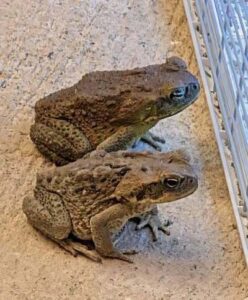
Finding a toad inside your home, near your doorway, or somewhere in your yard can feel unexpected at first. For many people, the sudden appearance of a small amphibian in a place normally associated with daily routines and human activity immediately creates curiosity. Some react with surprise, others with concern, and many instinctively search for deeper meaning behind the encounter. Yet in most cases, the explanation is far simpler and far more connected to the natural world than anything mysterious or supernatural.
A toad’s presence is usually not an omen, a warning, or a strange coincidence.
It is nature quietly continuing to function around us.
Toads are amphibians, meaning their survival depends heavily on moisture and environmental balance. Unlike mammals or reptiles, their skin is highly permeable, allowing them to absorb water directly from their surroundings. Because of this, they naturally seek out cool, damp, and shaded areas where they can avoid dehydration and remain protected from extreme temperatures or dry conditions.
Human homes and yards often unintentionally provide exactly those conditions.
A shaded porch, a damp basement, a cool garage floor, a flower garden, a leaking outdoor faucet, or even the moisture around air conditioning systems can create ideal environments for a toad searching for shelter. During periods of heat, drought, or sudden weather changes, toads instinctively move toward spaces that offer stability and protection. From the animal’s perspective, your property may simply appear to be part of a safe habitat.
In many situations, a toad does not intentionally “invade” a home in the dramatic way people sometimes imagine. It may wander through an open door, slip beneath a small gap, or follow insects attracted by lights near entryways at night. Outdoor lighting naturally attracts mosquitoes, moths, flies, and other insects, and where insects gather, predators often follow. For a toad, a porch light surrounded by bugs can seem like an easy feeding opportunity rather than a human-controlled space.
Despite the surprise their appearance may cause, toads are harmless creatures.
They are not aggressive, and they generally avoid interaction with humans whenever possible. Most toads will remain completely still when discovered, relying on camouflage and stillness as protection from predators. If approached, they typically attempt to retreat quietly rather than defend themselves.
Their primary concerns are simple survival needs:
Finding moisture.
Finding food.
Avoiding danger.
In fact, having a toad nearby can actually provide significant benefits, particularly in outdoor spaces and gardens. Toads are highly effective natural pest controllers. Their diets consist mainly of insects and other small invertebrates, many of which humans consider pests. Mosquitoes, beetles, ants, flies, slugs, moths, and various garden insects all become food sources for toads.
A single toad can consume dozens of insects in one evening.
Without chemicals, traps, or pesticides, they quietly help maintain ecological balance in the environment around them. For gardeners especially, this natural pest control can be extremely valuable. By reducing populations of harmful insects, toads contribute to healthier plants and more balanced ecosystems while supporting biodiversity naturally.
This ecological role is one reason toads are often considered important environmental indicators.
Amphibians are among the most environmentally sensitive creatures on Earth. Because their skin absorbs substances directly from air, soil, and water, they are especially vulnerable to pollution, pesticides, habitat destruction, and climate changes. Even relatively small environmental disruptions can impact amphibian populations quickly.
As a result, toads and other amphibians tend to thrive primarily in environments where ecological conditions remain relatively balanced and healthy.
If a toad appears regularly in your yard or around your property, it may actually indicate something positive about the surrounding environment. It can suggest that local water sources remain relatively clean, that soil conditions are not heavily contaminated, and that enough biodiversity exists to support functioning food chains and natural life cycles.
In this way, a toad becomes more than simply an unexpected visitor.
It becomes evidence that nature is still active and functioning around us.
Modern life often creates the illusion that human environments exist separately from the natural world. Cities, roads, buildings, and technology can make people feel disconnected from ecosystems and wildlife. Yet moments like encountering a toad indoors quietly remind us that nature continuously adapts around human spaces rather than disappearing entirely.
Animals adjust.
Plants adapt.
Life finds ways to continue even within developed environments.
A toad sitting quietly near a doorway or tucked into a shaded corner reflects this ongoing relationship between human life and the surrounding ecosystem.
Beyond ecology and biology, toads have also carried symbolic meanings throughout human history. Across many cultures and traditions, amphibians have represented transformation, adaptability, renewal, and resilience. Their life cycle naturally encourages symbolic interpretation because they undergo one of the most visible transformations found in nature.
A toad begins life as a tadpole living entirely underwater before gradually transforming into a land-dwelling amphibian capable of surviving in multiple environments. This dramatic change has long inspired associations with personal growth, transition, and adaptation.
In many traditions, seeing a toad is viewed as a reminder that change is a natural part of life.
Just as the amphibian moves through entirely different stages of existence, humans also experience periods of transition that require adjustment, patience, and resilience. While these interpretations are symbolic rather than scientific, they reveal how deeply humans have historically connected meaning to the natural world around them.
In some cultural traditions, especially within Feng Shui and certain Eastern belief systems, toads are associated with prosperity, fortune, and abundance. Decorative statues of three-legged toads holding coins are commonly used as symbols intended to attract wealth or positive energy into homes and businesses. These practices reflect the idea that animals can become representations of larger emotional or spiritual concepts within human culture.
Other traditions associate amphibians with cleansing energy or emotional balance because they inhabit both wet and dry environments, symbolically bridging different worlds or states of being. Again, whether one personally believes in symbolic meanings or not, these cultural interpretations highlight humanity’s long-standing tendency to observe nature not only scientifically but emotionally and spiritually as well.
On a more personal level, encounters with animals like toads can also encourage mindfulness.
Modern life moves quickly.
Schedules, technology, stress, and constant stimulation often leave little room for stillness or observation. Small moments involving wildlife interrupt that pace unexpectedly. Seeing a toad quietly sitting in a garden or moving slowly across a porch can become a brief reminder that not all life operates through urgency and noise.
Toads move deliberately.
They wait patiently.
They survive quietly.
And in doing so, they often draw attention to parts of nature many people overlook entirely.
For children especially, these encounters can become important early experiences with wildlife and environmental awareness. A child discovering a toad in the yard may become curious about ecosystems, animal behavior, or conservation in ways that textbooks alone rarely inspire. These small interactions often help build appreciation for biodiversity and encourage respect for even the smallest forms of life.
If a toad does appear inside the home, the best response is usually simple and gentle.
There is no reason for panic or harm.
Using gloves or a container, the toad can carefully be guided back outdoors into a shaded, moist area where it will be safer and more comfortable. Handling should always remain gentle because amphibians are delicate creatures, and their sensitive skin can easily become injured or contaminated by chemicals or oils from human hands.
Preventing future visits can usually be accomplished without harming the surrounding ecosystem. Sealing small gaps around doors, reducing bright outdoor lighting near entrances, and limiting moisture buildup around foundations can make homes less attractive to wandering amphibians. At the same time, maintaining outdoor environments that support healthy wildlife populations helps ensure toads remain outside where they naturally belong and continue contributing beneficially to the ecosystem.
Importantly, a toad’s presence should not automatically be viewed negatively.
Many people instinctively fear animals they do not encounter often, especially creatures associated with myths, superstitions, or unfamiliar appearances. Toads have historically suffered from this misunderstanding. Their rough skin and nocturnal habits sometimes led cultures to unfairly associate them with bad luck or discomfort.
In reality, they are peaceful, ecologically valuable creatures simply trying to survive.
They do not seek conflict.
They do not intentionally disrupt homes.
And they play an essential role in maintaining environmental balance.
Ultimately, encountering a toad indoors or around your property is less about mystery and more about connection.
It reflects the quiet reality that humans remain part of larger ecosystems even when surrounded by walls, roads, and modern conveniences. Nature does not fully disappear simply because environments become developed. Instead, it adapts, shifts, and continues finding ways to exist alongside us.
A toad crossing your path may simply be searching for moisture.
Or shelter.
Or food.
But at the same time, its presence can also serve as a subtle reminder that life around us remains interconnected in ways people often forget.
That homes are never entirely separate from the natural world.
That environmental balance still matters deeply.
And that even the smallest creatures contribute meaningfully to the ecosystems we all depend upon.
In the end, a toad is not something to fear or overanalyze.
It is a living reflection of survival, adaptation, and ecological balance.
A quiet visitor reminding us that nature still exists just beyond — and sometimes within — the boundaries we create for ourselves.
And perhaps that is what makes the encounter meaningful after all.