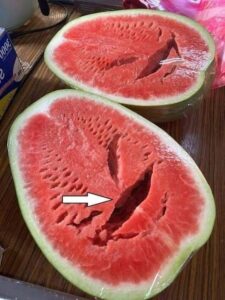
Few summer experiences are as satisfying as slicing open a ripe watermelon on a warm afternoon. The crisp texture, refreshing sweetness, and vibrant color make watermelon one of the most beloved seasonal fruits around the world. Yet that enjoyment can quickly turn into concern when the knife reveals something unexpected inside. Cracks running through the flesh, hollow spaces, separated sections, or unusual textures often cause people to question whether the fruit is safe to eat.
The internet has amplified these concerns. Photos of cracked watermelons frequently circulate on social media accompanied by alarming claims that the fruit contains dangerous chemicals, excessive growth stimulants, or harmful contaminants. Some posts warn consumers to discard any watermelon showing internal cracks immediately. Others suggest that the appearance is proof of unsafe farming practices or hidden health risks.
While such warnings attract attention, the reality is considerably more complex. Internal cracking is not uncommon in watermelons and can occur for a variety of reasons. In many cases, the explanation is entirely natural and poses no threat to human health. Environmental conditions, growing patterns, weather fluctuations, harvesting practices, transportation stress, and ripening processes can all contribute to structural changes inside the fruit.
Understanding the true causes of watermelon cracking helps consumers make informed decisions rather than reacting out of fear. Instead of assuming the worst, it is possible to evaluate the fruit based on objective signs of quality, freshness, and spoilage. This approach protects both health and peace of mind while reducing unnecessary food waste.
Why Do Watermelons Develop Internal Cracks?
Watermelons are composed primarily of water. Their rapid growth and high moisture content make them particularly sensitive to environmental changes during development.
One of the most common causes of internal cracking is irregular watering.
When watermelon plants experience a period of drought or limited moisture followed by heavy rainfall or intensive irrigation, the fruit may absorb water rapidly. The flesh expands quickly, but internal structures may not adjust evenly. As a result, small cracks or hollow spaces can develop.
This phenomenon is similar to what happens in certain tomatoes and other fruits that experience sudden growth spurts after periods of dryness.
Internal cracking is therefore often a consequence of environmental stress rather than contamination.
In many cases, the fruit remains perfectly edible despite these cosmetic imperfections.
The Impact of Weather Conditions
Weather plays a major role in watermelon development.
Farmers cannot fully control temperature changes, rainfall patterns, humidity levels, or seasonal fluctuations. These environmental variables influence how fruit forms and matures.
Sudden temperature swings can place stress on developing watermelons. Extreme heat followed by cooler periods may affect internal growth rates and tissue structure.
Likewise, excessive rainfall can lead to rapid water uptake.
Strong winds, storms, and other weather events may also contribute indirectly by affecting plant health and fruit development.
Because watermelons grow outdoors in dynamic conditions, some degree of variation is natural and unavoidable.
Consumers often expect produce to appear flawless, but nature rarely produces perfect uniformity.
Overripeness and Internal Separation
Another common explanation for cracks is overripeness.
As a watermelon remains on the vine beyond peak maturity, its internal structure may begin to weaken. The flesh can soften, and natural separations may develop.
An overripe watermelon might display:
- Hollow sections.
- Large internal cracks.
- Softer texture.
- Excessive juiciness.
- Reduced crispness.
These changes affect eating quality more than safety.
Although the fruit may not taste as fresh or appealing, internal cracking alone does not automatically indicate spoilage.
Evaluating smell, texture, and appearance remains essential before deciding whether to consume or discard it.
Harvesting and Transportation Stress
The journey from farm to table can be surprisingly demanding.
Watermelons are harvested, loaded, transported, unloaded, stored, displayed, and eventually purchased by consumers.
During this process, physical impacts can occur.
Dropping, bumping, stacking, or rough handling may create internal damage that is not immediately visible from the outside.
Sometimes the rind remains intact while the flesh inside develops cracks or separations.
These structural changes may affect texture but do not necessarily indicate contamination or health risks.
Proper transportation practices help minimize such damage, but some imperfections are inevitable when handling large quantities of fresh produce.
Understanding Hollow Heart
One condition frequently associated with cracked watermelons is known as “hollow heart.”
Hollow heart refers to internal gaps or cavities that form when fruit development becomes uneven.
This condition is often linked to pollination issues during flowering.
When pollination is incomplete, parts of the fruit may develop differently, creating spaces inside the flesh.
Despite its unusual appearance, hollow heart is generally considered harmless.
Watermelons affected by hollow heart may still be sweet, nutritious, and safe to eat.
The primary concern is usually texture rather than safety.
Consumers may notice reduced firmness or less consistent flesh throughout the fruit.
The Role of Plant Growth Regulators
Discussions about cracked watermelons frequently mention plant growth regulators, particularly chlorfenuron.
Chlorfenuron belongs to a class of compounds known as cytokinins, which promote cell division and growth in certain plants.
Some growers have used growth regulators to improve fruit size and production efficiency.
Critics argue that rapid growth stimulated by such substances may contribute to hollow centers or internal cracking.
However, the presence of cracks does not prove that growth regulators were used.
Natural environmental factors often produce similar results.
Furthermore, regulatory policies regarding chlorfenuron vary among countries. Some regions restrict or prohibit its use, while others permit carefully controlled applications under specific guidelines.
Consumers should recognize that agricultural science is often more nuanced than viral social media claims suggest.
Separating Facts From Fear
Food-related rumors spread quickly because they involve personal health and family safety.
When photographs of unusual fruits appear online, people naturally seek explanations.
Unfortunately, dramatic claims often gain more attention than balanced information.
Many viral posts suggest that every cracked watermelon contains harmful chemicals or dangerous substances.
There is no evidence supporting such a blanket conclusion.
Internal cracking alone cannot determine:
- Whether chemicals were used.
- Whether contamination occurred.
- Whether the fruit is unsafe.
- Whether health risks exist.
Meaningful conclusions require evidence rather than assumptions.
Visual appearance is only one piece of a much larger picture.
How to Evaluate a Watermelon Safely
Consumers can use several practical methods to assess watermelon quality.
Check the Smell
Fresh watermelon should have a mild, pleasant aroma.
A sour, fermented, alcoholic, or foul smell may indicate spoilage.
Examine the Texture
Healthy flesh is usually firm, crisp, and juicy.
Warning signs include:
- Sliminess.
- Mushiness.
- Excessive softness.
- Unusual wetness.
Look for Mold
Visible mold growth is a clear indication that the fruit should be discarded.
Evaluate the Taste
If the watermelon tastes fermented, bitter, or otherwise abnormal, it is best not to continue eating it.
Observe the Color
Healthy watermelon flesh generally appears vibrant and evenly colored.
Minor variations are normal, but widespread discoloration may indicate deterioration.
These observations often provide more useful information than internal cracks alone.
The Importance of Proper Food Handling
Even perfectly healthy watermelons can become unsafe if handled improperly.
Food safety begins before the fruit is cut.
Consumers should:
- Wash the rind thoroughly.
- Use clean knives.
- Sanitize cutting surfaces.
- Refrigerate sliced portions promptly.
- Avoid prolonged exposure to room temperature.
The rind serves as a protective barrier between the environment and the edible interior.
However, bacteria on the outside can be transferred to the flesh during cutting.
Good kitchen hygiene remains one of the most effective ways to reduce foodborne illness risk.
Hazard Versus Risk
A concept often overlooked in food discussions is the distinction between hazard and risk.
A hazard refers to something that has the potential to cause harm under certain circumstances.
Risk refers to the likelihood that harm will actually occur.
Many substances can be hazardous at extremely high doses while posing little practical risk at typical exposure levels.
This principle guides modern food safety regulation.
Government agencies establish safety limits based on extensive scientific evaluation.
The goal is to keep exposure levels far below thresholds associated with adverse effects.
Understanding this distinction helps consumers evaluate information more rationally.
Why Social Media Often Amplifies Fear
Social media platforms reward content that generates strong emotional reactions.
Fear, surprise, and outrage often receive more engagement than careful analysis.
As a result, unusual images of produce frequently become associated with alarming claims.
A photograph of a cracked watermelon may attract thousands of comments from people speculating about hidden dangers.
Yet a photograph alone rarely provides enough information to determine the true cause.
Environmental stress, pollination issues, transportation damage, overripeness, and numerous other factors can produce similar appearances.
Responsible evaluation requires context rather than assumptions.
What If You Already Ate the Watermelon?
Many people discover online warnings after consuming part of a watermelon.
This often creates anxiety.
Fortunately, eating a watermelon with internal cracks is unlikely to cause harm if the fruit otherwise appeared fresh and showed no signs of spoilage.
Most digestive issues linked to watermelon are more likely to result from:
- Improper storage.
- Bacterial contamination.
- Foodborne pathogens.
- Individual digestive sensitivity.
A one-time exposure to a watermelon with harmless internal cracking generally does not represent a serious health concern.
When to Seek Medical Attention
Although most situations are harmless, certain symptoms should always receive medical evaluation.
These include:
- Severe vomiting.
- Persistent diarrhea.
- Difficulty breathing.
- Facial swelling.
- Severe allergic reactions.
- Neurological symptoms.
- Signs of dehydration.
These symptoms warrant professional medical assessment regardless of the suspected cause.
Prompt attention helps ensure appropriate treatment and peace of mind.
Nutritional Benefits of Watermelon
Amid discussions about imperfections, it is easy to overlook the many benefits watermelon provides.
Watermelon contains:
- High water content.
- Vitamin C.
- Vitamin A.
- Potassium.
- Antioxidants.
- Lycopene.
- Beneficial plant compounds.
Its hydrating properties make it especially appealing during warm weather.
For many families, watermelon remains an enjoyable and nutritious part of a balanced diet.
Minor cosmetic imperfections should not overshadow these positive qualities.
Embracing Informed Decision-Making
Modern consumers have access to more information than ever before.
Unfortunately, not all information is equally reliable.
The best approach combines:
- Critical thinking.
- Practical observation.
- Trusted scientific sources.
- Common-sense food safety practices.
Rather than responding to every unusual appearance with fear, consumers can evaluate evidence carefully and make informed decisions.
This balanced mindset reduces anxiety while maintaining appropriate caution.
Conclusion
Finding cracks inside a watermelon can certainly be surprising, but it is not automatically a sign of danger. Internal cracking often results from natural factors such as irregular watering, weather fluctuations, pollination issues, transportation stress, or overripeness. While these conditions may affect texture or appearance, they do not necessarily indicate contamination or health risks.
The most reliable way to evaluate a watermelon is through practical observation. Fresh smell, firm texture, vibrant color, and the absence of mold or fermentation are far more meaningful indicators of quality than cracks alone. Good food-handling practices and proper storage further reduce potential risks.
Ultimately, understanding the reasons behind internal watermelon cracks allows consumers to replace fear with knowledge. Instead of assuming the worst, people can assess each fruit individually and make thoughtful choices based on evidence. By doing so, they protect both their health and their ability to enjoy one of summer’s most refreshing and nutritious fruits.