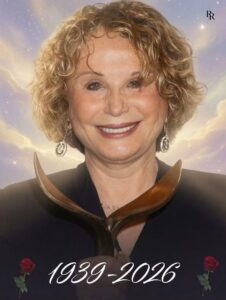
Fans of daytime television are mourning the death of actress, writer, and producer Ellen Weston, who has died at the age of 87, closing a career that stretched across more than six decades of American television history. Weston passed away on May 28 at Cedars-Sinai Medical Center in Los Angeles, according to her longtime friend and manager Susan Zachary. Her death marks the end of an era for a performer whose work bridged the golden age of network television, the rise of daytime soap operas, and the evolving world of modern serialized drama.
Weston’s name became familiar to millions of viewers through her memorable role as Suzanne Thurston on the long-running soap opera The Young and the Restless, where she appeared from 1979 to 1981. Though her time on the show represented only a portion of her extensive career, it solidified her place in the landscape of daytime television during one of its most influential periods. Her portrayal of Suzanne Thurston brought a blend of emotional complexity and restrained intensity that resonated with audiences who followed the show’s intricate storylines day after day.
Born in a period when television itself was still finding its identity, Weston entered the entertainment industry at a time when opportunities for women were often limited and highly competitive. She trained as a performer with a deep respect for stagecraft, dialogue, and character-driven storytelling. Those early influences would later shape not only her acting but also her writing and production work, which became an increasingly important part of her professional life as her career evolved.
Before achieving recognition on The Young and the Restless, Weston had already established herself as a familiar face in the soap opera world. She portrayed Robin Fletcher on Guiding Light, one of the longest-running dramatic series in broadcast history. Her work on Guiding Light helped her develop a strong understanding of the demanding production pace that defined daytime television, where actors were often required to memorize large volumes of dialogue and deliver emotionally charged performances on tight schedules.
She later appeared on Another World, further cementing her reputation as a reliable and compelling presence in serialized storytelling. Weston’s ability to move between roles in different soap operas reflected both her versatility and the trust that producers placed in her talent. She became part of a generation of actors who helped define the tone and emotional structure of daytime drama during its peak popularity in American culture.
In addition to her soap opera work, Weston built an impressive list of guest appearances across some of the most iconic television series of the 1960s, 70s, and 80s. Her credits include appearances on Get Smart, Bewitched, Wonder Woman, Mannix, and The Bob Newhart Show. Each of these roles, though often brief, showcased her adaptability and range, allowing her to step into comedic, dramatic, and genre-driven worlds with ease.
Industry colleagues often described Weston as a performer who brought seriousness and preparation to every role, regardless of its size. In an era when television production moved quickly and guest actors were frequently rotated in and out of episodes, Weston stood out for her ability to create memorable impressions in limited screen time. Casting directors reportedly valued her professionalism and consistency, qualities that made her a dependable presence across multiple decades of television production.
As her acting career developed, Weston expanded her work behind the camera. She transitioned into writing and producing, roles that allowed her to shape stories from their earliest conception rather than solely interpreting them as an actress. This shift reflected a broader trend in Hollywood during the latter half of the 20th century, as more performers sought creative control and long-term influence within the industry.
Weston’s writing contributions were marked by the same attention to character psychology that defined her acting. She had a particular interest in moral ambiguity, family conflict, and emotional realism—core elements that also defined the soap opera genre. Colleagues noted that she had a strong sense of narrative pacing, likely informed by years of working in daytime television’s fast-moving production environment.
Her work as a producer further demonstrated her understanding of the collaborative nature of television storytelling. Weston was known for her ability to bridge the gap between creative teams, ensuring that writers, directors, and actors were aligned in their interpretation of character arcs and emotional tone. This behind-the-scenes influence contributed to the stability and coherence of several projects she worked on later in her career.
Despite her professional achievements, Weston remained relatively private about her personal life. Friends and colleagues describe her as thoughtful, observant, and deeply committed to her craft. She was not known for seeking publicity or celebrity status, instead focusing on the work itself and the relationships she built within the industry.
Her manager, Susan Zachary, reflected on Weston’s passing by emphasizing both her artistic dedication and her humility. “Ellen cared deeply about storytelling,” Zachary said. “She believed that even the smallest role could carry emotional truth. That belief guided everything she did.”
The news of Weston’s death prompted an outpouring of remembrance from fans of classic television and longtime viewers of daytime drama. Many recalled growing up watching her performances, particularly during the late 1970s and early 1980s when soap operas were a dominant force in American household entertainment. In an era before streaming and on-demand viewing, characters like those Weston portrayed became part of daily routines for millions of viewers.
Television historians have noted that Weston’s career reflects a broader evolution in the entertainment industry. She began working during a time when television was still heavily influenced by theatrical traditions, moved through the rise of serialized daytime storytelling, and eventually adapted to the more fragmented, genre-diverse landscape of modern television. Her ability to remain active and relevant across these shifts speaks to both her adaptability and her understanding of the medium.
Colleagues from The Young and the Restless have described her contribution to the show as steady and grounding. Though not always at the center of the most explosive storylines, her character provided emotional continuity within a complex narrative structure. In soap operas, where storylines often span years or even decades, such roles are essential to maintaining audience connection.
Weston’s work on The Young and the Restless also coincided with a period of growth for the show itself, as it expanded its audience and solidified its position as one of the most-watched daytime dramas in the United States. Her presence during this period contributed to the show’s ability to balance personal drama with broader social themes, a hallmark of its enduring success.
In later years, Weston continued to be involved in creative projects, though she gradually stepped away from on-screen appearances. Those who worked with her during this period describe her as reflective and engaged, often offering insight into how television production had changed over time. She remained particularly interested in how new generations of writers and actors were redefining serialized storytelling.
Even as she moved away from regular acting roles, Weston maintained connections within the industry, attending occasional events and supporting colleagues’ projects. Her legacy, however, remained most strongly tied to her decades of work in front of and behind the camera, where she contributed to some of television’s most enduring formats.
Her passing marks the end of a career that not only spanned an impressive length of time but also intersected with multiple defining eras of American television. From black-and-white broadcasts to color programming, from tightly structured episodic dramas to sprawling serialized narratives, Weston witnessed—and helped shape—significant changes in how stories were told on screen.
She is survived by close friends, extended family, and a wide community of colleagues and fans who continue to celebrate her work. While her name may not always appear in headlines alongside the most widely recognized television stars of her era, her influence is preserved in the countless episodes, characters, and stories she helped bring to life.
As viewers revisit classic episodes of The Young and the Restless, Guiding Light, and her many guest appearances across iconic series, Weston’s presence remains embedded in the fabric of television history. Her performances continue to serve as a reminder of the craft, discipline, and emotional depth that defined a generation of actors who built the foundation of modern television storytelling.
Ellen Weston’s life in television was not defined by a single role, but by a steady accumulation of work that reflected both talent and endurance. In an industry known for constant change, she remained a consistent and respected figure, leaving behind a legacy that spans genres, decades, and audiences.
Her story, like the best of the soap operas she helped shape, is one of continuity, transformation, and enduring human connection.