A traveler named Daniel had been looking forward to his long-awaited vacation for months. Everything about the journey seemed routine—he arrived at the airport early, checked his luggage, and settled near the departure gate with his boarding pass in hand.
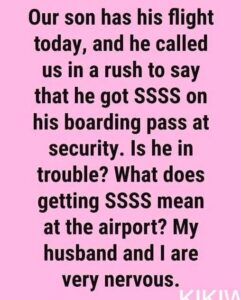
While reviewing his ticket, he noticed something unusual printed among the familiar details of his flight information: the letters “SSSS.”
At first, he assumed it was a technical error or some internal airline reference that didn’t matter to passengers. But as he looked around the terminal, he began to feel uneasy. Other travelers moved smoothly through security, while his boarding pass seemed to draw extra attention when scanned.
When Daniel reached the security checkpoint, the agent looked at the screen, paused briefly, and then directed him to a separate screening lane.
That’s when he learned what the code actually meant.
What “SSSS” Stands For
The letters SSSS stand for Secondary Security Screening Selection. It is a designation used in airport security systems, primarily in the United States, to indicate that a passenger has been selected for additional screening procedures.
It does not mean the traveler has done anything wrong, nor does it indicate suspicion of a specific threat. Instead, it is part of a broader security system designed to add an extra layer of inspection for randomly or algorithmically selected passengers.
What Extra Screening Involves
Passengers flagged with this designation may experience additional steps before boarding, such as:
- A more thorough pat-down by security personnel
- Additional inspection of carry-on luggage
- Swabbing of hands, electronics, or personal items for trace detection
- More detailed questioning about travel plans
While these procedures can take extra time, they are generally routine and do not require any action from the passenger beyond cooperation.
Why Some Travelers Are Selected
The exact criteria used to assign the SSSS code are not publicly disclosed. However, aviation security experts explain that selection can be influenced by a combination of factors, including:
- Random selection for security coverage
- One-way international itineraries
- Last-minute ticket purchases or changes
- Payment methods that trigger additional review
- Matches to security watchlist algorithms (not necessarily indicating wrongdoing)
Because the system is partially automated, many passengers receive the designation randomly without any clear reason.
How It Affected Daniel’s Experience
For Daniel, the process added an unexpected delay to his journey. His carry-on bag was carefully inspected, his electronics were swabbed, and he was asked a few additional questions about his travel plans.
Although the situation initially felt alarming, the staff remained professional and courteous throughout the process. Within a short time, he was cleared to continue to his gate.
Once he understood what the code meant, the anxiety faded. What had seemed like a mysterious warning was simply part of standard aviation security protocol.
What Travelers Should Know
Seeing “SSSS” on a boarding pass can be unsettling if you don’t recognize it. However, it is important to remember:
- It is not a punishment or accusation
- It does not prevent you from traveling
- It is usually random and system-generated
- It only means extra screening, not denied access
For most travelers, it appears only occasionally—if at all—and does not affect their overall travel history.
The Bottom Line
What Daniel initially feared was a hidden problem turned out to be a routine security procedure. While the “SSSS” code may look mysterious on a boarding pass, it is simply part of the layered systems used to keep air travel secure.
In the end, his journey continued as planned—just with a slightly longer stop at security and a better understanding of how modern airports quietly operate behind the scenes.