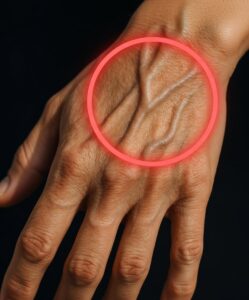
Noticing swollen or prominent veins on your hands, arms, legs, or feet can be surprising. For some people, these veins have always been visible, while for others they become more noticeable with age or changes in lifestyle. Although bulging veins are often harmless, they can sometimes point to an underlying issue that deserves medical attention.
Veins play an essential role in carrying blood back to the heart. They constantly respond to changes in blood flow, body temperature, hydration, physical activity, and overall circulation. As a result, the appearance of your veins can change from day to day.
There are several common reasons why veins become more visible. Regular exercise, particularly strength training, increases blood flow to working muscles and can temporarily make veins stand out. Hot weather causes blood vessels to widen, which may also make veins appear larger. People with lower body fat or thinner skin often have naturally visible veins, especially on the hands and forearms.
Aging is another common factor. As the skin gradually becomes thinner and loses some of its elasticity, the veins beneath it may become easier to see. This change is usually a normal part of getting older and does not necessarily indicate a health problem.
In some cases, however, swollen veins may be related to varicose veins. Varicose veins develop when the valves inside the veins weaken or become damaged, allowing blood to pool instead of flowing efficiently back toward the heart. This can cause veins—most commonly in the legs—to become enlarged, twisted, and raised beneath the skin.
People with varicose veins may also experience symptoms such as:
- Aching or heavy legs
- Swelling in the ankles or feet
- Throbbing or burning sensations
- Muscle cramps, especially at night
- Itching around the affected veins
- Discomfort that worsens after standing for long periods
Several factors can increase the likelihood of developing varicose veins, including age, family history, pregnancy, obesity, occupations that require prolonged standing or sitting, and a lack of regular physical activity.
Less commonly, a swollen vein may result from inflammation of a vein or, in some situations, a blood clot. A vein that becomes suddenly painful, hard, warm, or red should be evaluated by a healthcare professional. Likewise, if swelling in one leg is accompanied by significant pain, warmth, or shortness of breath, immediate medical attention is important because these symptoms can indicate a more serious condition.
While you cannot prevent every vein-related problem, healthy habits may support good circulation. Regular physical activity, maintaining a healthy weight, avoiding prolonged periods of sitting or standing, elevating your legs when possible, and staying well hydrated can all contribute to healthy blood flow. For some people with chronic venous problems, a healthcare professional may also recommend compression stockings or other treatments.
Visible veins alone are not a reliable measure of overall health. In many people, they are simply a normal variation caused by genetics, body composition, or recent physical activity. The key is to pay attention to changes. If a vein suddenly becomes swollen, painful, discolored, or is accompanied by other symptoms, it is worth seeking medical advice.
Your circulatory system constantly adapts to your body’s needs, and your veins can sometimes reflect those changes. Most visible veins are nothing to worry about, but understanding the difference between normal variations and potential warning signs can help you know when reassurance is enough—and when it’s time to consult a healthcare professional.