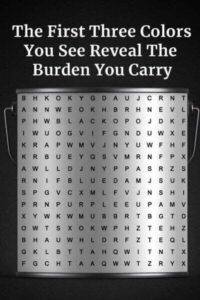
Color-based personality tests have become extremely popular on social media. They usually present viewers with an image containing several colors and ask one simple question: What color did you notice first?
The answer is then connected to a personality trait, emotional pattern, hidden feeling, or subconscious tendency.
These tests are fun and interesting, but they should be approached with some caution. The first color you notice cannot scientifically diagnose your personality, identify hidden trauma, or determine your mental health. Human behavior and emotions are far too complicated to be explained by one visual reaction.
Still, these exercises can encourage something valuable: self-reflection.
Sometimes a simple image can make us stop and think about how we are feeling, what we are experiencing, or what has been occupying our minds. The real value may not be in the color itself, but in the questions it inspires.
Why Do We Notice Certain Colors First?
When we look at an image, our visual system processes information extremely quickly. Color, brightness, contrast, shape, and movement can all influence what captures our attention.
Personal experiences can also affect how we respond to colors.
For one person, red might immediately stand out because it is associated with excitement and energy. For another, the same color might remind them of anger or danger. Someone else may associate red with a favorite childhood memory.
This means there is no single emotional meaning that applies to everyone.
Colors can have common associations, but individual experiences matter just as much.
If You Notice Red First
Red is often associated with energy, passion, urgency, confidence, strength, and action.
If red immediately captures your attention, you might find yourself thinking about situations in your life that currently feel intense or important.
Perhaps you are highly motivated toward a goal. Perhaps you are dealing with pressure. Maybe you are excited about a major change.
Rather than assuming that seeing red proves you are an aggressive or passionate person, consider asking yourself:
What currently feels intense in my life?
The answer may reveal more than the color itself.
If You Notice Blue First
Blue is commonly associated with calmness, stability, trust, reflection, and emotional depth.
It is also sometimes connected with sadness, loneliness, or a desire for peace.
If blue stands out first, you might reflect on whether you are currently looking for stability or a quieter environment.
Are you emotionally tired?
Are you trying to create more balance?
Are you seeking honesty and security in your relationships?
These questions can make the exercise more meaningful than simply accepting a personality description.
If You Notice Yellow First
Yellow is often associated with optimism, curiosity, creativity, communication, and mental energy.
It is bright and attention-grabbing, so it can easily stand out in a colorful image.
If you notice yellow first, you might think about your current relationship with creativity and new ideas.
Are you excited about something?
Are you looking for inspiration?
Or are you keeping a positive appearance while secretly feeling nervous or overwhelmed?
Yellow can represent brightness, but your personal experience determines what that brightness means to you.
If You Notice Green First
Green is strongly connected with nature, growth, balance, healing, and renewal.
Because people regularly encounter green in natural environments, it can feel calming and restorative.
If green is the first color you notice, you might reflect on whether you are entering a period of personal growth or recovery.
Perhaps you are trying to create more stability.
Maybe you are leaving an old situation behind.
Or perhaps you simply need more rest and time in nature.
Green can be a useful reminder that personal growth is often gradual.
If You Notice Purple First
Purple is frequently associated with imagination, creativity, mystery, introspection, and emotional depth.
If purple catches your attention first, you might enjoy thinking about ideas that go beyond everyday concerns.
You may be interested in creativity, personal meaning, or understanding yourself on a deeper level.
However, this does not mean that seeing purple proves you are especially creative or spiritual. Instead, it can provide an opportunity to ask whether those themes are currently important to you.
If You Notice Orange First
Orange is often associated with warmth, enthusiasm, friendliness, confidence, and social connection.
If orange immediately stands out, consider how connected you currently feel to other people.
Are you craving more social interaction?
Are you expressing yourself freely?
Are you looking for excitement or something new?
Orange can also represent a desire to balance independence with connection.
Again, the important part is not whether the interpretation is objectively correct. What matters is whether it gives you something useful to think about.
If You Notice Black First
Black can represent many different things depending on context and personal experience.
It may be associated with strength, privacy, elegance, seriousness, mystery, boundaries, or emotional protection.
For some people, black feels powerful and controlled. For others, it may remind them of grief or sadness.
If black stands out first, consider whether you are currently protecting your personal space or trying to establish stronger boundaries.
There is no reason to automatically interpret the color negatively.
If You Notice White First
White is often associated with clarity, simplicity, peace, cleanliness, and new beginnings.
It can represent openness and a desire for a fresh start.
However, it can also remind some people of emptiness, perfectionism, or the pressure to keep everything organized.
If white catches your attention, ask yourself whether you are seeking more peace or clarity in your life.
Perhaps you need to simplify your schedule, clear your mind, or create space for something new.
Your Personal Memories Matter
One of the most important things to remember about color is that personal associations can be stronger than general symbolism.
Imagine that someone sees green and immediately thinks about their childhood garden.
Another person might see green and remember a difficult workplace.
Someone else might associate the color with a favorite sports team.
The color is identical, but the emotional reaction is completely different.
This is why color interpretations should never be treated as universal psychological facts.
Your memories, culture, environment, and experiences all influence how you perceive color.
Reflection Is Different From Diagnosis
There is an important difference between using a visual test for reflection and using it as a psychological diagnosis.
A color test cannot determine whether someone has anxiety, depression, trauma, or another mental health condition.
It cannot accurately predict someone’s personality or explain their entire emotional life.
Professional psychological assessment requires much more information than a single visual choice.
Therefore, online color tests are best viewed as entertainment or prompts for personal reflection.
Instead of asking, “Does this test know who I am?”, ask:
“Why does this description make me think about my life?”
That question is much more useful.
Why These Tests Can Still Be Meaningful
People naturally look for patterns in their experiences.
A color test gives us a simple opportunity to pause and consider what we might be feeling.
Maybe a description makes you realize that you have been under more pressure than you admitted.
Maybe it reminds you that you have been avoiding an important conversation.
Maybe it encourages you to recognize how much you value peace, creativity, family, or personal freedom.
The color itself did not reveal a secret truth.
Instead, it provided a prompt that helped you discover something you already knew—or something you had not consciously considered.
Final Thoughts
The first color you notice in a visual personality test cannot tell you everything about who you are.
It cannot diagnose your personality, reveal hidden trauma, or predict your future.
But that does not mean the experience is completely meaningless.
Colors can influence attention, mood, memory, and perception. More importantly, they can trigger personal associations that encourage us to think about our emotions and experiences.
The next time a color-based test asks what you noticed first, enjoy the challenge—but don’t treat the result as a scientific diagnosis.
Instead, use it as an invitation to pause.
Ask yourself what the color reminds you of.
Think about what emotions it creates.
Consider what is happening in your life right now.
Are you seeking peace?
Are you feeling energized?
Are you under pressure?
Are you ready for change?
Are you protecting yourself?
Are you healing?
The answers to those questions may tell you much more about yourself than the color ever could.
Sometimes, self-understanding begins with something as simple as noticing what catches your eye.