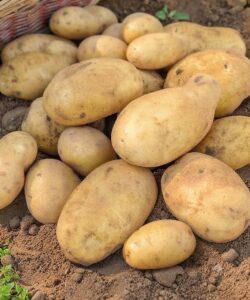
For years, potatoes have been caught in the middle of nutrition debates.
Some diets have treated them as a food to avoid, particularly because they are rich in carbohydrates. Weight-loss advice has sometimes grouped potatoes with highly processed foods, leaving many people with the impression that eating one automatically means gaining weight or experiencing unhealthy blood-sugar changes.
But potatoes are more complicated than that.
A plain potato is a whole food containing carbohydrates, fiber, potassium, vitamin C, vitamin B6, and other nutrients. How it affects your diet can depend on the portion, preparation method, toppings, and what you eat alongside it.
So what actually happens when you eat potatoes?
Your Body Gets a Source of Energy
Potatoes contain carbohydrates, primarily in the form of starch.
When you eat a potato, your digestive system breaks down much of that starch into glucose, which your body can use for energy.
This isn’t inherently a bad thing.
Carbohydrates are one of the body’s main energy sources, and the brain and muscles rely heavily on glucose.
The important question is what kind of carbohydrate-containing food you’re eating and how it fits into your overall diet.
A boiled or baked potato is very different nutritionally from a serving of heavily processed potato chips cooked in oil and covered with salt.
The potato itself isn’t necessarily the problem.
Preparation matters.
Potatoes Provide Potassium
One of the nutrients found in potatoes is potassium.
Potassium is an essential mineral involved in several important functions, including normal muscle contraction, nerve signaling, and maintaining fluid balance.
It also plays a role in blood-pressure regulation.
A medium potato can contribute a meaningful amount of potassium to the diet, although the exact amount depends on the variety and size.
Potatoes aren’t the only source of potassium, of course.
Beans, leafy vegetables, dairy products, fruit, and other foods can also contribute.
Still, potatoes can be a convenient and affordable way to obtain the mineral.
You Can Get Vitamin C, Too
Potatoes are also a source of vitamin C.
Vitamin C contributes to normal immune function, collagen formation, and antioxidant protection.
The amount can vary depending on the type of potato and how it is stored and cooked.
Because vitamin C can be affected by heat and cooking conditions, preparation can influence the final nutrient content.
That doesn’t mean you need to eat potatoes raw.
Cooking them safely remains important.
Instead, potatoes can simply be considered one of many foods that contribute vitamin C to a varied diet.
What About the Fiber?
Potatoes contain fiber, particularly when you eat the skin.
Fiber is important for digestive health and can contribute to feelings of fullness.
It also supports the normal functioning of the digestive system.
Keeping the skin on can therefore be a simple way to retain more of the potato’s natural fiber and nutrients.
Of course, the skin should be washed thoroughly before cooking and eating.
And if a potato is green, heavily damaged, or otherwise questionable, it is better to avoid consuming it.
Potatoes and Blood Sugar
This is where things become more nuanced.
Potatoes contain a significant amount of starch, so they can raise blood glucose after eating.
But the size of that response depends on several factors.
Portion size matters.
Preparation matters.
The variety of potato matters.
And what you eat with the potato matters.
For example, eating a potato as part of a meal containing vegetables, protein, healthy fats, and fiber can produce a different overall meal response than eating a large serving of mashed potatoes by itself.
People with diabetes or other conditions affecting blood-glucose management may need to pay particular attention to portions and carbohydrate intake.
Individual responses can vary, so personalized dietary advice from a qualified healthcare professional can be useful.
Cooling Potatoes Can Change Their Starch
There’s another interesting feature of potatoes.
When cooked potatoes are cooled, some of their starch can become resistant starch.
Resistant starch isn’t digested in the small intestine in the same way as ordinary starch. Some reaches the large intestine, where it can be fermented by gut bacteria.
This has attracted interest from nutrition researchers because resistant starch may have effects on digestive health and blood-glucose responses.
However, the amount formed depends on factors such as cooking, cooling, and reheating.
That doesn’t mean refrigerated potatoes are automatically healthier than freshly cooked potatoes.
It simply illustrates how food chemistry can change depending on preparation.
The Biggest Difference May Be What You Add
A plain baked potato and a loaded potato can be dramatically different meals.
Consider what commonly accompanies potatoes:
Butter.
Cream.
Cheese.
Bacon.
Heavy sauces.
Large amounts of salt.
Those additions can substantially increase calories, saturated fat, or sodium.
French fries introduce another factor: cooking in oil.
Potato chips are typically processed, fried, and heavily salted.
So when someone says, “Potatoes are unhealthy,” it can be useful to ask what type of potato preparation they’re actually talking about.
A boiled, baked, or roasted potato with vegetables and a source of protein is a very different food experience from a large serving of fries with a high-calorie sauce.
Potatoes Can Be Filling
Potatoes can also be surprisingly satisfying.
Their combination of water, starch, and fiber can contribute to fullness.
That may be useful for people trying to construct meals that are satisfying without relying heavily on highly processed snacks.
But portion size still matters.
Even nutritious foods contribute calories, and eating very large amounts can work against an individual’s energy needs.
There is no single “perfect” serving size for everyone.
Are Potatoes a Weight-Gain Food?
Not automatically.
Weight change is influenced by overall energy intake, activity, metabolism, food choices, and many other factors.
A plain potato doesn’t inherently cause weight gain.
What can change the equation is how potatoes are prepared and what accompanies them.
A small baked potato is one thing.
A large portion of fries covered in cheese and sauce is another.
The distinction is important because labeling an entire food as either “good” or “bad” can make nutrition unnecessarily confusing.
Don’t Forget Food Safety
Potatoes also need to be handled properly.
Green potatoes or potatoes that have developed significant sprouting can contain elevated levels of naturally occurring glycoalkaloids, such as solanine.
These compounds can cause illness at sufficiently high levels.
For that reason, potatoes that are strongly green, bitter, badly damaged, or significantly sprouted should be treated cautiously and may be best discarded.
Proper storage in a cool, dark, dry place can help maintain quality.
So, Should You Eat Potatoes?
For most people, potatoes can fit comfortably into a balanced diet.
They provide carbohydrates, potassium, vitamin C, vitamin B6, and other nutrients while remaining relatively inexpensive and versatile.
The bigger nutritional picture matters more than the potato itself.
A balanced meal might pair a potato with vegetables, beans, fish, eggs, poultry, or another protein source.
Using herbs and spices instead of excessive amounts of salt can add flavor without dramatically increasing sodium.
Choosing baked, boiled, or roasted potatoes more often can also make it easier to control added fats.
The Bottom Line
Potatoes don’t need to be treated as a nutritional villain.
They are a carbohydrate-rich whole food that can provide useful nutrients and fit into many different eating patterns.
At the same time, calling them a “superfood” would be just as misleading as calling them unhealthy.
The preparation, portion, and overall meal matter.
So the next time you reach for a potato, don’t automatically think of it as something you need to avoid.
Think about how it was prepared, what you’re eating with it, and how it fits into your overall diet.
Sometimes the healthiest approach isn’t eliminating a familiar food.
It’s understanding it better.