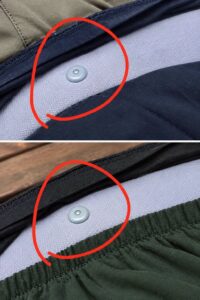
Have you ever noticed the tiny plastic button attached to your car’s seat belt and wondered what it actually does?
It may look like a random piece of plastic, but it serves a simple and useful purpose. This small component is commonly called a seat-belt stop button, retaining button, or stop.
Its main job is to keep the seat-belt buckle in a convenient position when the belt is not being used.
If you look closely at the belt, you’ll usually find the button attached to the webbing just below the buckle. When you release the belt, the retractor pulls the webbing back toward the side of the vehicle. Without the stop button, the buckle could slide much farther down the belt.
That might not sound like a serious problem, but it can quickly become annoying.
Imagine getting into your car, reaching for the seat belt, and discovering that the buckle has slid several inches farther down than usual. You would have to reach awkwardly to grab it before fastening the belt.
The small button prevents this from happening.
It acts as a physical barrier. When the belt retracts, the buckle reaches the stop and remains at a practical height, making it easier to find and use the next time you enter the vehicle.
This is why you may notice that the buckle seems to stop at roughly the same location every time.
Is the button part of the seat belt’s safety system?
Not really.
The stop button is primarily a convenience feature. It is not the component responsible for protecting you during a crash.
The important safety components of a seat-belt system include the belt webbing, buckle, latch, anchors, and retractor. Depending on the vehicle, the system may also include pretensioners and load limiters.
During a collision, these components work together to help restrain occupants and manage the forces involved.
The tiny plastic stop has a much simpler responsibility: keeping the buckle where you can easily reach it.
What happens if the button breaks?
Because the stop is often made from plastic, it can become damaged over time.
It may crack, loosen, or even fall off.
If that happens, you might notice that the buckle slides much farther down the belt than it normally does. The seat belt itself may still function, but reaching the buckle can become inconvenient.
You shouldn’t assume that any piece of plastic will work as a replacement.
Using glue, tape, clips, zip ties, or other improvised materials may not be an appropriate repair. A seat belt is a critical safety system, so modifications should be avoided unless they are specifically approved for that vehicle.
If the stop button is missing or damaged, the safest approach is to ask the vehicle manufacturer, dealership, or a qualified technician about the correct replacement.
Don’t confuse it with the release button
There are two very different buttons associated with a seat belt.
The large button on the buckle is the release button. Pressing it allows the latch to come out so you can remove the belt.
The tiny button attached directly to the webbing is the stop button.
It doesn’t release the belt.
It doesn’t tighten the belt.
It doesn’t activate a safety mechanism.
It simply keeps the buckle from sliding too far along the webbing.
Why does such a tiny part matter?
Good vehicle design often depends on small details that you barely notice.
The stop button is a perfect example.
It doesn’t perform a dramatic job, but it makes using the seat belt easier and more convenient every time you get into the car.
Without it, the buckle could disappear farther down the belt after every use, forcing you to search for it repeatedly.
So the next time you buckle up, take a moment to look at that little plastic piece.
It isn’t decorative.
It isn’t there by accident.
It is simply doing its job quietly—keeping your seat-belt buckle right where you expect it to be.