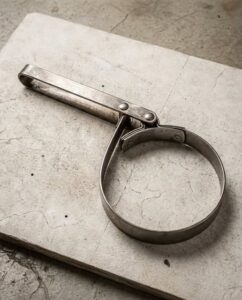
At first glance, an oil filter wrench may look like an ordinary workshop tool, but its role in automotive maintenance is far more important than many people realize. For decades, this practical invention has helped mechanics and vehicle owners solve one of the most frustrating parts of an oil change: removing a stubborn oil filter. Although changing engine oil is a routine maintenance task, a filter that refuses to loosen can quickly turn a simple job into a difficult one. The oil filter wrench emerged as a straightforward solution, combining grip, leverage, and mechanical advantage to make the process easier and more reliable.
The Problem That Inspired a Practical Invention
Engine oil plays a vital role in keeping an engine operating smoothly. It lubricates moving components, helps manage heat, and carries contaminants toward the oil filter, where many unwanted particles are trapped. Over time, the filter must be replaced according to the vehicle manufacturer’s maintenance recommendations.
However, removing an old filter is not always easy. Engine heat, prolonged use, dirt, and the conditions under which a filter was installed can make it difficult to turn. Oil residue can also leave the filter surface slippery, preventing a mechanic from getting a secure grip with bare hands.
Another common problem occurs when a filter is installed too tightly. Although many filters are designed to be tightened by hand according to the manufacturer’s instructions, excessive tightening can make later removal unnecessarily difficult. A filter that has been exposed to repeated heating and cooling cycles may also resist movement.
These challenges created a clear need for a specialized tool. Instead of relying on hand strength alone, mechanics needed a device that could grip the filter securely and apply enough turning force to loosen it without unnecessarily damaging surrounding components.
How the Oil Filter Wrench Works
The basic principle behind an oil filter wrench is simple: it transfers force from the user’s hand or a ratchet to the filter housing. By increasing grip and providing leverage, the tool helps overcome the resistance that prevents the filter from turning.
Different designs achieve this in different ways. Some wrap around the filter, while others fit over its end or use gripping teeth to hold its outer surface. The correct choice depends on the filter’s dimensions, shape, accessibility, and construction.
Early and traditional designs include chain-style and strap-style wrenches. Chain models use a metal chain that tightens around the filter as force is applied. Strap models use a strong band, often made from metal or a durable flexible material, to grip the filter’s exterior.
These designs are particularly useful when a filter is difficult to access or when a standard cup wrench does not fit. Their adjustable gripping arrangements can also make them suitable for various filter sizes, depending on the model.
As automotive technology developed, tool manufacturers introduced additional designs to improve convenience, control, and compatibility.
The Evolution of Oil Filter Wrench Designs
Over the years, oil filter wrenches have evolved to meet the needs of different vehicles and working environments. Modern workshops may use several types because no single design is ideal for every application.
Cup-style oil filter wrenches fit over the end of a compatible filter. Many resemble shallow metal sockets and connect to a ratchet or extension. When the cup matches the filter correctly, it provides a secure fit and allows the mechanic to apply turning force with good control. These tools are especially convenient for vehicles with filters that have limited side clearance.
Claw-style oil filter wrenches use gripping teeth or articulated jaws that tighten around the filter as torque is applied. They can be useful when a filter is difficult to reach, although care is necessary because their teeth can crush or puncture the filter housing.
Strap-style wrenches rely on a band that tightens around the filter. Depending on their construction, they may work with a range of filter diameters and can be helpful when access is awkward.
Chain-style wrenches use a chain to grip the filter firmly. Their robust construction makes them useful for certain heavy-duty applications, although the chain may require more working space than other designs.
Some modern tools also include ratcheting mechanisms, articulated handles, or specially shaped gripping surfaces. These features can reduce the effort required and improve access in crowded engine compartments.
Why Mechanics and Vehicle Owners Still Need Them
Despite advances in automotive engineering, the oil filter wrench remains a useful tool in professional garages and home workshops. Its continued relevance comes from the fact that oil filters vary considerably between vehicles.
Passenger cars, motorcycles, commercial vehicles, boats, agricultural machinery, and industrial engines may use different filter arrangements. Some have easily accessible spin-on filters, while others use cartridge-style systems with replaceable internal elements and separate housings.
The right tool depends on the application. A cup wrench may be ideal for a particular spin-on filter, while a cartridge housing may require a dedicated socket designed to fit its cover. In some cases, the manufacturer’s specified removal tool is the best choice.
For home mechanics, an appropriate oil filter wrench can make routine servicing less stressful. It can also help reduce the temptation to use unsuitable tools, such as large pliers or pipe wrenches, which may damage the filter or surrounding parts.
For professional technicians, the tool saves time and helps make repetitive maintenance tasks more consistent. In busy workshops, having the correct wrench readily available can prevent a small problem from delaying an entire service job.
Using an Oil Filter Wrench Safely
Although oil filter wrenches are relatively simple, proper use is important. Before starting, the engine should be switched off and allowed to cool sufficiently to avoid burns from hot oil or engine components. The vehicle must also be supported correctly if access underneath is necessary; a hydraulic jack alone should never be relied upon to support a vehicle while someone works beneath it.
The mechanic should identify the correct filter and choose a compatible wrench. Applying excessive force with an ill-fitting tool can crush the filter, damage its housing, or injure the user if the wrench slips.
It is also important to remember that an oil filter wrench is generally intended for removal. When installing a replacement filter, the manufacturer’s instructions should be followed carefully. Many spin-on filters require the sealing gasket to be lubricated and the filter to be tightened by hand according to the specified procedure. Cartridge housings may have specific torque requirements.
Following these instructions helps prevent leaks, damaged threads, and problems during future maintenance.
A Small Tool With a Lasting Legacy
The oil filter wrench illustrates how a practical tool can become an enduring part of mechanical work. It does not rely on complicated electronics or an elaborate operating system. Instead, it uses straightforward mechanical principles to solve a recurring problem.
Its different designs reflect the changing demands of automotive maintenance, from older vehicles with accessible filters to modern engines with tightly packaged components. While the materials and mechanisms have improved, the underlying purpose remains the same: provide a secure grip and enough leverage to remove a filter efficiently.
Some traditional workshop tools also attract the attention of collectors, particularly older examples made with distinctive metalwork or durable mechanical components. Their appeal comes from both their practical history and the craftsmanship associated with earlier toolmaking.
Ultimately, the oil filter wrench demonstrates that innovation does not always require a dramatic technological breakthrough. Sometimes, a lasting invention begins with recognizing an everyday frustration and designing a reliable way to overcome it.
What appears to be a simple metal cup, chain, strap, or set of gripping jaws has helped make routine engine maintenance more manageable for generations of mechanics. Its contribution may be easy to overlook, but every successful oil change reflects the value of having the right tool for the job.