-
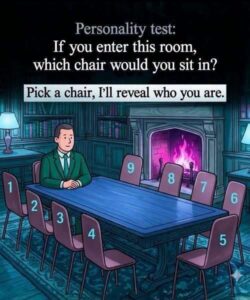
It sounds like one of the simplest questions you could be asked at a dinner.
Yet your answer can quietly shape the entire experience.
The chair you choose determines who sits beside you, who faces you, which conversations are easiest to hear, and which people you are most likely to interact with.
Your seat does not define your personality. But it can create opportunities for conversations and connections that might never happen from another side of the table.
A Table Is About More Than Food
For generations, shared meals have brought families, friends, and communities together.
People celebrate around tables. They tell stories, remember the past, meet new people, exchange ideas, laugh, disagree, and sometimes resolve old misunderstandings.
That is why having a “seat at the table” can mean much more than simply having somewhere to eat.
It can represent inclusion, participation, access, and belonging.
And when several chairs are available, people often make very different choices.
Some immediately look for someone they know.
Others deliberately choose an unfamiliar seat.
Some prefer the corner because it feels quieter.
Others enjoy sitting in the middle, where several conversations can happen at once.
None of these choices necessarily reveals a fixed personality trait. Instead, they may reflect the situation, the people present, and how comfortable someone feels at that particular moment.
Would You Sit Beside Someone You Know?
For many people, the safest choice is obvious.
Find a familiar face.
Sitting beside a close friend or family member can make an unfamiliar gathering immediately more comfortable. Conversation comes naturally, and there is less pressure to introduce yourself to strangers.
You already know what to talk about.
You may share inside jokes, memories, or experiences.
If the room becomes awkwardly quiet, you don’t have to search for something to say.
But choosing someone familiar can also influence the entire evening.
You may spend most of your time talking to that person and miss conversations happening elsewhere.
You might never meet the person sitting at the opposite end of the table.
That doesn’t make the choice good or bad.
It simply creates a different experience.
What If You Chose a Stranger?
Now imagine taking the empty chair beside someone you’ve never met.
At first, the situation might feel awkward.
You exchange a polite smile.
Maybe you introduce yourself.
Then someone asks a simple question.
“How do you know the host?”
Suddenly, you’re talking.
Perhaps you discover a shared interest, similar profession, favorite destination, hobby, or mutual friend.
A conversation that never would have happened from across the room has begun simply because two people ended up sitting beside each other.
Sometimes the most memorable conversations begin this way.
Neither person planned them.
Neither expected them.
The seating arrangement simply created the opportunity.
What About the Person Across From You?
The person directly opposite you can become just as important.
Facing someone naturally creates opportunities for eye contact and conversation.
At smaller tables especially, that person may become one of your main conversation partners.
You might arrive knowing nothing about them and leave remembering their stories more clearly than almost anything else about the evening.
The person across from you may also be easier to address during group conversations because both of you are already oriented toward each other.
A simple seat can therefore influence who becomes part of your attention.
The Corner Seat Creates a Different Experience
Some people naturally gravitate toward the end or corner of a table.
That position can provide a broader view of the room while reducing the number of people immediately surrounding you.
It may also make it easier to listen before joining a conversation.
From the corner, you can observe several interactions.
You can notice who is talking.
You can decide when to contribute.
You may also have an easier time stepping away from the table when necessary.
But again, choosing a corner does not automatically mean someone is shy or withdrawn.
Sometimes people choose it because it is comfortable.
Sometimes because it offers more personal space.
And sometimes the corner is simply the only available chair.
The Middle Seat Can Put You in the Conversation
Now imagine sitting somewhere near the middle of a long table.
You may have people on both sides.
You can potentially participate in multiple conversations without having to turn completely around.
This can make the middle feel socially active.
But it can also become overwhelming.
Several conversations may happen simultaneously.
One person may be speaking beside you while someone across the table is trying to get your attention.
You may find yourself constantly switching between conversations.
The same seat can therefore feel energetic to one person and exhausting to another.
Who You Sit Beside Matters
The chair itself is only part of the equation.
The person next to you may have a much greater effect on your experience.
A friendly person can make conversation effortless.
A quiet person may create a calmer evening.
Someone with strong opinions might lead the discussion in unexpected directions.
A person with a fascinating story could become the most memorable part of the gathering.
That is one reason seating arrangements can matter so much during weddings, conferences, family celebrations, and formal dinners.
The organizers may not realize it, but placing two people beside each other can create an entirely new social connection.
Family Tables Can Be Especially Complicated
At family gatherings, people often have established seating habits.
Someone always sits at one end.
Another person prefers the chair closest to the kitchen.
Children may have their usual places.
Older relatives might choose seats that are easier to access.
These patterns can continue for years without anyone formally deciding that they should.
Then someone sits in a different chair.
Suddenly, the normal conversation changes.
A different person becomes the one sitting beside Grandma.
Two relatives who rarely speak may find themselves next to each other.
A child may discover a completely different view of the adults at the table.
Small changes can sometimes produce surprisingly different interactions.
Seating Can Influence Who Gets Heard
At larger gatherings, physical position can affect how easily people participate.
Someone sitting close to the person leading the conversation may have more opportunities to respond.
Someone at the far end may find it harder to enter a discussion.
A person sitting between several active conversationalists may constantly be included.
Another person may struggle to hear because of distance or background noise.
These effects aren’t necessarily deliberate.
They can emerge simply from the physical arrangement.
That’s one reason meeting organizers often think carefully about seating during formal events.
The goal isn’t always to control conversation.
Sometimes it is simply to make communication easier.
There Is Also the Question of Comfort
Not every seating decision is social.
Physical comfort matters.
One person may want to sit near a window.
Another may prefer to avoid direct sunlight.
Someone else may want easy access to the door.
A person with mobility concerns may need a particular type of chair or a location that makes getting up easier.
Parents may choose seats that allow them to keep an eye on children.
Someone who needs to leave early may prefer an outside position.
These practical considerations can be more important than any psychological interpretation.
Why Do We Remember Certain Seats?
Think about the meals you remember most clearly.
You may remember exactly where you were sitting.
Perhaps you were beside a grandparent telling stories.
Maybe you sat across from someone you eventually became close friends with.
Perhaps a major family announcement happened while you were sitting at a particular table.
The chair itself didn’t create the memory.
The events surrounding it did.
But because the physical environment becomes part of memory, the location can become attached to the experience.
Years later, remembering the seat may bring back the entire scene.
A Seat Can Change a First Impression
Imagine arriving at a dinner where you know only one person.
You could immediately sit beside your acquaintance.
That gives you a comfortable starting point.
Or you could sit beside someone unfamiliar.
The second option creates a small amount of uncertainty.
But uncertainty can also create an opportunity.
You have to introduce yourself.
You have to ask questions.
You discover something you didn’t already know.
Neither approach guarantees a particular outcome.
The important point is that the physical choice can change the number and type of interactions available to you.
Children Experience Seating Differently
For children, a seat at the table can carry additional meaning.
Where they sit may determine who helps them, who talks to them, or how much of the adult conversation they hear.
At family events, children often move between chairs depending on who they want to sit beside.
One child may want to sit next to a favorite grandparent.
Another may choose a cousin.
These choices can reflect comfort, curiosity, or simple preference.
Over time, repeated seating patterns can become part of family tradition.
The Table Creates a Small Social World
A dining table is a surprisingly interesting social environment.
Everyone is physically close.
People are usually facing one another.
Food provides a natural topic.
There are pauses between conversations.
And because everyone shares the same space, interactions can move quickly from one person to another.
Someone tells a story.
Another person adds a detail.
Someone laughs.
A third person changes the subject.
The physical arrangement helps determine who can easily participate in that flow.
What Happens When You Change Seats?
Try imagining a familiar dinner where everyone suddenly swaps places.
The same people are present.
The same food is on the table.
The same topics could theoretically come up.
But the evening might feel completely different.
You may discover that you talk more with someone you normally barely notice.
Someone else might become quieter because their usual conversation partner is now several seats away.
A child might end up beside a relative who tells fascinating stories.
The seating arrangement hasn’t changed the people.
It has changed the pathways between them.
Don’t Overinterpret Your Own Choice
It can be tempting to turn seating preferences into personality tests.
“People who sit here are confident.”
“People who sit there are introverted.”
“People who choose the corner don’t like people.”
These conclusions are usually much too simple.
Human behavior depends on context.
The same person might choose the center of the table at a close friend’s birthday party and the corner at a professional dinner.
Someone may sit beside a stranger at one event and stay with friends at another.
The choice can change because the situation changes.
That’s why a single seating decision should not be treated as a reliable measurement of someone’s personality.
Sometimes the Best Seat Is the Unexpected One
There is another possibility.
You don’t have to choose the seat that seems most comfortable.
You can choose the one that creates the most interesting possibility.
Sit beside someone you haven’t met.
Face someone whose stories you’ve always wanted to hear.
Join the relatives you normally see only from across the table.
Move away from your usual position.
Even a small change can create a different conversation.
And sometimes that conversation becomes the part of the evening you remember.
The Seat Doesn’t Decide the Experience
Ultimately, there is no magical chair that guarantees friendship, comfort, meaningful conversation, or a memorable evening.
The people matter.
The circumstances matter.
Your willingness to listen matters.
Your ability to make someone feel welcome matters.
The chair simply determines where you begin.
A seat beside a stranger can become a new friendship.
A seat beside a familiar person can become an opportunity to reconnect.
A seat across from someone can lead to an unforgettable conversation.
And a quiet corner can provide the space someone needs to enjoy the evening.
So the next time someone asks, “Where would you like to sit?”, remember that you’re choosing more than a chair.
You’re choosing which conversations are easiest to enter, which faces you’ll see most often, and which small possibilities might unfold around the table.
Sometimes, the most memorable part of a meal isn’t what was served.
It’s who happened to be sitting beside you.

Related Posts
He Called Me “Leftovers” — Until He Needed My Signature, He Discovered I Was Stronger Than He Thought
After forty-one years of marriage, I never imagined my husband, Charles, would look at me as though I were nothing more than an obstacle standing between him…

The Woman They Rejected: I Took In My Lonely Stepmother, Then Discovered the Secret She Had Hidden for Years
After my father died, I thought grief would be the hardest thing I would ever have to face. I was wrong. Six months later, I discovered my…
My Father Fixed Fire Trucks for Decades, But Was Turned Away at the Door Tonight
The fire chief’s voice carried across the crowded banquet hall, cutting through the laughter and conversation. One hundred firefighters, retired officers, and their families turned toward the…

My Son Walked Home Alone for Just 20 Minutes When My Neighbor Called Me Outside
“Come outside. You need to see what your son did.” Ivy’s trembling voice sent me rushing out of the house without even putting on my shoes. Three…

The Silent Trap Beside Your Car: Why a Strange Noise Near Your Tire Could Make You Vulnerable to Theft
You park your car, gather your belongings, and prepare to leave. Everything seems normal until you hear an unexpected crunching sound as the vehicle begins to move….

This Viral Monkey Personality Test Claims to Reveal Narcissism, But How Many Monkeys Can You Actually See?
At first glance, the image looks like a simple cartoon illustration filled with rows of monkeys. But a bold caption makes the picture far more intriguing: “The…