-
Have you ever wondered whether the way you sleep reveals something interesting about your personality? Some people curl up on their sides, others stretch their arms above their heads, while some prefer sleeping flat on their backs or lying on their stomachs. Although these positions may seem like simple habits, they have inspired many popular theories about personality, emotions, and behavior.
Your sleeping position can be influenced by several factors, including comfort, mattress quality, temperature, and physical health. There is no strong scientific evidence that a particular sleeping posture can reliably reveal your true personality. Nevertheless, exploring these common sleeping positions can be an entertaining way to reflect on your habits and preferences.
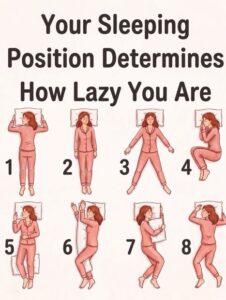
1. The Fetal Position: Curled Up on Your Side
The fetal position is one of the most recognizable sleeping styles. People who sleep this way curl onto their sides, draw their knees toward their chests, and sometimes place their hands near their faces.
Popular personality interpretations often describe fetal-position sleepers as sensitive, thoughtful, and cautious. They are sometimes portrayed as people who appreciate security, value close relationships, and prefer familiar surroundings.
However, these descriptions are not scientifically established. Many people choose this position simply because it feels natural and comfortable. Curling up may also help some individuals feel warmer during colder nights.
If you regularly sleep in this position, the most useful question is whether you wake up feeling refreshed and comfortable. Your sleeping posture alone cannot tell anyone how confident, sensitive, or independent you are.
2. The Log Position: Sleeping Straight on Your Side
The log position involves lying on your side with your legs relatively straight and your arms resting close to your body.
According to popular sleep-position theories, people who prefer this posture are sometimes described as sociable, relaxed, and trusting. Some interpretations suggest that they enjoy being around others and feel comfortable in familiar social situations.
Of course, there is no reliable scientific basis for concluding that side sleepers are naturally more outgoing or trusting than people who sleep in other positions.
The position may simply provide comfortable support for the body. For some people, sleeping on the side also feels more natural than lying on the back or stomach.
Rather than using this position to judge your personality, consider how you interact with people in everyday life. Your communication style, willingness to listen, and treatment of others provide much more meaningful information about your character.
3. The Yearner Position: Arms Extended Forward
The yearner position is another side-sleeping style. People who sleep this way extend their arms forward, sometimes appearing to reach toward something in front of them.
Popular interpretations associate this position with curiosity, thoughtfulness, and a careful approach to decision-making. Some descriptions suggest that yearner sleepers may enjoy exploring new ideas while taking time to consider their choices.
These claims should be treated as entertainment rather than established psychological findings. There is no convincing evidence that extending your arms while sleeping indicates a particular decision-making style.
Your position may change throughout the night as you adjust your body for comfort. The way you make decisions is better understood by looking at how you evaluate information, respond to challenges, and learn from experience.
4. The Soldier Position: Flat on Your Back
The soldier position involves lying on your back with your legs extended and your arms resting close to your sides.
Popular personality descriptions often connect this position with discipline, organization, and a preference for structure. Some interpretations suggest that people who sleep this way appreciate routines and approach responsibilities seriously.
However, sleeping on your back does not prove that you are organized, reserved, or disciplined. People may choose this position because it feels comfortable or because they are accustomed to sleeping that way.
It is also worth remembering that sleeping positions can affect comfort and breathing differently from person to person. For some individuals, sleeping on the back can make snoring or obstructive sleep apnea worse.
If you frequently snore loudly, wake up gasping, or feel unusually tired during the day, consider discussing these symptoms with a healthcare professional.
5. The Starfish Position: Arms Raised Above Your Head
Starfish sleepers usually lie on their backs with their arms raised near their pillows and their legs extended or slightly spread apart.
Popular theories often associate this position with generosity, friendliness, and a willingness to help others. Some descriptions portray starfish sleepers as people who enjoy supporting friends and family.
These interpretations may sound appealing, but they are not supported by strong scientific evidence. Sleeping with your arms raised does not establish that you are generous, caring, or naturally good at helping others.
Your real personality becomes clearer through your everyday choices. Keeping promises, offering support when someone needs help, and treating others with kindness are more meaningful indicators of generosity than the position you adopt at night.
For some people, raising their arms may also create shoulder discomfort or numbness. If you regularly experience these symptoms, adjusting your sleeping position or seeking professional advice may help.
6. The Freefall Position: Sleeping on Your Stomach
The freefall position involves lying on your stomach, often with your head turned to one side and your arms positioned around the pillow.
Some popular personality interpretations describe stomach sleepers as independent, energetic, or outspoken. Others suggest that they prefer to take control of situations rather than leave decisions to someone else.
There is no strong evidence that stomach sleeping reveals these characteristics. A person may simply find the mattress more comfortable in this position or have developed the habit over many years.
From a physical perspective, stomach sleeping can place additional strain on the neck because the head must remain turned to one side. It may also contribute to discomfort in the lower back for some people.
If you regularly wake up with neck stiffness or back pain, experimenting with a different position may improve your comfort.
7. Hugging a Pillow While Sleeping
Some people feel most comfortable when they hug a pillow, hold a blanket, or place an additional cushion between their arms.
Popular interpretations sometimes associate this habit with a desire for comfort, closeness, or reassurance. However, hugging a pillow does not necessarily mean someone feels lonely or emotionally insecure.
It can simply provide physical support. Side sleepers, for example, may find that hugging a pillow helps them position their shoulders more comfortably. Placing a pillow between the knees can also help some people feel better supported.
There is nothing unusual about finding comfort in a particular bedtime routine. Personal habits often develop because they help us relax and prepare for sleep.
8. Changing Positions Throughout the Night
Not everyone has one favorite sleeping position. Many people move between their sides, backs, and other positions without remembering doing so.
Some popular theories associate changing positions with adaptability, flexibility, or an open-minded personality. However, movement during sleep does not reliably reveal these traits.
Changing positions is a normal part of sleep. Your body may move to relieve pressure, respond to temperature changes, or find a more comfortable posture.
Occasional movement is generally nothing to worry about. However, if you frequently wake up because of pain, discomfort, or difficulty breathing, it may be helpful to discuss the problem with a healthcare professional.
What Matters More Than Your Sleeping Position?
Although personality-based sleep theories can be entertaining, your sleeping position is not a dependable personality test. You cannot determine someone’s honesty, confidence, emotional stability, or kindness simply by observing how they lie in bed.
Your personality is much more complex. It develops through a combination of experiences, personal values, habits, relationships, and individual characteristics.
If you want to understand yourself better, pay attention to how you respond to difficult situations, communicate with others, handle responsibility, and make decisions. These patterns offer a much more useful starting point for self-reflection.
It is also worth focusing on the quality of your sleep. A comfortable sleeping environment, a consistent bedtime routine, and a mattress that supports your body can contribute to better rest.
Ultimately, your favorite sleeping position may tell you something about what feels comfortable, but it cannot define who you truly are. Enjoy exploring the popular interpretations, but remember that your character is revealed through your actions, values, and choices—not the way you sleep.

Related Posts

Historic Kentucky Farmhouse With a Peaceful Pond, Rustic Barn, Rolling Pastures, and Beautiful Countryside Views Awaits Restoration
Imagine waking up to the gentle sounds of nature, looking out over rolling green fields, and enjoying a quiet morning on a covered front porch. In Greensburg,…
The Purpose of Fabric Strips on Hotel Beds: Discover Why Hotels Use These Decorative Bed Runners
Have you ever checked into a hotel, admired the neatly made bed, and noticed a narrow strip of fabric lying across the foot of the mattress? At…
My Groom Never Showed Up at Our Wedding, So I Changed Out of My Heels and Took Control
I had spent months planning my wedding, imagining the moment I would walk down the aisle and see Wesley waiting for me. I had pictured his smile,…
My Daughter Told Me to Stay Out of Her Life—Then She Came Back Asking About the Bills
My daughter Sarah sent me a message at 9:45 on a rainy Tuesday night. Her words were short, but they hurt more than I expected. “Mom, David…
My Groom Never Showed Up to Our Wedding, So I Changed Out of My Heels and Took Control of My Future
I had spent months planning my wedding, imagining the moment I would walk down the aisle and see Wesley waiting for me. I pictured his smile, the…

Drivers Are Surprised to Discover What the Letter “G” Really Means on a Manual Gear Stick—and How This Special Gear Helps Conquer Tough Off-Road Terrain
he Mysterious Letter on a Gear Stick That Many Drivers Have Never Seen Most drivers who use a manual transmission are familiar with the traditional gear pattern:…