The long-running success of Wheel of Fortune rests on a deceptively simple foundation: spin a wheel, choose letters, and solve a word puzzle. Yet beneath that simplicity lies a carefully balanced structure of risk, reward, psychology, and timing that transforms each episode into a miniature study of human decision-making under pressure. While most episodes proceed in a predictable rhythm—contestants accumulate winnings, solve puzzles, and advance through rounds—there are occasional moments when everything aligns to create something far more compelling. This particular episode became one of those moments, driven by a contestant whose steady performance turned routine gameplay into a gripping narrative of tension and near triumph.
From the opening spin, it was clear that this would not be an ordinary game. Contestants often enter the stage with varying levels of confidence, but few manage to immediately establish control over the board. One such contestant, Adam Wredberg, distinguished himself early with a combination of composure and strategic awareness. Rather than rushing into guesses or chasing high-risk wedges prematurely, he demonstrated a disciplined approach that prioritized momentum and accuracy. In a game where a single misstep can shift control instantly, this kind of measured play is often the difference between fading into the background and becoming the focal point of the episode.
The structure of Wheel of Fortune rewards consistency as much as it does boldness. Each round presents its own psychological challenge, requiring contestants to adjust quickly to changing circumstances. The initial rounds are often about building confidence and establishing a financial base, but they also serve as a testing ground for pacing and intuition. Adam Wredberg’s early success in solving the opening puzzle set a tone that suggested both familiarity with the game’s mechanics and a calm ability to operate under studio pressure. The applause, the flashing lights, and the presence of a live audience can easily overwhelm less experienced players, but he appeared unfazed.
As the game progressed into the Mystery Round, the stakes naturally increased. This round is known for its potential to dramatically shift the leaderboard, introducing an element of suspense that can reward risk-taking or punish hesitation. Contestants must decide whether to reveal the mystery wedge or cash out safely, and those decisions often define their trajectory in the game. Wredberg’s performance in this round further solidified his position. He navigated the puzzle with precision, accumulating both cash and a travel prize that symbolized not just luck, but calculated engagement with the game’s risk-reward structure.
What makes this phase of the game particularly compelling is the subtle psychological pressure it creates. Unlike purely knowledge-based quizzes, Wheel of Fortune demands real-time decision-making in a public setting. Every letter choice carries weight, and every spin introduces uncertainty. Contestants are not just solving puzzles; they are managing their own reactions, reading the board, and anticipating outcomes in front of an audience that reacts instantly to success or failure. Wredberg’s ability to maintain equilibrium during this phase suggested a strong internal rhythm, one that kept him aligned with the game rather than reacting emotionally to it.
By the time the game entered its later rounds, a clear frontrunner had emerged. However, dominance in the main game does not guarantee victory. One of the defining features of Wheel of Fortune is that every contestant who reaches the Bonus Round faces an entirely new level of difficulty. The pacing changes, the music intensifies, and the puzzle itself becomes compressed into a high-pressure scenario where seconds matter more than minutes.
For Wredberg, reaching the Bonus Round was both an achievement and a new challenge. Standing under the bright studio lights, accompanied by supportive family members whose presence added emotional weight to the moment, he transitioned from the steady rhythm of the main game to the rapid intensity of the final puzzle. The Bonus Round is uniquely unforgiving. Contestants are given a limited set of letters, a short time window, and a single opportunity to interpret a partially revealed phrase. There is no room for incremental progress—only immediate insight or missed opportunity.
This is where the psychological dimension of the game becomes most visible. Even experienced contestants can struggle with the abrupt shift in pacing. The brain, accustomed to gradual letter revelation and contextual buildup, must suddenly process incomplete information and generate a solution almost instinctively. For viewers, this creates a heightened sense of suspense, as they too attempt to solve the puzzle from their living rooms, often arriving at answers moments before or after the contestant.
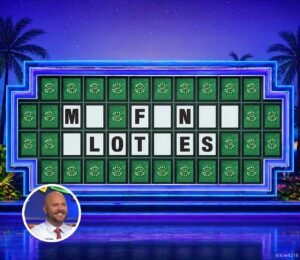
The puzzle presented in this episode proved to be particularly divisive. Some viewers felt that the visible letters offered a clear linguistic pathway, while others argued that the structure of the phrase introduced ambiguity that made confident guessing difficult. This divergence of interpretation is part of what makes the Bonus Round so engaging. Language, when partially obscured, becomes a space of multiple possibilities, and contestants must navigate those possibilities under extreme time constraints.
Wredberg’s attempt reflected this tension. His body language suggested concentration and urgency, as he worked through potential combinations in real time. The studio environment amplified every second—audience silence, the ticking clock, and the subtle cues of anticipation all contributed to an atmosphere where even small pauses felt significant. In moments like these, the game transcends entertainment and becomes a live demonstration of cognitive pressure.
Ultimately, he was unable to solve the puzzle within the allotted time. The reveal of the correct phrase brought a mixture of reactions: disappointment from the contestant, empathy from the audience, and debate among viewers about whether the puzzle had been fairly balanced or deceptively challenging. This outcome, while not resulting in a Bonus Round win, did not diminish the strength of his overall performance. In fact, it reinforced a key truth about Wheel of Fortune—that success is measured not only by final outcomes, but by the journey through each round.
What makes episodes like this memorable is not simply the presence of a near win, but the narrative arc that develops organically through gameplay. Wredberg’s progression from confident early rounds to a high-pressure finale created a structure that viewers could emotionally follow. His consistency built anticipation, and his final challenge provided resolution, even if not in the form of victory.
Audience reactions to such moments often extend beyond the broadcast itself. Social media discussions, informal debates, and replayed clips contribute to a broader cultural conversation about what might have been. Some viewers analyze letter choices, others reconstruct alternative solving strategies, and many simply express admiration for the contestant’s composure. This post-episode engagement is part of the modern lifecycle of game shows, where content continues to evolve after airing through public interpretation.
It is also worth noting that the appeal of Wheel of Fortune lies in its accessibility. Unlike complex competition formats that require specialized knowledge, this game is built on universally understood mechanics: letters, words, and probability. This simplicity allows viewers to participate mentally, turning passive watching into active engagement. The Bonus Round, in particular, functions almost like a shared puzzle between contestant and audience, intensifying the emotional stakes.
For contestants like Wredberg, the experience is both exhilarating and humbling. The studio environment amplifies every decision, but it also offers a rare opportunity to engage in high-stakes problem-solving under conditions that few other contexts replicate. The pressure is real, but so is the support—from audience applause to family encouragement, each element contributes to the emotional texture of the experience.
Even in moments of defeat, contestants often leave with substantial winnings and an unforgettable personal experience. The structure of the game ensures that participation itself carries value, both financially and emotionally. This balance between competition and entertainment is one of the reasons the show has maintained its popularity for decades.
Looking at the broader context, episodes like this one reinforce the enduring design strength of Wheel of Fortune. It is a format that thrives on unpredictability within structure. The wheel introduces chance, the puzzles introduce intellect, and the Bonus Round introduces pressure. Together, these elements create a dynamic system where every episode has the potential for dramatic variation.
Wredberg’s performance exemplifies how individual contestants can elevate this system into compelling storytelling. His steady progression, strategic decision-making, and composure under pressure transformed what could have been a standard episode into a memorable narrative arc. The absence of a final victory did not diminish the impact of his journey; instead, it highlighted the fine margins that define success in such environments.
In the end, the episode serves as a reminder that game shows are not just about outcomes but about moments. A correctly placed letter, a well-timed spin, or a near-solved puzzle can resonate as strongly as a win. The human element—decision-making under uncertainty, emotional reaction to pressure, and the shared experience of suspense—is what sustains viewer interest over time.
As the lights dimmed and the episode concluded, what remained was not just a record of winnings or losses, but a narrative of tension, skill, and possibility. And that is precisely why Wheel of Fortune continues to endure: because every spin holds the potential for something unforgettable, and every contestant brings a new story waiting to unfold under the bright studio lights.