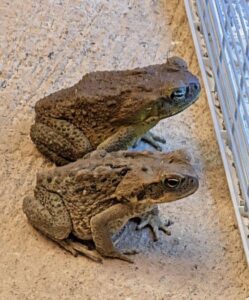
A toad appearing in or around a home often creates a moment of surprise. For many people, it is an unexpected encounter that interrupts routine—something small, quiet, and unfamiliar suddenly present in a space typically associated with human life. Yet in most cases, this encounter is neither unusual nor cause for concern. Instead, it is a natural event rooted in ecology, behavior, and environmental conditions.
To understand why a toad might enter a yard, garden, or even a house, it is important to first understand what drives its behavior. Toads are amphibians, meaning they rely heavily on moisture for survival. Their skin must remain damp to support breathing and regulate hydration. Because of this, they are naturally drawn to environments that provide shade, humidity, and access to water sources.
After rainfall, for example, toads often become more active. Wet soil makes it easier for them to move, and the increased humidity helps prevent dehydration. Rain also stimulates insect activity, which increases their food supply. As a result, it is common to see toads more frequently during or after rainy weather.
In residential areas, gardens and yards can unintentionally create ideal habitats for toads. Thick vegetation, mulch, compost piles, and shaded corners provide shelter during the day. At night, outdoor lighting attracts insects such as moths and flies, which in turn attract toads looking for food. From the toad’s perspective, a well-lit porch or garden is not unusual—it is simply a convenient hunting ground.
When a toad enters a home, it is usually accidental. It may slip through an open door, a gap near a foundation, or an entry point while chasing insects. Once inside, it typically remains still and tries to find a dark, quiet place to hide. Toads are not aggressive animals. They do not seek interaction with humans and are far more likely to freeze or retreat than to move toward activity.
Despite their sudden appearance, toads pose no threat to people. They do not bite, they are not poisonous to touch in most everyday circumstances, and they do not damage property. Some species do produce mild toxins as a defense mechanism, but these are not dangerous through casual contact and mainly serve to deter predators in the wild. Simple handwashing after accidental contact is generally sufficient.
One of the most beneficial roles toads play in human environments is pest control. They feed on a wide range of insects, including mosquitoes, ants, beetles, slugs, and other small invertebrates. This makes them natural allies in maintaining ecological balance in gardens and outdoor spaces. Unlike chemical pesticides, toads provide a continuous and environmentally friendly form of pest management.
Gardeners often appreciate the presence of toads for this reason. A single toad can consume a large number of insects in a single night. By reducing pest populations, they can help protect plants and improve overall garden health. In this way, their presence is not only harmless but actively beneficial.
Beyond their practical ecological role, toads also serve as indicators of environmental health. Amphibians in general are highly sensitive to changes in their surroundings. Their permeable skin makes them vulnerable to pollution, pesticides, and environmental disruption. Because of this sensitivity, they tend to avoid heavily contaminated or unstable environments.
When toads are found in a particular area, it often suggests that the local ecosystem is relatively balanced. Clean water sources, adequate vegetation, and low levels of harmful chemicals all contribute to conditions where amphibians can survive. In this sense, seeing a toad can be interpreted as a sign that the environment is functioning well on a basic ecological level.
However, it is important not to overinterpret this observation. While the presence of toads can suggest favorable conditions, it does not guarantee that an environment is entirely free of pollution or ecological stress. It simply indicates that conditions are suitable enough for certain wildlife to thrive.
Toads also play an important role in the food chain. They are both predators and prey, occupying a middle position in the ecosystem. While they consume insects and small invertebrates, they are also eaten by birds, snakes, and small mammals. This balance helps maintain stability within natural systems, preventing overpopulation of certain species.
Their life cycle further reflects their ecological importance. Toads begin life as eggs laid in water, which hatch into tadpoles. These tadpoles undergo metamorphosis, gradually developing legs and adapting to life on land. This transformation is one of the most recognizable examples of biological change in nature and highlights the adaptability required for survival in different environments.
Because of this transformation process, toads have often been associated with symbolic meanings in various cultures. Across different traditions, they are sometimes seen as symbols of change, resilience, and adaptation. Their ability to shift from aquatic to terrestrial life has made them metaphors for personal growth and transition.
In some cultural interpretations, toads are also linked to renewal. Their emergence after rain or during humid conditions has been associated with cycles of nature and rebirth. These interpretations are not scientific, but they reflect how humans have historically observed and assigned meaning to natural phenomena.
In certain belief systems, particularly within traditional Feng Shui practices, toads are associated with prosperity and abundance. They are sometimes considered symbols of good fortune, believed to attract positive energy or financial success. These interpretations are symbolic rather than empirical, but they remain part of cultural storytelling in various communities.
Other traditions view toads more neutrally or practically, recognizing them simply as part of the natural environment. In these perspectives, their presence is neither lucky nor unlucky—it is simply a reflection of ecological balance and seasonal activity.
From a scientific standpoint, there is no evidence to suggest that a toad entering a home carries any supernatural meaning or predictive significance. Its behavior is driven entirely by environmental conditions, survival instincts, and biological needs.
Still, human beings naturally seek meaning in unexpected events. A small creature entering a private space can feel symbolic simply because it is unusual. This is a psychological response rather than a biological one. People often interpret such moments through cultural frameworks, personal beliefs, or emotional states.
In practical terms, if a toad is found inside a home, the best approach is simple and gentle. It can be carefully guided back outside without harm. Toads do not need to be killed or removed aggressively. In fact, allowing them to return to their natural environment is both humane and beneficial for local ecosystems.
Preventing future indoor visits is also straightforward. Reducing excess outdoor lighting, sealing small gaps near doors or windows, and minimizing standing water around entryways can help make homes less attractive to insects and, by extension, toads. However, complete exclusion is rarely necessary unless frequent indoor appearances become a concern.
In gardens, encouraging a toad-friendly environment can be beneficial. Features such as small water sources, natural ground cover, and undisturbed shaded areas can support their presence. This contributes to biodiversity and helps maintain a healthy balance between plants and insects.
Ultimately, the appearance of a toad is a reminder of the quiet systems that operate alongside human life. While people often focus on larger or more visible wildlife, small creatures like toads play essential roles in maintaining ecological stability. Their presence reflects the interconnectedness of living systems, where even the smallest organisms contribute to the health of the whole.
Whether viewed through a scientific lens or a cultural one, toads represent a connection to the natural world that often goes unnoticed. They are not signs of danger or mystery, but rather expressions of environmental balance and seasonal rhythm.
In a fast-paced human environment, moments like encountering a toad can serve as subtle reminders that nature is always present, even in small and unexpected ways. Their quiet movements, nocturnal habits, and unassuming appearance encourage observation rather than reaction.
In the end, a toad in or near a home is simply a visitor guided by instinct—seeking shelter, moisture, and food in a world that overlaps with our own. Its presence is neither extraordinary nor alarming, but part of a broader ecological pattern that has existed long before human structures were built.
Understanding this allows for a calmer, more informed response. Instead of fear or superstition, the encounter can be met with awareness. Instead of disruption, it can be met with coexistence.