Home security has become one of the most important concerns for modern households. Whether people live in large cities, quiet suburbs, or rural communities, the desire to protect family members, belongings, and personal space remains universal. Many homeowners invest heavily in alarm systems, surveillance cameras, motion sensors, reinforced locks, smart doorbells, and outdoor lighting in hopes of creating safer living environments. Entire industries have developed around the promise of stronger protection through increasingly advanced technology.
Yet despite all these sophisticated solutions, some of the most widely discussed home security ideas involve surprisingly ordinary household objects.
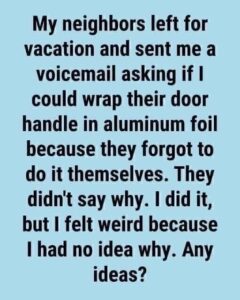
One of the most unusual examples is the growing popularity of the aluminum foil door handle trick. At first glance, the concept sounds almost absurdly simple. Wrapping aluminum foil around a door handle hardly appears comparable to modern security systems filled with cameras, smartphone alerts, and electronic monitoring. Nevertheless, this inexpensive household hack has attracted attention online because of the way it combines psychological deterrence, visible tamper evidence, sound awareness, and practical resourcefulness into a quick and accessible safety measure.
The idea spread largely through social media posts, home safety discussions, and viral demonstrations where people explained how aluminum foil could function as a low-tech alert system for exterior doors. While it is not a replacement for proper locks or comprehensive security systems, supporters argue that it can add another small layer of awareness that may help homeowners notice tampering more quickly or discourage opportunistic intruders altogether.
The method itself is remarkably straightforward.
Before leaving home or going to sleep at night, a person wraps aluminum foil snugly around an exterior door handle. The foil is usually smoothed carefully so that it remains intact and visibly clean rather than loosely crumpled. Once applied, the foil becomes highly sensitive to touch or movement. If someone attempts to twist the handle, push the door, or manipulate the knob, the foil immediately wrinkles, tears, shifts, or produces noticeable crinkling sounds.
In the morning or upon returning home, the homeowner can quickly inspect the foil for signs of disturbance.
Supporters of the trick point to several reasons why this simple setup may provide value beyond its appearance. One of the biggest advantages is that aluminum foil reacts visibly and audibly to even minor handling. Unlike a standard doorknob that can be touched silently and leave little obvious evidence, foil creates both sound and visual change instantly.
The crinkling noise produced by foil may alert someone inside the home if a handle is disturbed unexpectedly at night. Even small movements can generate surprisingly sharp sounds in a quiet environment. For light sleepers or individuals living alone, this immediate auditory cue can create additional awareness during vulnerable hours.
At the same time, the visual effect serves another purpose.
If the foil appears wrinkled, torn, loosened, or disturbed after being left untouched overnight or during an absence, it may signal that someone attempted to manipulate the handle. While the disturbance could easily result from harmless causes such as weather, pets, or accidental contact, the altered foil still functions as a crude tamper indicator that encourages homeowners to remain attentive.
The reflective nature of aluminum foil also contributes to its unusual effectiveness as a psychological deterrent.
Most burglars prefer easy, low-risk opportunities. Criminal behavior research consistently shows that intruders often avoid homes that appear occupied, monitored, or difficult to access. Unusual visual details around entry points can interrupt expectations and create uncertainty.
A door handle wrapped in shiny foil immediately appears abnormal.
To an opportunistic intruder approaching a home, the foil may suggest the homeowner has intentionally prepared some form of alert mechanism or surveillance setup. Even if the person does not fully understand its purpose, the unfamiliar appearance can introduce hesitation. In many situations, burglars seek quick and predictable access rather than uncertainty or attention.
This psychological aspect is central to many effective security strategies.
Motion lights, security stickers, visible cameras, barking dogs, reinforced doors, and neighborhood watch signs all function partly by increasing perceived risk. They communicate awareness and preparedness rather than vulnerability. Aluminum foil operates similarly on a smaller scale by making the entry point appear intentionally monitored.
The concept also highlights an important principle in home safety: layered security.
No single security measure guarantees protection completely. Instead, effective safety usually results from combining multiple small barriers and deterrents that collectively make unauthorized access more difficult, noisy, risky, or time-consuming.
Aluminum foil alone will not stop a determined intruder. It cannot physically secure a door or notify emergency services. However, when combined with quality locks, outdoor lighting, cameras, alarm systems, or neighborhood awareness, it can become one additional layer contributing to overall household vigilance.
Some people even pair the foil trick with additional low-tech alert methods.
For example, lightweight objects such as bells, cups, cans, or small hanging items may be positioned near the handle so they fall or make noise if the door moves unexpectedly. Others use the foil primarily as a visible tamper seal while relying on cameras or smart doorbells for actual monitoring and recording.
The broader popularity of the hack reflects something deeper than security alone: the appeal of practical resourcefulness.
People are naturally drawn to simple solutions that feel empowering and accessible. Not everyone can afford expensive security installations or monthly monitoring subscriptions. Renters may face restrictions preventing major modifications to doors or property. Some individuals simply prefer low-cost preventive habits that require little technical knowledge.
Aluminum foil satisfies all of those conditions.
It is inexpensive, widely available, easy to apply, and removable within seconds. No electricity, batteries, internet connection, or installation process is required. This accessibility makes the idea especially attractive to people seeking immediate and affordable ways to feel more secure.
The trick also resonates because it represents a form of everyday preparedness.
Humans often feel calmer when they believe they have taken active steps to reduce vulnerability, even if those steps are relatively small. Locking doors, checking windows, setting alarms, or turning on lights before bed all contribute psychologically to feelings of safety and control. The aluminum foil hack fits naturally into this category of small protective rituals.
Beyond security, aluminum foil itself has long been valued for its versatility around the home.
Its reflective, lightweight, and moldable properties make it useful in dozens of household situations. People use foil for cooking, insulating, protecting surfaces, polishing metal, sharpening scissors, deterring pests, reducing static electricity, and temporarily sealing gaps or leaks. Its ability to respond visibly to touch and pressure is part of what makes the door handle trick possible in the first place.
The foil hack also illustrates how low-tech solutions continue to coexist alongside modern technology.
In an era dominated by smart homes, AI-powered cameras, facial recognition systems, and smartphone-controlled security devices, there remains something appealing about simple physical awareness tools requiring no software or maintenance. Basic human observation still matters.
In fact, many professional security experts emphasize that awareness and habits often matter more than gadgets alone.
A homeowner who consistently locks doors, communicates with neighbors, pays attention to unusual activity, and maintains visible signs of occupancy may reduce risk significantly even without expensive technology. Conversely, the most advanced security system loses value if people neglect basic precautions.
The foil trick therefore works best when viewed not as a magical defense mechanism but as part of a broader mindset of attentiveness.
Critics of the idea sometimes argue that its practical effectiveness is limited, and in many ways they are correct. Aluminum foil cannot prevent forced entry, and determined criminals are unlikely to abandon plans solely because of a wrapped doorknob. Environmental factors like wind, rain, or accidental contact may also disturb the foil, reducing reliability as a true tamper indicator.
These criticisms are important because exaggerated claims can create false confidence.
No household hack should replace proper locks, reinforced doors, exterior lighting, emergency planning, or professional security measures when needed. Homeowners should avoid assuming that foil alone provides meaningful physical protection.
However, dismissing the idea entirely may overlook its actual strengths.
The foil hack succeeds less as a defensive barrier and more as a behavioral tool encouraging awareness. It prompts homeowners to think actively about entry points, nighttime routines, and environmental cues. It introduces a small but noticeable sign of intentional vigilance that may discourage casual tampering or increase alertness inside the home.
Even the act of applying the foil each evening can reinforce security habits psychologically.
People often underestimate the role of routine in personal safety. Repeated habits create mindfulness. A nightly ritual involving checking locks, inspecting windows, turning on lights, and applying simple alert measures can increase overall awareness of the home environment.
The social spread of hacks like this also reflects modern internet culture.
People enjoy sharing practical, low-cost solutions that appear clever or unexpectedly effective. Viral household tips often gain popularity because they combine curiosity with empowerment. The aluminum foil trick appeals to viewers precisely because it transforms an ordinary kitchen product into something associated with protection and preparedness.
Whether every viral claim surrounding it is fully justified matters less than the broader lesson it teaches.
Security does not always depend solely on expensive technology or complicated systems. Sometimes awareness, creativity, and layered thinking provide meaningful contributions to safety. Small actions can influence behavior, increase attentiveness, and create psychological deterrence even when they are physically simple.
Ultimately, the aluminum foil door handle trick serves as a reminder that home protection exists on many levels.
Some measures physically block access. Others create noise, visibility, uncertainty, or awareness. Some strengthen doors and locks, while others strengthen habits and mindfulness. Effective safety often emerges not from one perfect solution but from multiple overlapping choices working together.
A roll of aluminum foil will never replace comprehensive home security. But as a low-cost supplemental tool, a visible tamper indicator, an audible alert mechanism, and a symbol of practical resourcefulness, it continues to capture attention for understandable reasons.