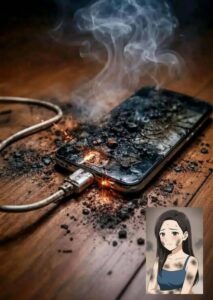
The phrase “never put the charger like this” sounds almost overly simple—like something you might scroll past without a second thought. But behind it is a warning that connects directly to real-world accidents, house fires, and preventable damage that continue to happen every year.
Charging a phone has become one of the most routine actions in modern life. We do it half-asleep, while watching videos, before leaving the house, or overnight without thinking twice. Because it feels so ordinary, the risks are often ignored. Yet the truth is that improper charging habits remain one of the most underestimated causes of device failure and, in rare but serious cases, residential fires.
The Hidden Energy Inside Your Phone
At the center of every smartphone is a lithium-ion battery—a compact, powerful energy source designed for efficiency and long life. But this technology comes with one critical limitation: it is sensitive.
Heat, pressure, poor ventilation, and electrical instability can all affect how safely a battery operates. When things go wrong, the failure is not always gradual. In extreme cases, batteries can enter a dangerous state known as thermal runaway, where internal heat builds rapidly and uncontrollably.
This process can lead to swelling, smoke, fire, or complete device failure in a matter of minutes.
What makes this especially concerning is how easily it can be triggered by everyday habits that seem harmless.
The Most Common Charging Mistakes
Many charging-related incidents don’t happen because of defective phones—they happen because of how phones are used while charging.
One of the most dangerous habits is placing a phone on soft surfaces such as beds, couches, or pillows while it is charging. These materials trap heat and prevent proper airflow. Without cooling, temperature rises steadily, increasing stress on the battery.
Other common risks include:
- Using low-quality or uncertified chargers
- Continuing to use frayed or damaged cables
- Charging under blankets or inside enclosed spaces
- Leaving devices exposed to direct sunlight while plugged in
- Charging overnight without supervision in unsafe conditions
Each of these habits may seem minor on its own, but together they can create the perfect conditions for overheating.
Why Overnight Charging Can Be Risky
Charging a phone overnight is convenient—but it also extends the time a device spends connected to power without attention.
Modern phones include safety features that slow or stop charging when full, but these systems are not designed to compensate for external risks like poor ventilation, faulty cables, or heat buildup from surrounding materials.
If a phone is placed on a bed or under a pillow while charging overnight, heat has nowhere to escape. Over time, this can stress the battery and increase the chance of malfunction.
While serious incidents remain relatively rare, they are serious enough that safety agencies continue to warn against improper overnight charging habits.
The Role of Chargers and Cables
Not all chargers are created equal.
Certified chargers are designed to regulate voltage, prevent overheating, and communicate properly with the device. Cheaper or counterfeit alternatives may lack these protections, leading to unstable current flow.
Similarly, worn or damaged cables can create inconsistent electrical contact. This can produce heat at connection points, which may go unnoticed until visible damage occurs.
A small crack in insulation or a loose connector may not seem important, but it can significantly increase risk over time.
What Actually Happens During Overheating
When a lithium-ion battery overheats, internal chemical reactions accelerate. This increases pressure inside the battery cell, which can lead to:
- Swelling of the device
- Loss of battery efficiency
- Sudden shutdowns
- Smoke or burning odor
- Fire in extreme cases
In many documented incidents, the issue did not begin with the phone itself, but with external conditions such as poor airflow or incompatible charging equipment.
Simple Habits That Reduce Risk Immediately
The good news is that preventing these problems does not require technical knowledge or expensive upgrades. It comes down to consistency and awareness.
Here are safe charging practices that significantly reduce risk:
- Use only certified or original chargers
- Replace damaged cables immediately
- Charge on hard, flat, non-flammable surfaces
- Keep the phone uncovered during charging
- Avoid charging under pillows, blankets, or clothing
- Do not expose the device to direct heat or sunlight while charging
- Unplug when not needed for long periods
These habits help maintain stable temperature and reduce unnecessary stress on the battery.
Why Awareness Matters More Than Fear
It’s important to keep perspective. Smartphone fires are not common—but when they do happen, they are often preventable.
The goal is not to create fear around everyday technology, but to highlight how small decisions affect safety. A charging cable is not dangerous on its own. A phone is not dangerous on its own. But certain combinations of heat, pressure, and poor equipment can turn convenience into risk.
The Bigger Picture
Modern devices are safer than ever, with built-in protections and smarter power management systems. But technology can only respond to conditions—it cannot correct unsafe environments.
That responsibility remains with the user.
Safe charging is not about avoiding technology. It is about understanding it well enough to use it responsibly.
Final Thought
Charging your phone should be one of the simplest parts of your day. And for the most part, it is.
But the difference between safe and unsafe charging often comes down to habits that take only seconds to change.
A flat surface instead of a pillow.
A certified charger instead of a cheap replacement.
A moment of attention instead of complete neglect.
Small choices like these ensure that your device remains exactly what it is meant to be: a tool for convenience—not a hidden risk in your home.