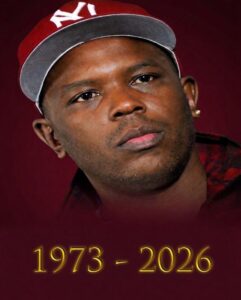
The passing of Oliver Power Grant at the age of 52 has sparked deep reflection throughout the global hip-hop community, especially among those who understand that cultural revolutions are rarely driven by performers alone. While the spotlight often rests on the artists whose voices define a generation, the foundation of any enduring movement is shaped just as powerfully by those who operate behind the scenes—individuals whose decisions, structure, and vision allow creativity to evolve into something lasting.
Grant was one of those rare figures.
His influence was not measured in chart-topping verses or stage performances, but in his ability to recognize potential, organize creative energy, and help transform raw artistic ambition into a structured cultural force. In the early formation of the Wu-Tang Clan, this role was not secondary—it was essential. The group’s eventual global impact was not the result of music alone, but of a carefully constructed ecosystem of artistry, identity, and entrepreneurship, much of which depended on early foundational contributions like his.
To understand Grant’s significance, it is important to revisit the early 1990s, a period when hip-hop itself was still defining its identity within the broader music industry. At the time, the genre was expanding rapidly but remained constrained by traditional industry expectations. Artists were often treated as individual performers rather than collective innovators, and business models rarely accounted for long-term creative independence. In this environment, the emergence of the Wu-Tang Clan represented something entirely different—an approach that combined collective structure with individual empowerment, artistic experimentation with strategic vision.
The group’s formation was unconventional from the beginning. Rather than conforming to standard industry templates, Wu-Tang Clan operated as a collective built around shared identity, creative diversity, and long-term strategic thinking. Each member brought a distinct voice, style, and perspective, yet the group functioned as a unified force. This balance between individuality and collective identity became one of the defining characteristics of their success.
Oliver Power Grant’s involvement during these early stages contributed to shaping this direction. While he was not a front-facing performer, his presence helped reinforce the importance of structure, organization, and long-term vision. He understood that artistic talent alone was not enough to sustain a movement—that without infrastructure, even the most powerful creative energy could dissipate. His perspective aligned with a broader recognition among key members that hip-hop could evolve beyond music into something more expansive: a cultural and economic ecosystem.
This understanding became especially important as the collective began to consider its long-term potential. Rather than focusing solely on immediate musical output, there was a growing awareness that their influence could extend into fashion, branding, business ownership, and cultural identity. This shift in thinking was ahead of its time, particularly within an industry that still relied heavily on traditional label control and limited artist autonomy.
One of the most significant expressions of this expanded vision was the development of Wu Wear, a clothing line that would go on to become one of the earliest and most influential examples of artist-driven fashion in hip-hop history. At a time when artists were rarely involved in brand creation beyond music merchandise, Wu Wear represented a bold redefinition of what artistic identity could look like in the marketplace.
Grant’s role in supporting this broader ecosystem reflected a deeper understanding of cultural entrepreneurship. Wu Wear was not simply a commercial venture—it was an extension of identity. It allowed the Wu-Tang Clan to express its aesthetic, philosophy, and cultural presence in a tangible form that extended beyond music. Fans were no longer just listeners; they became participants in a larger cultural movement. Clothing became communication. Style became language. And branding became storytelling.
This integration of music and business marked a turning point in hip-hop’s evolution. It demonstrated that artists could maintain creative control while also building independent revenue streams and cultural influence. In many ways, this model laid the groundwork for future generations of artists who would seek to own their intellectual property, control their branding, and expand their influence across multiple industries.
As Wu-Tang Clan’s popularity grew, so did its global impact. The group became more than a musical act—it became a cultural institution. Its influence spread across continents, reaching audiences who connected not only with the music but with the philosophy behind it. The idea of collective strength, individual expression, and strategic independence resonated deeply in a world where artists were increasingly seeking alternatives to traditional industry structures.
Behind this expansion was a carefully maintained balance between creativity and organization. The success of the Wu-Tang Clan was not accidental; it was the result of intentional planning, shared vision, and a willingness to think beyond conventional limitations. Grant’s behind-the-scenes contributions helped support this balance, ensuring that the structural foundation of the movement remained stable even as its cultural reach expanded.
One of the most overlooked aspects of cultural movements is the infrastructure required to sustain them. While artistic expression captures attention, it is often the organizational framework that determines longevity. In this regard, Grant’s role reflects a broader truth about creative industries: vision without structure rarely survives, and structure without vision rarely inspires. The Wu-Tang Clan succeeded because it embodied both.
Despite his significant contributions, Grant remained largely outside the public spotlight. This absence of visibility was not an absence of impact. Instead, it reflected a deliberate choice to prioritize substance over recognition. In an industry where visibility is often equated with value, his approach stood in contrast to prevailing norms. He operated with a focus on function rather than fame, understanding that meaningful influence does not always require public acknowledgment.
Those who worked alongside him often recognized this quality. His presence was described not in terms of performance, but in terms of perspective. He brought clarity to complex ideas, grounded ambitious visions in practical frameworks, and contributed to decisions that shaped the group’s long-term trajectory. In doing so, he embodied a type of leadership that is frequently underappreciated but fundamentally essential.
As time has passed, the significance of his contributions has become more visible, not through isolated achievements but through the enduring legacy of the systems he helped support. The continued relevance of Wu-Tang Clan, both musically and culturally, serves as a testament to the strength of its foundation. Its influence on fashion, business, branding, and independent artistry can still be seen across the global creative landscape.
Modern artists frequently cite principles that the Wu-Tang Clan helped popularize: ownership of intellectual property, diversification of income streams, and control over artistic identity. These ideas, now widely discussed and implemented, were once considered unconventional. The early adoption of such principles reflects the forward-thinking nature of the collective’s foundational strategy.
In this sense, Grant’s legacy extends beyond a single group or moment in time. It exists within the broader evolution of hip-hop as a global industry. The shift from purely performance-based careers to multifaceted creative enterprises owes much to early experiments in independence and structure. Wu-Tang Clan’s model demonstrated that artists could be both creators and entrepreneurs, both storytellers and strategists.
His passing invites reflection not only on what was accomplished, but on what was made possible. Cultural movements are rarely the result of individual effort alone. They are built through networks of visionaries, contributors, and collaborators whose roles may differ in visibility but not in importance. Grant’s story reminds us that influence does not always require center stage. Sometimes, it operates most effectively from behind it.
The emotional response to his passing has been shaped by this recognition. For many, it is not simply the loss of an individual, but the acknowledgment of a foundational presence in a movement that reshaped music history. His work helped create space for others to thrive, and in doing so, contributed to a legacy that continues to expand across generations.
As fans, artists, and cultural observers reflect on his life, a consistent theme emerges: the importance of vision paired with humility. The ability to contribute meaningfully without demanding recognition is rare in any field, and especially significant within an industry often defined by visibility and performance.
Oliver Power Grant’s legacy is therefore not confined to a single role or achievement. It is embedded in the structure of a cultural movement that continues to evolve. It lives in the music that still resonates decades later, in the business models that have become industry standards, and in the creative independence that artists continue to pursue.
Ultimately, his story is a reminder that the most enduring contributions are not always the most visible. They are often the ones that shape the conditions under which others can succeed. In this way, his influence extends far beyond the early years of Wu-Tang Clan. It exists in the ongoing evolution of hip-hop as a global force, and in the countless artists who continue to build upon the foundation that figures like him helped establish.
And in that ongoing legacy, his impact remains present—not as a fleeting moment in history, but as part of the enduring architecture of modern music culture.