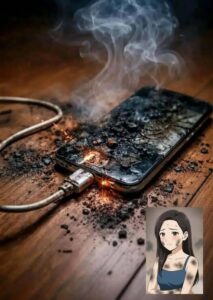
The phrase “never put the charger like this” may sound like a simple warning people casually scroll past online, but behind those words lies a very real safety issue that affects millions of households every day. Charging a smartphone has become so routine that most people no longer think about it. Phones are plugged in before bed, left charging on couches, placed beneath pillows, or connected to damaged cables without a second thought.
Yet many serious electrical accidents begin exactly this way.
What seems like a harmless nightly habit can sometimes become the starting point for overheating, smoke damage, battery failure, or even dangerous house fires. Reports of melted chargers, burned mattresses, scorched outlets, and exploding batteries are not exaggerated internet myths. They are real incidents connected to improper charging practices that people often underestimate until something goes wrong.
In modern life, smartphones rarely leave our side.
They store photos, banking information, passwords, messages, work files, memories, and daily routines. Because these devices feel so familiar and essential, many people forget they are powered by highly concentrated energy systems operating inside very small spaces.
At the center of this issue are lithium-ion batteries.
These batteries power most modern smartphones, tablets, laptops, and portable electronics because they are lightweight, rechargeable, and capable of storing large amounts of energy efficiently. Without lithium-ion technology, modern portable electronics would not function the way they do today.
But despite their convenience, lithium-ion batteries are extremely sensitive to heat, pressure, physical damage, and electrical instability.
Under proper conditions, they operate safely.
Under poor conditions, they can become dangerous surprisingly quickly.
One of the most serious risks associated with lithium-ion batteries is a process called thermal runaway.
This occurs when a battery overheats uncontrollably. Excessive heat triggers chemical reactions inside the battery that generate even more heat, creating a dangerous cycle that can rapidly escalate. In severe cases, the battery may begin smoking, catch fire, or explode.
And often, the initial trigger is something simple.
A damaged charging cable.
Poor airflow.
An uncertified charger.
Charging beneath a pillow.
Leaving the device trapped inside blankets overnight.
These situations trap heat around the battery precisely when the device is already generating heat from charging.
Many people unknowingly create ideal conditions for overheating every single day.
One of the most common mistakes is charging a phone on soft surfaces like beds, couches, blankets, or mattresses. Soft materials prevent heat from escaping properly and reduce airflow around the device. As temperature rises, both the battery and charging components experience additional stress.
This risk becomes especially concerning overnight.
People often place phones beside them while sleeping, sometimes under pillows or blankets for convenience. Unfortunately, enclosed spaces trap heat efficiently. If a charger or battery begins malfunctioning during the night, the user may not notice warning signs such as excessive warmth, strange smells, or smoke until the situation becomes severe.
Another major danger comes from damaged or low-quality charging accessories.
Cheap chargers and uncertified cables may lack important safety protections designed to regulate voltage, prevent overheating, and reduce electrical instability. While unofficial accessories are often cheaper, they sometimes use lower-quality materials and insufficient insulation.
Frayed wires, bent connectors, exposed metal, or loose charging heads should never be ignored.
Even small cable damage can increase the risk of:
- Electrical short circuits
- Overheating
- Sparks
- Battery stress
- Fire hazards
Repeatedly bending charging cables near the connector is another extremely common habit that weakens internal wiring over time.
People often continue using damaged chargers because they still appear functional. But functionality does not equal safety.
A charger may continue powering a device while silently generating excess heat or unstable electrical flow.
Fast charging technology adds another layer to the conversation.
Modern smartphones increasingly support fast charging systems capable of delivering large amounts of power quickly. While convenient, fast charging naturally generates additional heat compared to slower charging methods.
This does not mean fast charging itself is unsafe.
However, it does mean proper ventilation and quality accessories become even more important.
Using fast charging with damaged cables, poor airflow, or uncertified adapters increases stress on the battery system significantly.
Heat remains the central issue in nearly every charging-related accident.
Lithium-ion batteries are designed to operate within specific temperature ranges. Once temperatures rise too high, battery components begin degrading faster, reducing both lifespan and safety.
This is why charging phones in direct sunlight is also dangerous.
Leaving a device charging inside a hot car, near windows, or outdoors in high temperatures combines external heat with internal charging heat. The battery may become dangerously hot much faster than users realize.
Even gaming or streaming videos while charging can raise temperatures considerably because the phone is simultaneously:
- Charging the battery
- Running intensive processing tasks
- Generating additional internal heat
Over time, these habits may weaken battery health and increase safety risks.
The consequences of improper charging extend far beyond replacing a damaged phone.
In severe cases, charging-related fires can spread rapidly through bedrooms, furniture, curtains, carpets, and electrical systems. House fires linked to electronics have caused injuries, hospitalizations, and devastating property loss worldwide.
Even smaller incidents carry serious consequences.
A damaged battery may destroy personal data, family photos, work files, and sensitive information stored on the device. For many people, losing years of memories and digital records feels emotionally devastating.
Financial consequences also add up quickly.
Replacing modern smartphones is expensive. Fire damage repairs can cost thousands. Some insurance providers may even investigate whether negligence contributed to the incident, particularly if clearly damaged charging equipment was involved.
There are environmental consequences as well.
Burned electronics release toxic materials and contribute to electronic waste, which continues growing globally each year. Improper disposal of damaged lithium batteries creates additional environmental and safety hazards.
Fortunately, preventing most charging-related accidents is relatively simple.
Safe charging habits dramatically reduce risk.
Some of the most important safety practices include:
✔️ Use original or certified chargers whenever possible
✔️ Replace damaged cables immediately
✔️ Avoid charging on beds, couches, or blankets
✔️ Charge devices on hard, flat surfaces
✔️ Keep phones uncovered during charging
✔️ Avoid charging in extreme heat or direct sunlight
✔️ Disconnect chargers showing unusual heat or smell
✔️ Avoid leaving devices plugged in unnecessarily for long periods
Good airflow matters enormously.
A simple desk, nightstand, or hard tabletop allows heat to dissipate far more effectively than soft materials that trap warmth around the device.
Paying attention to warning signs is equally important.
A phone should not become excessively hot during normal charging. Slight warmth is common, especially with fast charging, but extreme heat, swelling, strange odors, flickering screens, or buzzing sounds should never be ignored.
Battery swelling is particularly dangerous.
If a phone begins bulging or separating from its casing, charging should stop immediately because the battery may already be unstable.
Modern smartphones include numerous built-in safety systems designed to reduce risk. Manufacturers implement temperature monitoring, charging regulation, automatic shutdown protections, and battery management software.
But these systems are not invincible.
No safety technology can fully compensate for poor habits, damaged accessories, or unsafe charging environments.
In many documented incidents, the phone itself was not defective. Instead, unsafe usage conditions created the problem.
That distinction matters because it highlights how much control users actually have over preventing accidents.
Safe charging is not complicated.
It simply requires awareness.
The problem is that familiarity often creates carelessness. People charge devices so frequently that the process feels automatic and harmless. Yet any technology involving concentrated electrical energy deserves at least basic attention and respect.
Especially during overnight charging when problems may go unnoticed for hours.
Ultimately, the warning “never put the charger like this” reflects a larger reality about modern technology: convenience should never replace safety awareness.
Small decisions matter.
Where a phone is placed.
Which charger is used.
Whether airflow exists.
Whether damaged accessories are replaced promptly.
These details may seem minor individually, but together they determine whether charging remains safe or becomes risky.
In the end, smartphones are meant to simplify life—not endanger it.
A few thoughtful habits can protect:
- Your device
- Your personal data
- Your finances
- Your home
- Your health
- Your family’s safety
And considering how small those efforts are, they may ultimately become some of the most important daily precautions people take without even realizing it.