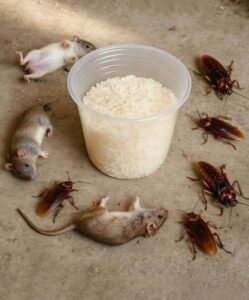
For generations, people have searched for simple ways to keep homes free from unwanted pests. Long before modern sprays, poison pellets, and chemical exterminators became common, families relied on practical household remedies passed down through observation and experience. Among the most surprising of these remedies is one humble kitchen staple almost everyone already owns: rice.
At first glance, rice seems like an unlikely tool for pest control. Most people associate it with comforting meals, pantry shelves, family recipes, and cultural traditions—not with eliminating rats and cockroaches. Yet rice has quietly remained part of many traditional pest-control methods because of how effectively it works when combined with a few inexpensive ingredients and placed strategically around the home.
The reason rice works is not based on superstition or magic. It comes down to biology and behavior. Rats and cockroaches are both highly opportunistic creatures. They constantly search for food sources, especially foods rich in starches, sugars, and carbohydrates. Rice naturally attracts them because it resembles the types of foods they already seek out for survival. When rice is combined with other carefully selected ingredients, it becomes an effective delivery system that helps control pest populations without depending entirely on harsh chemicals.
For many homeowners, especially families with children, elderly relatives, pets, allergies, or sensitivity to strong chemicals, natural methods feel safer and less stressful than commercial pesticides. Rice-based pest solutions offer an affordable alternative that can often reduce infestations significantly when combined with proper cleaning and prevention strategies.
To understand how these remedies work, it helps to look separately at cockroaches and rats because each pest responds differently.
Cockroaches are among the most resilient insects on earth. They survive in warm, dark, moist environments and feed on nearly anything organic. Kitchens, bathrooms, laundry areas, basements, and storage spaces become ideal hiding places because crumbs, grease, moisture, and clutter provide everything they need.
One of the most common rice-based cockroach remedies uses cooked rice, sugar, and boric acid.
Cooked rice works especially well because its soft texture and starchy smell attract roaches quickly. Sugar strengthens the bait by increasing its scent and sweetness. Boric acid, when used carefully and safely, acts as the active ingredient that ultimately kills the insects.
The process itself is surprisingly simple.
Small portions of cooked rice are mixed with a little sugar and a modest amount of boric acid powder. The mixture is then shaped into tiny portions and placed in areas where cockroaches frequently travel.
The effectiveness comes from cockroach behavior itself.
Roaches constantly groom their bodies and antennae. When they crawl through boric acid, tiny particles stick to their legs and shells. Later, while cleaning themselves, they ingest the powder. Once inside the digestive system, boric acid disrupts their metabolism and damages their internal systems.
What makes this method especially powerful is that cockroaches live communally. They crawl over one another, share nesting spaces, and often consume the droppings or remains of dead roaches. As a result, contamination spreads gradually throughout the colony. One exposed insect can indirectly affect many others.
Placement matters enormously.
Cockroaches prefer warm, hidden areas close to moisture and food sources. Effective locations include:
behind refrigerators
under sinks
near dishwashers
behind ovens
inside cabinets
along baseboards
near garbage bins
around pipe openings
inside dark pantry corners
The bait should be placed in small amounts rather than large piles. Tiny portions feel safer to insects and are less noticeable inside the home.
However, caution remains important even with natural methods. Boric acid should always be kept away from pets and small children. While generally less hazardous than many commercial pesticides when used correctly, it still requires responsible handling.
For rats, rice works differently.
Rats are intelligent, cautious animals with digestive systems that respond poorly to certain combinations of ingredients. Traditional remedies often combine uncooked rice with other household materials that exploit biological weaknesses in rodents.
One common mixture involves uncooked rice, sugar, and baking soda.
Sugar attracts rats by masking unfamiliar smells and encouraging feeding. Rice provides texture and bulk. Baking soda becomes the active ingredient once consumed.
When baking soda reacts with stomach acids, it produces carbon dioxide gas. Humans and many animals can release gas naturally through burping or digestion. Rats cannot easily expel gas the same way. The buildup creates internal distress that eventually becomes fatal.
Another traditional method combines uncooked rice with plaster powder, often called plaster of Paris or gypsum.
The idea behind this remedy is that rats consume the mixture believing it is food. Moisture inside the digestive system causes the plaster to harden gradually, creating deadly blockages.
Although many people continue using such remedies, caution is necessary. Improper use can create risks for pets or wildlife if left accessible. Homemade bait should always be placed carefully in inaccessible areas where only pests are likely to reach it.
People are often drawn to rice-based methods because they offer several practical advantages over commercial chemical products.
First, they are inexpensive.
Rice, sugar, baking soda, and similar ingredients are already available in many homes. Even boric acid is relatively affordable compared to repeated professional extermination treatments.
Second, the methods are discreet.
Large traps and poison stations can feel unpleasant or embarrassing, especially when guests visit. Small rice mixtures can be hidden quietly behind furniture, appliances, and storage areas without disrupting the appearance of the home.
Third, many homeowners appreciate reducing chemical exposure.
Strong pesticide sprays often produce lingering odors and airborne chemicals that may irritate lungs, trigger allergies, or create discomfort for sensitive individuals. Natural mixtures generally produce fewer fumes and less environmental contamination when used responsibly.
Still, no pest-control method works effectively without addressing the root causes attracting pests in the first place.
Rats and cockroaches invade homes because they find food, shelter, moisture, and hiding places. Even the best bait becomes less effective if conditions continue supporting infestation growth.
Successful pest control always combines elimination with prevention.
For cockroaches especially, moisture control is critical. A dripping pipe beneath a sink can support roach survival for months even if food sources are limited. Repairing leaks often reduces infestations dramatically.
Food storage also matters.
Open cereal boxes, crumbs beneath appliances, overflowing trash bins, pet food left overnight, and greasy kitchen surfaces all encourage pest activity. Cleaning thoroughly and storing food in sealed containers makes the environment less attractive.
Clutter reduction plays another important role.
Cardboard boxes, stacked paper bags, unused storage piles, and dark crowded spaces create ideal hiding locations for insects and rodents. Simplifying storage areas helps expose nesting zones and reduces safe shelter.
For rats, sealing entry points becomes essential.
Rodents can squeeze through surprisingly small openings around pipes, vents, foundations, doors, and utility lines. Even tiny cracks become access routes. Steel wool, caulk, metal mesh, and proper sealing materials help prevent reinfestation after baiting begins.
Monitoring progress is equally important.
Homeowners should inspect bait placements every few days. If bait disappears quickly, pests are active nearby. If untouched for long periods, placement may need adjustment.
Patience also matters.
Natural methods rarely create instant results overnight. Unlike strong commercial poisons designed for rapid killing, rice-based approaches often work gradually by reducing populations over time. Consistency usually produces the best outcome.
Many people also appreciate these methods because they allow early intervention before infestations become severe.
A single cockroach spotted occasionally does not always indicate a major infestation yet. Faint scratching sounds in walls may signal only limited rodent activity initially. Using simple household remedies early can sometimes prevent problems from escalating into expensive professional extermination situations later.
However, there are times when professional help becomes necessary.
Large infestations, recurring infestations despite repeated treatment, extensive structural damage, heavy droppings, persistent odors, or signs of disease exposure require licensed pest-control experts. Natural remedies work best for prevention, small infestations, or supplemental control rather than severe uncontrolled outbreaks.
Another reason rice-based methods continue resurfacing today is growing public interest in environmentally conscious living.
Many people increasingly prefer reducing synthetic chemicals inside their homes whenever possible. Awareness about air quality, pet safety, environmental contamination, and chemical sensitivity has encouraged renewed interest in traditional remedies once considered outdated.
In some ways, these methods represent a return to older forms of practical knowledge.
Before modern pesticides became common, families learned through observation. They watched pest behavior carefully and adapted available materials creatively. Rice, sugar, flour, plaster, baking soda, and natural powders became tools not because advertising promoted them, but because repeated experience demonstrated results.
That historical connection gives these remedies a certain appeal even today.
They feel resourceful.
Simple.
Grounded.
Affordable.
And surprisingly effective when used intelligently.
Of course, “natural” never means completely risk-free. Any substance capable of harming pests requires thoughtful handling. Boric acid should not be inhaled excessively or left accessible to children. Baking soda mixtures should be placed carefully away from pets. Plaster products must remain dry and stored properly.
Responsible use remains essential.
But compared to aggressive chemical sprays, foggers, and toxic rodenticides, many homeowners feel more comfortable controlling small infestations with household-based methods they understand clearly.
Ultimately, what makes rice such an interesting pest-control ingredient is its simplicity.
It demonstrates that solutions do not always need complicated packaging, expensive branding, or harsh fumes to work effectively. Sometimes ordinary household items become powerful tools simply because they interact naturally with animal behavior and biology.
That idea feels reassuring in a modern world often dominated by expensive products and complex solutions.
Rice reminds people that practical knowledge still matters.
Observation still matters.
Consistency still matters.
And sometimes the most useful answers are already sitting quietly inside the kitchen cabinet waiting to be used thoughtfully.
For homeowners struggling with occasional cockroaches or rats, rice-based remedies may provide a surprisingly helpful first step toward restoring comfort, cleanliness, and peace of mind.
With careful placement, regular monitoring, proper sanitation, and patience, these simple mixtures can interrupt pest activity, reduce populations, and help reclaim a home naturally without immediately resorting to aggressive chemical treatments.
Sometimes the most effective solutions are not the loudest or most expensive ones.
Sometimes they begin with something as humble and familiar as a handful of rice.