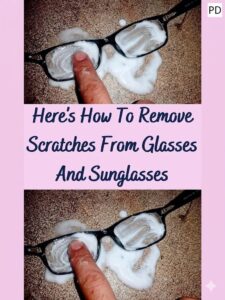
Five Practical Ways to Deal With Scratched Glasses at Home
Scratched glasses are one of those small daily annoyances that quickly become impossible to ignore. At first, a mark on the lens might seem minor—barely visible when you’re indoors or in soft lighting. But once you step outside, drive at night, or face bright screens, that tiny imperfection suddenly turns into glare, streaks, and distraction. It pulls your attention away from everything else, reminding you constantly that your vision is not as clear as it should be.
Because glasses are essential for nearly every aspect of daily life—reading, working, driving, and navigating the world—it’s natural to want a quick fix. A search online reveals countless DIY remedies claiming to erase scratches instantly using household products. Toothpaste, baking soda, car wax, and even metal polish are often suggested as miracle solutions.
But before trying any of these, it’s important to understand a simple truth that opticians consistently emphasize: most scratches cannot truly be repaired at home. They can sometimes be reduced in visibility, but they cannot be fully removed without professional resurfacing or replacing the lenses entirely.
That doesn’t mean home care is useless. It just means expectations need to be realistic. The goal is not restoration—it is careful minimization without causing further damage.
Understanding What a Scratch Really Is
Modern eyeglass lenses are not just pieces of plastic or glass. They are complex layered structures. Most include:
- Scratch-resistant coating
- Anti-reflective coating
- UV protection layer
- Blue-light filter (in many cases)
- Hydrophobic or smudge-resistant coating
When you see a scratch, it may not be in the lens material itself. Often, it exists in one or more of these delicate coatings. That is why DIY polishing methods can be risky: they don’t selectively remove damage—they remove material unevenly across the surface.
In other words, the “fix” can easily become worse than the original problem.
With that in mind, here are five commonly discussed home approaches and what they actually do.
1. Baking Soda Paste (Mild Polishing Method)
Baking soda is one of the most commonly recommended household remedies for lens scratches. It is mildly abrasive, which means it can smooth extremely fine surface imperfections in some uncoated lenses.
The idea is not to remove the scratch itself, but to slightly polish the surrounding surface so the scratch becomes less noticeable.
To use it, a very small amount of baking soda is mixed with water to form a thin paste. This is then applied gently with a microfiber cloth or fingertip in light circular motions for only a short time before being rinsed thoroughly.
However, this method comes with serious limitations. It is only potentially suitable for older, uncoated plastic or glass lenses. On modern coated lenses, it can strip protective layers and leave a cloudy, uneven finish that permanently reduces clarity.
Even when it “works,” the improvement is usually subtle and temporary.
2. Non-Gel Toothpaste (Controlled Abrasion Approach)
Toothpaste is another popular suggestion, often shared in online forums and videos. Like baking soda, it contains mild abrasives designed for cleaning teeth—but those same abrasives are not designed for optical surfaces.
If used at all, it should be plain white toothpaste without gels, whitening agents, or gritty additives. A very small amount is applied gently and briefly before rinsing.
The key risk here is inconsistency. Some toothpastes are far more abrasive than others, even within the “mild” category. That makes this method unpredictable and potentially damaging.
In practice, toothpaste is more likely to haze or dull coated lenses than to improve them.
It may be acceptable only for very old backup glasses where clarity is no longer critical.
3. Car Wax or Scratch Fillers (Temporary Optical Masking)
Car wax and commercial scratch fillers work differently from abrasive methods. Instead of removing material, they attempt to fill in microscopic grooves on the lens surface.
By smoothing how light passes through the scratch, they can temporarily reduce glare and make the damage less noticeable.
This is why some people find short-term improvement after applying wax carefully with a microfiber cloth.
However, this effect is cosmetic and temporary. Over time, wax can build up unevenly, attract dust, and create a hazy appearance. It may also interfere with anti-reflective coatings.
This method is generally only considered for non-essential eyewear such as backup sunglasses or spare reading glasses.
4. Metal Polish (High-Risk Damage Method)
Products like metal polish are sometimes mentioned in online “life hacks,” but they are highly unsuitable for eyeglass lenses.
Metal polish is designed to aggressively remove oxidation and surface imperfections from hard metals. Eyeglass coatings, by comparison, are extremely thin and delicate.
Using metal polish on lenses can result in:
- Immediate removal of protective coatings
- Permanent clouding of the lens surface
- Uneven optical distortion
- Irreversible damage
This is one of the most common DIY mistakes, and opticians strongly advise against it.
Once coatings are stripped, the lens often cannot be restored.
5. Professional Replacement (The Only True Fix)
While it may not feel like a “home solution,” replacing lenses is the only method that truly restores optical clarity.
Modern lenses are engineered with precision coatings and curvature designed for clear vision. Once scratched, that precision is compromised.
Opticians can often replace just the lenses while keeping your existing frames, which can significantly reduce cost compared to buying a full new pair.
In many cases, insurance or vision plans cover lens replacement periodically, making it more accessible than people expect.
If scratches affect your central vision, cause glare, or lead to eye strain, replacement is not optional—it is the healthiest choice for long-term visual comfort.
When DIY Methods Should Be Avoided Completely
You should avoid all home scratch remedies if:
- The lenses have anti-reflective or blue-light coatings
- Scratches are in your direct line of sight
- You experience headaches or eye fatigue
- The damage is deep or spreading
- You rely on the glasses for driving or work
In these cases, any DIY attempt carries more risk than benefit.
The Prevention Mindset Matters More Than Repair
Because true scratch repair is limited, prevention is far more important than fixing damage after it happens.
Simple habits make a major difference:
- Always store glasses in a hard protective case
- Clean only with microfiber cloths
- Use proper lens cleaning solution or mild soap with water
- Avoid paper towels, tissues, clothing, or napkins
- Never use glass cleaners or ammonia-based products
- Place glasses lens-side up when resting them
- Avoid leaving them in hot environments like cars
These habits protect coatings far more effectively than any repair method.
A Realistic Way to Think About Scratched Glasses
It’s easy to treat scratches as something that should be “fixable,” especially with so many DIY solutions online. But eyeglass lenses are precision optical tools, not simple surfaces.
A small scratch may feel like a minor flaw, but it can meaningfully affect clarity, comfort, and eye strain—especially in low light or during prolonged screen use.
Sometimes, a scratch on an old backup pair is not worth worrying about. Other times, especially with prescription lenses used daily, clarity is essential enough that replacement becomes the most practical and health-conscious decision.
Final Perspective
Scratched glasses sit in a strange space between annoyance and impairment. They are not always urgent, but they are rarely harmless when they affect vision quality.
DIY methods like baking soda or wax may offer slight, temporary cosmetic improvement in limited situations. But they do not restore optical precision, and in many cases they introduce new problems.
The most reliable solution is often the simplest: replacing the lenses when clarity matters most.
Because at the end of the day, glasses are not just objects you wear—they are how you see the world.
And anything that affects that clarity deserves careful, informed attention.