The first winter nearly broke me in ways I didn’t know I could be broken.
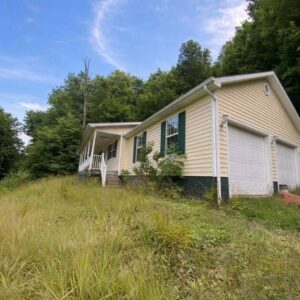
Briar Hollow Farm didn’t feel like land so much as a test of endurance disguised as inheritance. The kind of place people drove past without slowing down, because stopping meant acknowledging how easily something alive could be left to rot.
By December, the pipes had frozen twice, the barn roof had shed another section into the hay like a slow collapse, and I had developed a habit of waking up in the dark just to make sure the wind hadn’t taken anything else overnight.
The silence out there was never peaceful. It was evaluative. Like the land itself was waiting to decide whether I belonged.
I learned quickly that intention meant nothing without structure.
So I started building systems instead of dreams.
The first was water. I couldn’t fix the plumbing permanently, so I rerouted temporary lines using insulated tubing I barely understood at the time. I read manuals until my eyes blurred. I made mistakes that flooded the kitchen floor twice and cost me an entire weekend of drying wood with borrowed heaters from a hardware store in Kingston.
The second system was soil.
That one changed everything.
Year One: Learning What Was Actually Broken
I had studied environmental science, but textbooks don’t teach you how to stand in a field that refuses to grow anything and admit you don’t know where to start.
Briar Hollow’s soil wasn’t just depleted. It was exhausted from decades of neglect. Nutrient imbalance, compaction, and invasive root systems had turned the topsoil into something closer to lifeless dust in some areas and sticky clay in others.
The first soil test I ran came back with numbers that might as well have been a foreign language.
Nitrogen deficiency. Low organic matter. Acidic pockets scattered unpredictably across the property like scars.
I sat on the barn steps that night staring at the report, feeling something between panic and stubborn refusal.
Garrett would have called it hopeless.
My father would have called it predictable.
I called it data.
And data could be worked with.
Spring: The First Real Decision
By March, I made my first real investment: compost infrastructure.
Not glamorous. Not impressive. But foundational.
I built three composting zones behind the barn using reclaimed pallets and wire mesh fencing. I collected everything organic I could find—yard waste, food scraps from the grocery store where I worked part-time, and manure from a neighboring horse stable that initially treated me like a joke until I showed up consistently enough for them to stop laughing.
Consistency has a way of changing how people perceive you.
The smell was unbearable at first.
I got used to it.
What I didn’t get used to was the physical exhaustion. There were days I came home so tired I fell asleep fully clothed on the floor because the idea of walking up the stairs felt unnecessary.
But slowly, something shifted.
The compost piles began to heat properly.
Microbial activity returned.
Life, in its smallest form, started rebuilding itself.
Summer: The Farm Starts Listening
The first green shoots didn’t feel like victory.
They felt like permission.
I tested small sections of land first—experimental plots where I rotated cover crops: clover, rye, and buckwheat. The goal wasn’t production. It was healing.
The soil responded unevenly at first, like a patient unsure whether to trust the treatment.
But by late June, something undeniable happened.
The clover took hold.
Not everywhere. Not perfectly. But enough that I stopped seeing the fields as dead.
They were just waiting.
That distinction mattered more than I expected.
During that summer, I stopped thinking of Briar Hollow as a burden and started thinking of it as a long-term equation.
Inputs. Outputs. Recovery time.
It was no longer emotional.
It was operational.
Garrett Returns
He came back in July without warning.
Same BMW. Same polished shoes. Same expression of mild disbelief.
He didn’t even park properly before stepping out.
“You’re still here,” he said, looking around as if expecting the farm to have improved itself out of embarrassment.
“I told you I would be.”
He laughed once. “Dad thinks this is still a phase.”
I wiped my hands on my jeans. “Everything is a phase until it works.”
He looked toward the fields. “Or until it fails.”
There was no anger in his voice. Just certainty.
That certainty used to shake me.
It didn’t anymore.
Because for the first time, I had evidence that he was wrong.
Not in theory.
In soil.
Year Two: The First Economic Shift
The second year was when things stopped being survival and started becoming strategy.
I began selling small-batch produce at local farmers’ markets in the Hudson Valley region. Nothing large. Nothing branded. Just what the land could reliably produce without collapse.
At first, it barely covered fuel costs.
But something unexpected happened: people noticed quality before quantity.
The vegetables from rehabilitated plots tasted different. Not dramatically. Subtly. Like food that had been allowed to develop at its own pace instead of being forced through industrial cycles.
A chef from a small restaurant in Rhinebeck became my first consistent buyer.
Then another.
Then a catering company.
I reinvested everything.
Infrastructure expanded slowly: drip irrigation systems, improved fencing, cold storage units built from salvaged materials and late-night research.
Every dollar had a destination before it arrived.
The Turning Point: Visitors
By the third summer, something I didn’t plan for began happening.
People started visiting.
Not just buyers.
Visitors.
A local food blogger wrote a piece about “a quiet regenerative farm hidden outside Hudson Valley.” It wasn’t meant to be promotional. It was observational.
But it changed everything.
Weekend visitors began arriving in small groups.
They weren’t looking for entertainment.
They were looking for proof that land like this could come back.
So I gave them tours.
Not polished ones. Honest ones.
I showed them the compost systems, the soil recovery zones, the failures as much as the successes. I explained what didn’t work before I explained what did.
People trust imperfection more than performance.
That was something I learned quickly.
Scaling Without Losing Control
By year four, Briar Hollow Farm was no longer just land.
It was a system with multiple revenue streams:
Regenerative agriculture plots
Educational workshops
Small-scale farm-to-table events
Seasonal lodging in restored outbuildings
I resisted the word “brand” for a long time.
But investors didn’t.
When the first serious offer came, I declined it without hesitation.
Not because I was sentimental.
Because I had seen what happened when systems were optimized too quickly.
They break.
Control mattered more than speed.
My Family Returns
My father arrived unannounced in autumn.
He stood near the edge of the main field, staring at rows of structured growth where there had once been collapse.
He didn’t speak for a long time.
Neither did I.
Garrett came with him this time, quieter than before.
Eventually, my father said, “This wasn’t supposed to be… this.”
I looked at him. “What was it supposed to be?”
He hesitated.
A disposal. A dismissal. A final assignment.
He didn’t say it, but he didn’t need to.
Garrett broke first. “How much is it worth now?”
The question didn’t surprise me.
I had already done the calculations.
“Several million,” I said simply.
Not bragging.
Just reporting.
My father blinked. “You turned it into a business.”
“No,” I corrected. “I turned it into a system that works.”
What They Didn’t Understand
They thought the transformation was financial.
It wasn’t.
It was structural.
Briar Hollow didn’t become valuable because I forced it to produce more.
It became valuable because I stopped treating it like something broken and started treating it like something that needed time and respect to reorganize itself.
The irony was not lost on me.
The same people who dismissed it as a “hobby” now stood on its edge trying to understand its valuation.
But valuation was the least interesting part.
The real shift had already happened years earlier.
The moment I stopped asking for permission.
Final Year Snapshot
By the time Briar Hollow Farm reached full operational stability, it had become something unexpected in the Hudson Valley:
A destination.
Not in the tourist sense.
In the structural sense.
A working example of land restoration at scale combined with education and sustainable commerce.
People didn’t just visit to buy food.
They visited to understand how systems rebuild themselves when given enough time and refusal to quit.
Closing Reflection
One evening, years after that first winter, I stood alone at the edge of the fields.
The same fields that once looked like punishment now moved gently under wind, alive in ways I had once struggled to imagine.
I thought about the word my mother had used back then.
Hobby.
It had been meant to diminish.
Instead, it became the foundation of something far larger than anyone in my family had predicted.
Not because I proved them wrong.
But because I stopped measuring myself by their expectations entirely.
Briar Hollow Farm didn’t become worth millions because I was trying to succeed.
It became worth millions because I stayed long enough for it to become something worth believing in.