Social media has become a popular place for discovering household tips and do-it-yourself solutions. Every week, new videos promise easy ways to eliminate common home problems using inexpensive items that most people already have around the house. While some of these ideas are harmless or even helpful, many oversimplify complex issues and create unrealistic expectations.
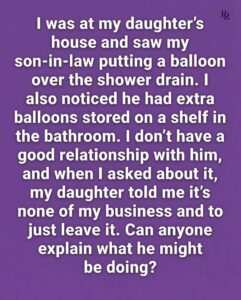
One of the latest viral suggestions recommends placing a balloon over a shower drain to stop insects from entering the bathroom. At first glance, the idea seems logical. If bugs are supposedly coming through the drain, covering it appears to create a barrier that keeps them out.
Unfortunately, the reality is much more complicated.
Bathrooms are among the most attractive areas of a home for many types of pests. They provide moisture, warmth, shelter, and easy access to plumbing systems that connect different parts of a building. Although drains can occasionally contribute to pest activity, they are rarely the only—or even the primary—entry point.
As a result, simply covering a shower drain with a balloon usually fails to solve the underlying problem. In many cases, homeowners who rely on this method discover that insects continue appearing despite faithfully following the internet advice.
Understanding why requires looking at how household pests actually behave.
Why Bathrooms Attract Pests
Bathrooms naturally create conditions that many insects prefer. Daily showers increase humidity, sinks produce condensation, toilets contain standing water, and plumbing often creates dark, protected spaces behind walls.
These conditions attract several common household pests, including drain flies, cockroaches, silverfish, ants, and occasionally spiders that feed on other insects.
Each of these pests has different habits and preferred nesting locations. Assuming they all emerge through a shower drain oversimplifies their behavior.
For example, silverfish thrive in damp areas but usually hide behind baseboards, beneath cabinets, or inside wall voids rather than inside drain pipes.
Cockroaches frequently travel along plumbing lines but may enter through cracks around pipes, damaged weather stripping, utility penetrations, or gaps beneath doors.
Drain flies, meanwhile, breed inside the organic film that builds up within certain drains, making them one of the few insects actually associated with plumbing fixtures.
Because different pests originate from different locations, one simple barrier cannot solve every infestation.
The Problem with Viral Household Hacks
Internet hacks often become popular because they are easy to understand and inexpensive to try.
People naturally hope for a quick solution that requires little time, effort, or expense. Unfortunately, household pest control rarely works that way.
Professional pest management relies on identifying the specific pest, locating breeding sites, eliminating food and water sources, sealing entry points, and monitoring results over time.
None of these important steps can be replaced by stretching a balloon across a shower drain.
Even if the balloon temporarily blocks one opening, insects already inside the home remain unaffected.
Likewise, pests entering through gaps in foundations, vents, windows, plumbing penetrations, or damaged seals continue to find access.
In other words, the balloon treats one possible symptom without addressing the actual cause.
Can Bugs Really Come Through Drains?
The answer is yes—but only in certain situations.
Drain flies commonly breed inside drains that contain accumulated organic matter. Fruit flies may occasionally be confused with drain flies, although they usually originate elsewhere.
Cockroaches can sometimes travel through sewer systems or plumbing networks, especially in multi-unit buildings.
However, healthy plumbing systems include traps filled with water that help prevent sewer gases and many pests from moving freely through pipes.
If insects consistently appear around drains, the problem often involves clogged pipes, dried-out drain traps, damaged plumbing, or nearby breeding locations rather than the drain opening itself.
Simply covering the drain does not repair any of these issues.
Instead, proper drain cleaning and plumbing maintenance are far more effective long-term solutions.
Why Balloons Make Poor Drain Covers
Although creative, balloons were never designed for use as plumbing barriers.
Rubber balloons stretch unevenly, lose elasticity over time, and can easily slip away from smooth surfaces.
Moisture accelerates deterioration, especially in warm bathrooms where humidity remains high.
Accidental punctures or tears reduce their effectiveness even further.
Additionally, repeatedly removing and replacing a balloon every time the shower is used becomes inconvenient for most households.
Unlike purpose-built drain covers, balloons provide no secure attachment mechanism and cannot create a reliable airtight seal.
Perhaps most importantly, they offer no protection against insects entering through countless other locations around the bathroom.
For these reasons, pest management professionals generally recommend focusing on prevention rather than improvised barriers.