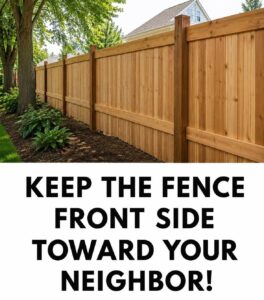
When homeowners install a fence between properties, the main concerns are usually privacy, security, appearance, and clearly defining the boundary. Yet there is another detail that can have a surprisingly large impact on the relationship between neighbors: which side of the fence faces outward.
A common fencing tradition is to place the finished or “good” side of the fence toward the neighboring property or the public-facing side. The finished side generally has the cleaner appearance, while the structural side may show posts, rails, brackets, or other construction elements. Although this practice may seem like a small design decision, it can communicate consideration and respect.
The tradition is partly about appearance. A fence is not seen only by the person who owns it. Neighbors see it every day, and passersby may see it from the street or sidewalk. If the unfinished side faces outward, the fence can look more industrial or construction-oriented. A finished exterior, by comparison, tends to create a cleaner and more attractive appearance.
For many homeowners, this is one reason the “good side” tradition has continued. A neat fence can contribute to the overall appearance of a property and the surrounding neighborhood. When several homes have well-maintained fences that present a finished appearance, the entire street can look more orderly.
There is also an element of courtesy involved. A fence usually sits along a shared boundary, even though one homeowner may have paid for and installed it. Because both households live alongside it, the fence affects both people. Choosing a design that looks attractive from the neighbor’s side can be interpreted as a gesture of goodwill.
This does not mean that every neighbor will object if the structural side faces them. Fence preferences vary, and many people care more about privacy, durability, or cost than about which side contains the posts. Still, thoughtful homeowners often consider how their choices will look and feel from the other side of the property line.
Local regulations can make the issue more than a matter of etiquette. In some jurisdictions, fencing rules specify requirements concerning height, placement, materials, visibility, setbacks, or orientation. These rules differ considerably from one location to another, so homeowners should not assume that a common fencing tradition automatically represents a legal requirement.
Before installing a fence, it is therefore important to check local building codes, zoning rules, homeowners association requirements, and property-boundary restrictions where applicable. In some places, the finished side may be required to face a particular direction. In others, there may be no such requirement at all.
Ignoring applicable regulations can create unnecessary problems. Depending on the local rules, a homeowner could be required to modify a fence or bring it into compliance. In more serious situations, construction that violates regulations may lead to penalties or additional costs.
Property boundaries should also be confirmed before construction begins. A fence that is accidentally placed across a property line can create a much bigger dispute than the direction of its finished boards. Homeowners should make sure they understand where their property ends and their neighbor’s begins.
Communication can make the entire process easier. If a new fence will directly affect a neighboring property, talking with the neighbor beforehand can prevent misunderstandings. A simple conversation about the proposed location, materials, height, and appearance can establish expectations before construction begins.
This is especially useful when an existing fence is being replaced. Both homeowners may have different ideas about what the new fence should look like or who is responsible for maintenance. Discussing those questions in advance can prevent disagreements later.
There are also modern alternatives to the traditional one-sided fence. Double-sided or “good neighbor” fence designs are finished on both sides. These fences can provide an attractive appearance from either property, making the orientation issue much less significant.