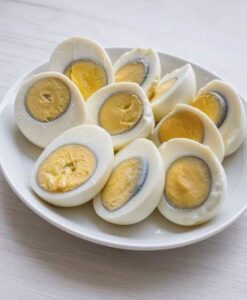
That strange green or gray ring around the yolk of a hard-boiled egg can look alarming the first time you see it.
You may wonder whether the egg has spoiled or whether it is safe to eat.
Fortunately, the green ring is usually not a sign that the egg has gone bad.
It is most commonly caused by overcooking.
When an egg is heated for too long or at an excessively high temperature, a chemical reaction can occur between sulfur-containing compounds in the egg white and iron in the yolk. This reaction produces iron sulfide, which can form a greenish-gray layer around the yolk.
So while the color may look unpleasant, the discoloration itself generally does not mean the egg is unsafe.
Why Does It Happen?
Eggs naturally contain sulfur in the whites and iron in the yolks.
During cooking, these substances normally remain separate. But prolonged or intense heating can encourage them to react.
The resulting compound, iron sulfide, creates the familiar green or gray ring.
The longer the egg is exposed to high heat, the more noticeable the discoloration can become.
This is why eggs that have been boiled far longer than necessary sometimes develop a much darker ring.
Interestingly, the ring can also vary depending on the egg and cooking conditions. Some eggs may develop only a very thin discoloration, while others can show a more obvious green band.
Is the Egg Safe to Eat?
In general, a green ring caused by overcooking is harmless.
The appearance may not be appealing, but the color itself is not evidence that the egg has spoiled.
However, it’s important to distinguish an overcooked yolk from other signs of spoilage.
If an egg has an unusual rotten smell, slimy texture, damaged shell, or other clear signs of spoilage, don’t rely on the color of the yolk alone. When in doubt about an egg’s freshness or storage history, it is safer to discard it.
How Can You Prevent the Green Ring?
The easiest solution is to avoid overcooking the eggs.
Rather than leaving eggs at a vigorous boil for a long period, cook them until the whites and yolks have reached the desired firmness.
Once they’re finished, immediately transfer them into very cold water or an ice bath.
This does two things.
First, it quickly lowers the temperature and stops the cooking process.
Second, it helps prevent the residual heat inside the egg from continuing to cook the yolk.
Rapid cooling can also make the eggs easier to peel.
What Cooking Method Should You Use?
There are several ways to prepare hard-boiled eggs, and cooking times vary depending on egg size, starting temperature, altitude, and the exact cooking method.
For firm yolks, many home cooks use roughly 9 to 12 minutes of cooking time, followed by immediate cooling.
The important thing isn’t to treat one exact number as universal.
Instead, adjust the timing to your preferred yolk texture and cooking method.
If you frequently get green rings, try reducing the cooking time slightly and cooling the eggs immediately afterward.
Does the Green Ring Affect the Taste?
Usually, the main effect is visual.
An overcooked egg may have a slightly firmer or drier texture, and the yolk can become less creamy than one cooked for the ideal amount of time.
But the green ring itself isn’t what makes the egg taste bad.
If you prefer smooth, bright-yellow yolks, controlling the cooking time is the best approach.
Does Egg Freshness Cause the Ring?
Egg freshness can affect how eggs behave during cooking and peeling, but the green ring is primarily associated with the cooking process.
Slightly older eggs are often easier to peel after boiling because the air cell becomes larger and the egg white pulls away from the shell somewhat more readily.
Regardless of age, proper refrigeration and handling are important.
The Best Way to Store Hard-Boiled Eggs
After cooking, cool the eggs promptly and refrigerate them.
Keep the shells intact until you’re ready to use them if possible, as the shell provides some protection.
If you’ve already peeled the eggs, store them in a covered container in the refrigerator.
Don’t leave cooked eggs sitting at room temperature for extended periods.
The Bottom Line
That green ring around a hard-boiled egg yolk can certainly look strange, but in most cases it simply means the egg was overcooked.
The color comes from a chemical reaction involving sulfur from the egg white and iron from the yolk.
It isn’t something you need to panic about.
For better-looking eggs, focus on three things: appropriate cooking time, moderate heat, and rapid cooling afterward.