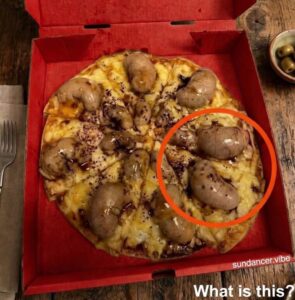
When your pizza arrived covered in odd, raised bubbles, your hesitation made perfect sense. We’re used to food looking a certain way, and even small visual changes can trigger doubt. But those mysterious blisters weren’t a mistake—they were a clue. A sign that something interesting (and completely natural) happened during baking.
Once you understand what causes them, they go from “that looks wrong” to “that’s actually kind of impressive.”
🍕 What Those Bubbles Actually Are
Those smooth, dome-like bumps on your pizza are usually caused by steam and expanding air trapped beneath melted cheese or dough layers.
Here’s what’s happening inside the oven:
- The dough contains tiny pockets of air and moisture
- As the pizza bakes, heat causes those pockets to expand
- Moisture turns into steam
- Melted cheese forms a soft seal on top
- Pressure builds underneath—and creates bubbles
So what you saw wasn’t random. It was physics in action.
🔥 Why High Heat Makes It More Noticeable
The hotter the oven, the more dramatic the effect.
In very hot ovens—like those used in pizzerias—this process happens fast:
- Rapid heat = faster steam formation
- Faster expansion = bigger bubbles
- Less time for air to escape = more visible blisters
That’s why you’ll often see bubbling or blistering in pizzas cooked at higher temperatures. It’s especially common in styles baked quickly.
🧀 Cheese Plays a Big Role Too
Not all cheese behaves the same way.
Cheeses with higher moisture content (like fresh mozzarella) tend to:
- Melt more fluidly
- Trap steam more easily
- Create smoother, shinier bubbles
Lower-moisture cheeses melt differently and may show fewer or smaller bubbles.
So the type—and even the distribution—of cheese affects what you see.
🍞 The Dough Matters More Than You Think
The structure of the dough also influences bubbling:
- Well-fermented dough has more air pockets
- Thinner dough allows quicker heat transfer
- Uneven thickness can trap air in specific spots
If a section of dough has slightly more trapped gas, that area is more likely to puff up under heat.
👀 Why It Looked “Wrong” at First
Your reaction wasn’t about the pizza—it was about expectation.
We’re used to pizza looking:
- Flat (or evenly textured)
- Predictable
- Familiar
So when something appears different—even slightly—it triggers a quick internal check: “Is this safe?”
That pause is actually useful. It’s how we protect ourselves.
But in this case, the visual difference didn’t signal danger—it signaled variation.
✅ Are These Bubbles Safe?
Yes—completely.
In fact, they often indicate that:
- The pizza reached a proper high temperature
- The dough expanded as expected
- The ingredients reacted normally
As long as:
- The pizza smells normal
- The crust is properly cooked
- There’s no unusual odor or discoloration
👉 Those bubbles are nothing to worry about.
🍽️ Do They Affect Taste or Texture?
Slightly—but usually in a good way.
You might notice:
- Lighter, airier spots in the crust
- Slightly crisped or stretched cheese in those areas
- A subtle contrast between dense and airy bites
Most people don’t consciously notice it—but it adds variety to the texture.
🔬 The Hidden Science Behind It
What you saw is a mix of basic cooking science:
- Gas expansion: Air pockets grow when heated
- Steam formation: Water turns into vapor under heat
- Protein changes: Cheese melts and restructures
- Heat transfer: Different layers cook at different speeds
All of this happens in minutes—inside something as simple as a pizza.
🍕 Why No Two Pizzas Look the Same
Even if you order the same pizza twice, small variables change the result:
- Oven temperature fluctuations
- Dough fermentation differences
- Cheese distribution
- Baking time by a few seconds
- Placement in the oven
That’s why one pizza might look perfectly smooth, and another has visible bubbles.
They’re both normal.
🤔 When Should You Actually Be Concerned?
Bubbles themselves aren’t a problem.
But you should be cautious if you notice:
- A sour or rotten smell
- Wet, undercooked dough
- Burnt or blackened areas that taste bitter
- Unusual colors (green, gray beyond normal cheese behavior)
Those are real warning signs.
Smooth, glossy bubbles? Not one of them.
🧠 The Bigger Takeaway
What made this moment interesting wasn’t just the pizza—it was how quickly perception changed.
At first:
- It looked unfamiliar → you questioned it
After understanding:
- It made sense → you appreciated it
Nothing about the pizza changed.
Only your interpretation did.
🍕 Final Thought
Those bubbles weren’t flaws. They were evidence.
Evidence that heat, moisture, and ingredients did exactly what they’re supposed to do.
And once you know that, you’ll probably never look at a “perfectly imperfect” pizza the same way again.
Next time you see those little domes?