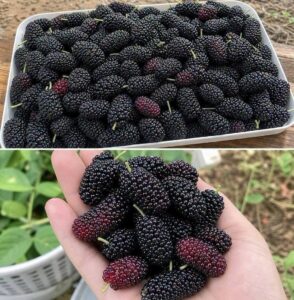
At first glance, mulberries can easily be mistaken for blackberries. Their dark colors, juicy appearance, and clusters of tiny fruit segments make them look surprisingly similar. However, these fascinating fruits have several distinctive characteristics that set them apart. Mulberries grow on trees rather than the thorny bushes commonly associated with blackberries, and their elongated shape gives them a unique appearance. Available in shades ranging from white and pink to deep red, purple, and almost black, mulberries have been enjoyed around the world for centuries. Beyond their appearance, they also offer a naturally sweet flavor and a variety of nutrients that make them an interesting addition to everyday meals.
One of the easiest ways to recognize a mulberry is by examining its shape. Unlike the generally rounded appearance of blackberries, mulberries tend to be longer and more cylindrical, with numerous tiny segments forming a single fruit. Their appearance can vary depending on the variety and stage of ripeness. Some mulberries are bright red when immature, while others become deep purple or nearly black as they ripen. White mulberries may remain pale or develop a pinkish-purple color, depending on the variety. These differences make mulberries an intriguing fruit for gardeners, nature enthusiasts, and anyone interested in discovering unfamiliar foods.
Another important difference lies in where the fruits grow. Mulberries develop on trees belonging to the Morus genus, while blackberries grow on plants belonging to the Rubus genus. Blackberry plants often form thorny, tangled bushes, although thornless varieties are also widely cultivated. Mulberry trees, by contrast, can grow quite large and produce abundant fruit during their growing season. When ripe, the berries may fall naturally from the branches, sometimes leaving colorful stains on sidewalks, patios, and garden surfaces below.
The rich colors of mulberries are more than just visually appealing. Dark varieties contain anthocyanins, natural plant pigments responsible for many red, purple, and blue colors found throughout the plant kingdom. These compounds are also studied for their antioxidant activity. Antioxidants help protect cells from damage caused by unstable molecules known as free radicals, although the effects of eating particular foods depend on many factors. The presence of anthocyanins makes dark mulberries an interesting subject for nutritional research, but it does not mean that eating them can prevent or cure specific diseases.
Mulberries also provide several useful nutrients. Depending on the variety and how they are prepared, they contain dietary fiber, vitamin C, potassium, and other plant compounds. Fiber supports normal digestion and can help maintain regular bowel movements. Vitamin C contributes to normal immune system function, supports collagen production, and helps the body absorb iron from plant-based foods. Potassium plays an important role in normal muscle function, nerve signaling, and fluid balance.
Although mulberries are relatively small, their nutritional contribution can be meaningful when they form part of a varied diet. Fresh fruit generally provides water, fiber, and naturally occurring sugars, making it a convenient snack between meals. Rather than relying on one particular fruit for all nutritional needs, people can benefit from eating a range of fruits and vegetables with different colors, textures, and nutrient profiles.
The taste of mulberries is another reason they deserve attention. Ripe black and dark-purple varieties are often sweet, with a mild flavor that may remind some people of a combination of berries and other soft fruits. Red mulberries can have a more pronounced flavor, while some white varieties are especially sweet when fully ripe. Their texture is delicate and juicy, which makes them enjoyable when eaten fresh. Because they can become soft quickly after harvesting, fresh mulberries are often best consumed soon after picking or stored carefully in the refrigerator.
There are numerous ways to enjoy mulberries in the kitchen. Fresh berries can be added to yogurt, oatmeal, breakfast cereal, and smoothies. They also work well in fruit salads, homemade sauces, pies, muffins, and other desserts. Their natural sweetness can complement ingredients such as lemon, cinnamon, nuts, and plain yogurt. For a simple breakfast, a handful of mulberries can be combined with oats, nuts, and yogurt to create a meal with a mixture of fiber, protein, and other nutrients.
Mulberries can also be preserved by freezing or drying them. Freezing is a convenient way to keep fresh berries available beyond their usual season, while dried mulberries can be used in trail mixes, baked goods, and cereal. However, fresh and dried mulberries differ in nutritional concentration. Removing water makes dried fruit smaller and more concentrated, so a given weight generally contains more calories and natural sugars than the same weight of fresh fruit. Checking portion sizes can be helpful for people who regularly enjoy dried fruit.
For gardeners, growing mulberries can be rewarding, although the right variety depends on the climate, available space, and intended use. Some mulberry trees grow quite tall and spread widely, while others are more compact. Trees may produce substantial quantities of fruit once established, attracting birds and other wildlife. Before planting one, homeowners should consider the amount of space required and the possibility of staining from fallen berries. Choosing a suitable location can help prevent maintenance problems while allowing the tree to flourish.
Anyone gathering mulberries from trees should identify the plant carefully and make sure the fruit is ripe. Fruits should be washed under clean running water before eating. Avoid collecting berries from trees that may have been exposed to pesticides, roadside pollution, or other contaminants. It is also important not to assume that every dark, clustered fruit encountered outdoors is an edible mulberry, since other plants may produce superficially similar fruits.
Despite exaggerated claims sometimes appearing online, mulberries are not miracle foods. They cannot replace medical treatment or guarantee protection against illness. Their real value comes from being a flavorful fruit that contributes fiber, vitamins, minerals, and beneficial plant compounds to a balanced eating pattern. People with specific dietary restrictions or medical concerns should consider their overall nutritional needs rather than depending on a single food.
Ultimately, mulberries are much more than tiny black fruits that resemble blackberries. Their distinctive tree-growing habit, elongated shape, varied colors, and naturally sweet flavor make them easy to appreciate once their characteristics are understood. Whether enjoyed straight from a carefully identified tree, mixed into breakfast, blended into a smoothie, or incorporated into homemade desserts, mulberries offer a delicious way to add variety to everyday meals. The next time you encounter a cluster of dark berries, take a closer look: those unusual little fruits might be mulberries, a familiar-looking but distinctive fruit with a fascinating history and plenty of culinary possibilities.