He wrote that he had watched me spend forty-nine years making room, at every table and in every plan, for everyone else. He had watched me adjust my needs, postpone my wishes, and quietly surrender decisions because keeping the peace had always seemed easier than asking people to respect what I wanted.
And he had come to fear the day that generosity would be mistaken for the belief that nothing belonged to me.
He wrote that the lake house was mine. The deciding was mine. And he had left the trust deliberately unfinished so that the last word on who received it would be spoken by me alone, in a room, on a day I chose.
Then, in the final paragraph, he suggested the one thing I had never once considered.
That I stop lending the lake house to people who called it theirs, and start living in it.
I read that paragraph three times before folding the letter.
Outside my kitchen window, the afternoon rain was drawing thin silver lines across the glass. My coffee had gone cold. Somewhere down the street, a lawn mower started and stopped, started and stopped, as if its owner couldn’t decide whether the weather was worth fighting.
I sat there with Warren’s handwriting beneath my fingers and realized that the most difficult thing he had ever given me wasn’t property.
It was permission.
Warren had been a surveyor for most of his working life. He wasn’t a wealthy man in the way people meant when they talked about wealth. He drove an old pickup truck, kept his receipts in labeled envelopes, and believed a good pair of boots should be repaired before they were replaced.
But he understood land.
He understood that a boundary could look perfectly obvious from the road and still be wrong by several feet. He understood that a fence could stand for fifty years without proving where the property line actually lay. And he understood that a promise, however sincere, wasn’t the same thing as a recorded agreement.
Whenever someone asked him about a property dispute, he would shrug and say, “A line you do not record is just a wish.”
I used to think he was talking about land.
After forty-nine years of marriage, I understood that he had been talking about everything.
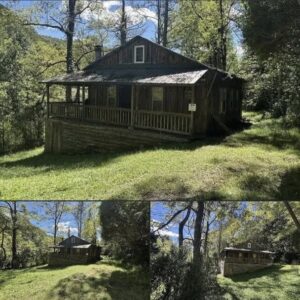
We had bought the lake house when our children were young. It wasn’t grand then. The original structure had two bedrooms, a narrow kitchen, and a porch that leaned slightly toward the water. Warren spent three summers repairing it himself, driving to the property every weekend with tools rattling in the back of his truck.
He measured everything twice.
He marked the corners carefully, checked the old survey documents, and made sure the legal description matched the property we believed we were buying. When a neighboring owner questioned the boundary, Warren didn’t argue from memory or point at an old fence.
He hired the appropriate professionals, checked the records, and settled the question properly.
“Never confuse what everybody assumes with what the documents actually say,” he told me afterward.
I remembered that conversation when our children began treating the lake house as a family inheritance long before Warren had died.
Our daughter, Elaine, liked to spend long summer weekends there with her husband and their children. Our son, Peter, preferred the autumn fishing season. Friends came for holidays, cousins arrived with extra guests, and somebody always seemed to have a reason the house would be more useful to them than to us.
At first, I loved it.
The house had been built for making memories, and I liked seeing it full of people. I kept extra sheets in the upstairs closet, stocked the pantry before visits, and left spare keys with relatives who promised to take good care of the place.
But gradually, the language changed.
Instead of asking whether they could use the house, people announced when they would be arriving.
Instead of checking whether Warren and I had plans, they assumed we would make room.
When I mentioned that I wanted to spend a quiet week at the lake, Elaine laughed and said, “Mom, you can go whenever you want. We just need to know which weekends we’re using it.”
She didn’t mean to hurt me.
That was what made it so difficult to explain.
Nobody had formally taken the lake house away from me. Nobody had changed the deed. Nobody had stood in the kitchen and declared that I was no longer welcome.
They had simply become so accustomed to my accommodation that they no longer recognized it as a choice.
Warren recognized it.
He began asking me questions I found irritating at first.
“When was the last time you went to the lake because you wanted to?”
“Why do you always ask permission to change your own plans?”
“If you wanted the house to yourself for a month, who would you be afraid of disappointing?”
I answered each question with a practical explanation.
Elaine had school schedules to manage. Peter had limited vacation time. The grandchildren loved the water. Everyone was busy.
Warren listened without arguing.
Then, a few months before his death, he started reviewing the lake house paperwork.
He checked the deed, the old survey, the insurance documents, and the records relating to the property. He met with an attorney to discuss estate planning and how the house should be handled after he was gone.
I knew he was doing it, but I didn’t ask many questions. We had always shared our important decisions, and I assumed we would finish everything together.
Then his health declined faster than either of us expected.
There were hospital visits, difficult conversations, and long nights when I held his hand while the machines beside his bed measured the passing hours.
He died on a gray Thursday morning.
For weeks afterward, I moved through the house as though I were visiting someone else’s life. I answered condolences, signed papers, and listened to relatives discuss practical matters because I didn’t have the energy to explain that nothing felt practical anymore.
The lake house became a place I couldn’t bear to visit.
Elaine offered to manage it for me. Peter suggested that we discuss the long-term expenses. Other relatives proposed renting it during the months nobody used it.
Everyone had an idea.
Nobody asked what I wanted.
I didn’t blame them. Grief makes people reach for plans because plans feel like something they can control. But their suggestions accumulated until I began to feel like a guest in a future that had already been arranged without me.
Then Warren’s attorney called.
He explained that Warren had left some estate-planning matters unresolved. The trust documents required further attention, and the question of how the lake house should ultimately be distributed had not been finalized.
There were legal steps to complete, and I would need professional advice before making decisions.
The attorney also told me that Warren had left a letter specifically for me.
I collected it the following morning.
That was the letter I read at my kitchen table.
Afterward, I called the attorney and asked for an appointment.
For the first time since Warren’s death, I wasn’t calling to ask what everyone else expected me to do. I was calling because I wanted to understand my options.
We reviewed the property records and the estate documents. I learned which decisions were mine to make, which matters required additional legal work, and what would happen if I decided to keep the house rather than transfer or sell it.
Nothing could be settled by a sentimental letter alone. The deed, the estate documents, and the applicable law still mattered.
Warren would have appreciated that distinction.
A week later, I drove to the lake house by myself.
The road was familiar, but every turn seemed to bring back something I had forgotten. The old bait shop where Warren bought fishing line. The narrow bridge where the children used to count passing boats. The little grocery store where we once spent an entire afternoon searching for the ingredients to make a birthday cake after Elaine forgot hers at home.
When I reached the property, I parked beside the porch and sat with the engine running.
The house looked exactly as I remembered it.
And yet, for the first time in years, I wasn’t thinking about who might want to use it next weekend.
I was thinking about whether I wanted to stay.
I unlocked the door and walked through every room. The blue curtains were faded by sunlight. A small crack had appeared in the plaster near the fireplace. Warren’s old fishing jacket still hung on a hook beside the back entrance.
I opened the windows and let the lake air move through the rooms.
Then I did something I hadn’t done in nearly a decade.
I made myself lunch, carried it to the porch, and ate without checking my phone.
Nobody needed me to organize anything. Nobody needed a key. Nobody was waiting for an answer about dates or sleeping arrangements.
The silence was not empty.
It was mine.
That evening, Elaine called.
“Mom, Peter says we should figure out what we’re doing with the lake house,” she said. “Everyone wants to plan for next summer.”
I looked out at the water.
“I agree that we need to make plans,” I replied. “But I won’t be making them today.”
She went quiet.
“Are you thinking about selling it?”
“No.”
“Renting it?”
“No.”
“Then what are you going to do?”
I looked at Warren’s jacket hanging beside the door.
“I’m going to live here for a while.”
Elaine didn’t answer immediately.
“But Mom, what about the family?”
“The family can visit when I invite them,” I said gently. “We’ll work out arrangements together. But this is my home, too, and I need to decide how I want to live in it.”
She sounded surprised, perhaps even hurt. I understood that. She had never thought of herself as taking something from me.
But I couldn’t spend the rest of my life protecting everyone from the discomfort of discovering that I had limits.
Over the following months, I made the house my own again.
I replaced the curtains in the upstairs bedroom. I repaired the porch steps and planted flowers beside the walkway. I arranged Warren’s books on the shelves instead of keeping them packed away in boxes because I thought the children might want them someday.
I also completed the necessary legal work with the help of the attorney. We reviewed the trust arrangements, confirmed the relevant ownership records, and made sure that future decisions about the property would be documented properly.
When relatives asked whether I was being selfish, I stopped trying to prove that I wasn’t.
I invited people when I wanted company. I welcomed the grandchildren during school holidays. I still shared meals, stories, and afternoons on the water.
But I no longer treated every request as an obligation.
One morning, almost a year after Warren died, I found myself standing near the old property marker at the far edge of the yard.
The grass had grown high around it. I brushed away the leaves and remembered Warren kneeling beside that same marker years earlier, checking measurements with his notebook open across his knee.
He had trusted careful records more than assumptions.
I finally understood why.
A boundary was not an insult to the people standing on either side of it. It was a clear statement of where one person’s responsibility ended and another’s began.
That evening, I took Warren’s letter from the drawer beside my bed and read it once more.
His final suggestion no longer sounded like permission.
It sounded like a reminder.
The lake house had never stopped being mine simply because I had allowed other people to make themselves comfortable in it. But unless I chose to live according to that truth, I could spend the rest of my life surrendering the very thing Warren had wanted me to protect.
I folded the letter and placed it beside the property records.
Outside, the lake reflected the last orange light of the evening.
For forty-nine years, I had believed that love meant making room for everyone else.
Warren had spent his life teaching people where the lines belonged.
Only after he was gone did I understand that he had been trying to teach me the same thing.
A line you do not record is just a wish.
And a life you never claim for yourself can become a place where everyone feels at home except you.