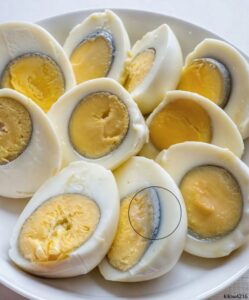
If you’ve ever sliced open a hard-boiled egg and noticed a green or gray ring forming around the yolk, you’re not alone. This common kitchen occurrence often sparks concern, confusion, or even the assumption that something has gone wrong with the egg itself. In reality, that greenish halo is not a sign of spoilage or danger—it’s simply the result of overcooking.
Understanding why this happens can help you not only avoid it but also improve your cooking skills in a meaningful way. What seems like a small detail actually reveals a lot about how heat, timing, and food chemistry interact in everyday cooking.
What Causes the Green Ring?
The green ring forms due to a chemical reaction between two natural components found in eggs: sulfur and iron. Egg whites contain sulfur compounds, while egg yolks are rich in iron. When eggs are exposed to high heat for too long, these elements react and form iron sulfide, which appears as a greenish-gray layer around the yolk.
This reaction is more likely to occur when eggs are boiled for extended periods or when they are not cooled quickly after cooking. Even after you remove eggs from boiling water, residual heat continues to cook them internally, which can intensify the reaction.
The result is that familiar green ring—harmless, but far from ideal.
Is It Safe to Eat?
Yes, eggs with a green ring are completely safe to eat. The color change is purely cosmetic and does not indicate spoilage, contamination, or reduced safety. However, while safety isn’t compromised, quality often is.
Overcooked eggs tend to have a noticeably different texture. The yolk becomes dry, crumbly, and chalky instead of smooth and creamy. The egg white, on the other hand, can turn rubbery and tough. This affects not just the eating experience but also how well the eggs work in recipes.
Why Texture and Taste Matter
Food is not just about nutrition—it’s also about enjoyment. Perfectly cooked hard-boiled eggs have firm yet tender whites and rich, slightly creamy yolks. When overcooked, those qualities are lost.
In dishes like egg salad or deviled eggs, overcooked yolks don’t blend as smoothly, resulting in a grainy consistency. Visually, the green ring can also make the eggs less appealing, especially when serving guests or preparing meals for presentation.
Small details like this can make a big difference in how a dish is perceived.
Common Mistakes That Lead to Overcooking
Many people rely on general instructions like “boil for 10 minutes,” but this approach doesn’t account for important variables. Factors such as egg size, starting temperature, altitude, and even the type of cookware can influence cooking time.
Starting eggs in already boiling water, leaving them in hot water too long, or skipping the cooling step are among the most common mistakes. These small missteps can quickly turn perfectly good eggs into overcooked ones.
Another overlooked factor is residual heat. Even after turning off the stove, the heat trapped in the pot continues to cook the eggs unless they are removed promptly.
The Importance of Cooling
One of the simplest and most effective ways to prevent the green ring is rapid cooling. Transferring eggs immediately into an ice bath stops the cooking process almost instantly. This prevents the sulfur and iron from continuing to react.
Cooling also has an added benefit—it makes eggs easier to peel. The sudden temperature change helps separate the egg from the shell membrane, reducing frustration and damage during peeling.
The Best Method for Perfect Hard-Boiled Eggs
Achieving consistently perfect eggs doesn’t require complicated tools or techniques—just attention to detail.
Start by placing eggs in a single layer in a pot. Cover them with cold water, about an inch above the eggs. Bring the water to a gentle boil over medium heat. Once boiling, remove the pot from heat, cover it, and let the eggs sit for about 9 to 12 minutes depending on how firm you want the yolks.
After that, transfer the eggs immediately into an ice bath and let them cool for at least 5 to 10 minutes.
This method prevents overcooking while ensuring even results.
Does Egg Freshness Matter?
Freshness does not affect whether a green ring forms, but it does influence peeling. Fresh eggs tend to be harder to peel because the membrane clings more tightly to the shell. Slightly older eggs—about a week old—are generally easier to work with.
However, both fresh and older eggs can develop a green ring if overcooked. The key factor is always heat and timing, not age.
Nutritional Impact of Overcooking
Eggs are highly nutritious, providing protein, vitamins, and essential minerals. While overcooking does not eliminate these benefits, it can reduce the availability of some heat-sensitive nutrients.
More importantly, overcooking affects how enjoyable the eggs are to eat, which can influence how often you include them in your diet. Cooking food properly helps preserve both its nutritional value and its appeal.
Myths About the Green Ring
There are several misconceptions surrounding green-ringed eggs. Some people believe the color indicates spoilage, poor storage, or contamination. Others think it means the eggs are old or unsafe.
None of these are true.
The green ring is simply a predictable result of overcooking. It can happen with any egg, regardless of freshness or quality. Understanding this helps remove unnecessary worry and builds confidence in the kitchen.
Small Adjustments, Big Results
Preventing the green ring comes down to a few simple habits:
Avoid overboiling by using precise timing instead of guessing.
Remove eggs from heat promptly once cooking is complete.
Cool eggs immediately in ice water to stop residual cooking.
Use consistent methods to reduce variability.
These small changes can dramatically improve your results.
Why This Matters Beyond Eggs
Learning how to cook eggs properly teaches broader lessons about cooking in general. It highlights the importance of timing, temperature control, and understanding how ingredients react under different conditions.
These principles apply to many other foods as well. Mastering something as simple as boiling eggs can build confidence and encourage more precise, thoughtful cooking overall.
Making Eggs Part of a Better Routine
Perfect hard-boiled eggs are incredibly versatile. They can be used in salads, sandwiches, snacks, or as a quick source of protein. When cooked correctly, they are convenient, nutritious, and satisfying.
Avoiding the green ring ensures that your eggs not only taste better but also look more appealing and perform better in recipes.
The Bottom Line
If your eggs have a green ring around the yolk, it means they’ve been overcooked. While this doesn’t make them unsafe, it does affect their texture, taste, and appearance.
By understanding the science behind the reaction and making a few simple adjustments—like controlling cooking time and cooling eggs quickly—you can consistently achieve perfect results.
In the end, it’s a small detail that reflects a bigger truth: even the simplest foods benefit from care, attention, and a little knowledge.