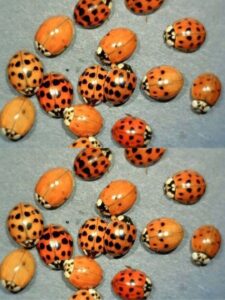
Seeing a yellow ladybug can be an unexpected and memorable experience. Most people are familiar with the classic red ladybug covered in black spots, so finding one that is yellow may seem unusual. Some people immediately wonder whether it is a rare species, whether it has a special meaning, or whether its unusual color is a sign of good luck.
The reality is both simpler and more interesting. Yellow ladybugs are generally not a separate category of magical or mysterious insects. Lady beetles come in a wide variety of colors, including yellow, orange, red, brown, and black. Their appearance can vary significantly depending on the species.
Color alone does not tell you whether a lady beetle is beneficial, harmless, or potentially troublesome. Identification is more useful than color when trying to understand what you have found.
For gardeners, the good news is that many lady beetles are helpful insects. They are well known for eating common garden pests, particularly aphids. Aphids can damage plants by feeding on their tissues and reproducing rapidly. A healthy population of lady beetles can therefore provide a natural form of pest control.
Some lady beetles also feed on scale insects and other small pests. This makes them valuable visitors in gardens and agricultural environments. Instead of immediately reaching for chemical pesticides, gardeners can sometimes benefit from encouraging naturally occurring beneficial insects.
However, not every yellow-colored lady beetle behaves exactly the same way. There are numerous species, and their diets can differ. Some species may feed on plants, fungi, pollen, or other materials rather than primarily hunting garden pests. This is why assuming that every yellow ladybug is beneficial simply because it looks like a ladybug can be misleading.
The color itself is therefore not a reliable guide to behavior.
Another reason people notice yellow lady beetles is that some species can enter homes. Asian lady beetles, for example, are known for seeking sheltered places as temperatures fall. In autumn, they may gather around buildings and enter through small cracks, gaps, windows, vents, or other openings.
Finding one or two indoors is usually not a serious problem. However, large numbers can become a nuisance. They may gather around windows, walls, ceilings, or other warm areas. Their presence can be especially noticeable on sunny days when they become active.
Despite their reputation as household pests, these beetles generally do not behave like termites or other insects that damage the structure of a home. They do not normally reproduce inside buildings in the same way that some household pests do. Their primary reason for entering is often to find shelter.
One unusual defense mechanism can make indoor encounters unpleasant. When threatened, some lady beetles can release a yellowish fluid. This substance can have a strong odor and may leave stains on surfaces.
For this reason, crushing a lady beetle is usually not the best way to remove it. Squashing one against a wall or curtain can produce a mess that is considerably more noticeable than the original insect.
A gentler approach is preferable. If there are only a few beetles indoors, they can sometimes be captured carefully and moved outside. A vacuum can also be useful when larger numbers have entered the home. If a vacuum is used, removing the insects from the vacuum afterward can prevent them from remaining trapped inside.
Lady beetles can occasionally pinch or bite people. These incidents are generally minor and may feel like a small pinch. They are not considered dangerous to most people.
Some individuals may experience mild irritation when exposed to large numbers of certain lady beetles. Pets can also encounter them, particularly curious dogs that investigate or eat insects. If a pet consumes a large quantity of insects or develops unusual symptoms, consulting a veterinarian is the sensible response.
Preventing indoor invasions is usually easier than dealing with a large gathering later. Homeowners can inspect windows, doors, vents, and other openings for gaps. Damaged window screens should be repaired, and cracks around frames can be sealed where appropriate.
Small openings can provide convenient entry points for insects. Sealing these areas does not guarantee that no beetle will ever enter the house, but it can reduce the opportunities available to them.
Now comes the more mysterious question: what does a yellow ladybug mean?
In folklore and popular symbolism, ladybugs are often associated with good fortune. Their bright appearance and gentle reputation have made them symbols of luck, protection, happiness, and positive change in various cultural traditions.
Yellow can also carry symbolic associations of its own. It is commonly connected with sunshine, optimism, energy, warmth, and renewal. Combining these traditional associations can lead people to interpret seeing a yellow ladybug as a particularly positive sign.
Some people view such an encounter as a reminder to welcome change or remain optimistic. Others may simply consider it a pleasant coincidence. These interpretations belong to folklore and personal belief rather than scientific evidence.
Science does not indicate that a yellow ladybug appears because good fortune is coming. The insect is simply responding to biological needs such as finding food, shelter, or suitable environmental conditions.
That does not mean the symbolic interpretation has no value. People have always found meaning in encounters with nature. A small insect landing on a hand or appearing unexpectedly in a garden can become a memorable moment. Whether someone considers it lucky or simply beautiful is a matter of personal perspective.
The important thing is not to confuse symbolism with biology.
If you see a yellow ladybug outdoors, there is usually no reason to be concerned. In a garden, it may be helping control pests. Instead of immediately removing it, consider leaving it alone and allowing it to continue its natural behavior.
If you find several indoors, the situation is different. You can gently remove them, use a vacuum for larger groups, and inspect the home for possible entry points. Avoid crushing them unnecessarily because their defensive fluid can create odor and stains.
Ultimately, a yellow ladybug is not necessarily rare, mysterious, or dangerous. It is part of the remarkable variety found among lady beetles. Its color may make it stand out, but its behavior and species are more important than its appearance.
For gardeners, these insects can be useful allies. For homeowners, a few indoor visitors are usually more of a nuisance than a threat. And for people who enjoy symbolism, the sight of a bright yellow ladybug can certainly serve as a cheerful reminder of luck, optimism, and change.