Why the “Good Side” of Your Fence Should Face Your Neighbor: The Etiquette, Local Rules, Privacy, Curb Appeal, Property Value, Community Respect, Boundary Considerations, Maintenance, Communication, Design Choices, and Practical Reasons Behind This Common Residential Fencing Tradition for Better Neighborhood Relationships

When homeowners install a fence between properties, the main concerns are usually privacy, security, appearance, and clearly defining the boundary. Yet there is another detail that can have a surprisingly large impact on the relationship between neighbors: which side of the fence faces outward.

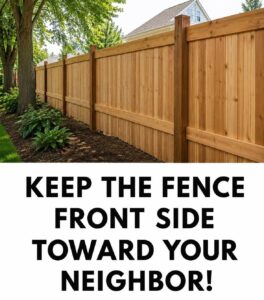
A common fencing tradition is to place the finished or “good” side of the fence toward the neighboring property or the public-facing side. The finished side generally has the cleaner appearance, while the structural side may show posts, rails, brackets, or other construction elements. Although this practice may seem like a small design decision, it can communicate consideration and respect.

The tradition is partly about appearance. A fence is not seen only by the person who owns it. Neighbors see it every day, and passersby may see it from the street or sidewalk. If the unfinished side faces outward, the fence can look more industrial or construction-oriented. A finished exterior, by comparison, tends to create a cleaner and more attractive appearance.

For many homeowners, this is one reason the “good side” tradition has continued. A neat fence can contribute to the overall appearance of a property and the surrounding neighborhood. When several homes have well-maintained fences that present a finished appearance, the entire street can look more orderly.

There is also an element of courtesy involved. A fence usually sits along a shared boundary, even though one homeowner may have paid for and installed it. Because both households live alongside it, the fence affects both people. Choosing a design that looks attractive from the neighbor’s side can be interpreted as a gesture of goodwill.

This does not mean that every neighbor will object if the structural side faces them. Fence preferences vary, and many people care more about privacy, durability, or cost than about which side contains the posts. Still, thoughtful homeowners often consider how their choices will look and feel from the other side of the property line.

Local regulations can make the issue more than a matter of etiquette. In some jurisdictions, fencing rules specify requirements concerning height, placement, materials, visibility, setbacks, or orientation. These rules differ considerably from one location to another, so homeowners should not assume that a common fencing tradition automatically represents a legal requirement.

Before installing a fence, it is therefore important to check local building codes, zoning rules, homeowners association requirements, and property-boundary restrictions where applicable. In some places, the finished side may be required to face a particular direction. In others, there may be no such requirement at all.

Ignoring applicable regulations can create unnecessary problems. Depending on the local rules, a homeowner could be required to modify a fence or bring it into compliance. In more serious situations, construction that violates regulations may lead to penalties or additional costs.

Property boundaries should also be confirmed before construction begins. A fence that is accidentally placed across a property line can create a much bigger dispute than the direction of its finished boards. Homeowners should make sure they understand where their property ends and their neighbor’s begins.

Communication can make the entire process easier. If a new fence will directly affect a neighboring property, talking with the neighbor beforehand can prevent misunderstandings. A simple conversation about the proposed location, materials, height, and appearance can establish expectations before construction begins.

This is especially useful when an existing fence is being replaced. Both homeowners may have different ideas about what the new fence should look like or who is responsible for maintenance. Discussing those questions in advance can prevent disagreements later.

There are also modern alternatives to the traditional one-sided fence. Double-sided or “good neighbor” fence designs are finished on both sides. These fences can provide an attractive appearance from either property, making the orientation issue much less significant.

Related Posts

I Spent My Children’s Inheritance on a Luxury Car, and Their Reaction Left Me Speechless: A Story of Grief, Family, Betrayal, Second Chances, Unspoken Expectations, Lost Love, Unexpected Forgiveness, Personal Freedom, and One Widower’s Decision to Finally Live for Himself Again

At eighty-five years old, Harold thought he understood what loneliness felt like. He had experienced quiet evenings before, but nothing prepared him for the silence that followed…

What It Means If You See a Yellow Ladybug: Luck, Science, Symbolism, Garden Benefits, Household Behavior, Color Variations, Common Misconceptions, Safe Removal, Natural Pest Control, and What These Bright Little Beetles Really Tell Us About Nature and Everyday Life

Seeing a yellow ladybug can be an unexpected and memorable experience. Most people are familiar with the classic red ladybug covered in black spots, so finding one…

The Body Part You Wash First While Bathing May Reveal Your Personality: What Your Shower Routine Could Suggest About Confidence, Organization, Independence, Practical Thinking, Communication, Self-Image, Daily Habits, Decision-Making, Personal Preferences, and the Subtle Ways Ordinary Routines Can Reflect Your Approach to Life and Relationships

The way people approach everyday routines can sometimes reveal interesting things about their preferences and habits. Even something as ordinary as taking a shower has a sequence….

The Laundry Room Showdown: Can You Wash Kitchen Towels and Bath Towels Together, or Should You Keep Them Separate to Prevent Bacteria, Grease, Cross-Contamination, Odors, and Poor Cleaning While Protecting Household Hygiene, Saving Time, and Making Everyday Laundry Easier, Cleaner, and Safer?

Laundry seems simple until you start wondering whether everything really belongs in the same washing machine. Towels, in particular, can raise questions because different towels perform very…

The Quiet Charm of Homemade Jam: Preserving Seasons, Creating Memories, Reducing Waste, Celebrating Simple Ingredients, Sharing Thoughtful Gifts, Exploring Creative Flavors, Enjoying Everyday Traditions, and Finding Warmth, Patience, Satisfaction, and Meaning in the Familiar Comfort of Homemade Food and Family

Making homemade jam is more than simply cooking fruit with sugar. It is a small act of preservation, creativity, and care. A jar of jam can capture…

The Tragic Fall and Secret Redemption of a ’90s Idol: Why Hollywood’s Golden Boy Vanished Forever Uncategorized admin · August 29, 2026 · Comments off Chad Allen became a familiar face to television audiences after entering the entertainment industry as a child. Born in 1974, he began acting at a young age and appeared in productions including St. Elsewhere, Our House, My Two Dads, and later Dr. Quinn, Medicine Woman. His early success made him a recognizable young star, but growing up in front of cameras also meant experiencing a childhood very different from that of most people. Over time, Allen began looking for a life that offered more privacy, balance, and personal freedom. As a teenager, Allen stepped away from Hollywood and returned to a more traditional school environment. His later years brought additional personal challenges, including struggles with alcohol and questions surrounding his identity. In the 1990s, his private life received intense public attention after photographs of him with another man were published. Rather than allowing the experience to completely define him, Allen eventually became an openly gay actor and advocate. His visibility also encouraged many people who were dealing with similar questions about identity and acceptance. Allen gradually moved toward a completely different professional path. After leaving acting, he pursued higher education and developed an interest in psychology. He eventually earned a Doctor of Psychology in Clinical Psychology from Antioch University New England in 2020. Today, he works in psychology and has continued using his experience to help others navigate personal challenges, identity, relationships, and emotional well-being.

He entered the entertainment industry as a child and quickly became recognizable to television audiences. His early career included appearances in popular productions such as St. Elsewhere, Our House,…