A simple yard sale discovery turned out to be much more than an ordinary piece of old furniture. Hidden beneath years of dust, the heavy wooden frame and cast-iron rollers revealed a laundry wringer, a remarkable reminder of a time when washing clothes demanded hours of physical labor, patience, and determination.
At first glance, it might have looked like an unusual antique with little practical value. Yet this humble machine once played an essential role in countless households, helping families complete one of their most demanding weekly chores. Before modern washing machines and electric dryers became household necessities, laundry day was an event that required careful planning, considerable strength, and sometimes the help of an entire family.
The Essential Tools of Traditional Wash Day
Long before laundry became as simple as loading a machine and pressing a button, people relied on a collection of hardworking tools to clean their clothing.
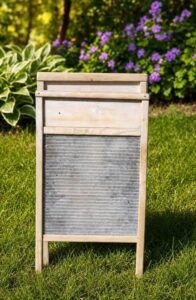
Washboards were among the most recognizable. Their ridged surfaces allowed people to rub fabric against them, loosening dirt and stubborn stains through repeated scrubbing. Heavy garments, bed linens, and work clothes required particularly strenuous effort, especially when they were covered in mud or grease.
Large tubs and wash boilers held the water used for soaking and washing. Depending on the household, water might have been heated over a fire or on a stove before being poured into a washing container. Soap was added, and garments were scrubbed, rinsed, and handled repeatedly until they were sufficiently clean.
Then came the wringer.
Its purpose was simple but incredibly useful: squeezing excess water from freshly washed clothing. Instead of twisting each garment by hand, a person could feed the wet fabric between two rollers. Turning a handle moved the rollers together, pressing water out of the material.
The result was clothing that was considerably easier to carry and quicker to dry.
Although the process still required effort, the wringer reduced one of the most exhausting parts of traditional laundry work.
How a Laundry Wringer Worked
The design of an old-fashioned wringer was surprisingly straightforward. Two rollers were mounted within a sturdy frame, often made from cast iron, wood, or a combination of materials.
A hand crank rotated the rollers, drawing fabric through the narrow space between them. The pressure forced water out of the clothing, allowing it to drain away into a tub or other container.
Some wringers were designed to attach directly to washing tubs, while others were mounted on separate stands. Later models incorporated improvements that made them easier to operate and more convenient to use.
Despite their relatively simple construction, these machines required care. Fingers, loose clothing, and long hair could become caught in the moving rollers, making them potentially dangerous. Their sturdy frames and mechanical simplicity, however, allowed many examples to survive for decades.
Finding one at a yard sale today offers a fascinating glimpse into the practical engineering that supported everyday domestic life.
Laundry Day Was Hard Work
It is difficult to appreciate the demands of traditional wash day without imagining the sheer volume of work involved.
A typical household might have needed to wash shirts, trousers, dresses, towels, sheets, pillowcases, and work clothes. Each item had to be handled individually, often through several stages of soaking, scrubbing, rinsing, wringing, and drying.
The work could take much of the day, especially for larger families.
Water had to be collected, heated, and carried. Soap and other supplies needed to be prepared. Heavy, wet garments were difficult to lift, and large sheets could become particularly cumbersome after washing.
In colder weather, drying clothes presented another challenge. Outdoor lines were useful when conditions permitted, but rain, snow, and freezing temperatures could make the process frustrating. Some households relied on indoor drying spaces, while others had to wait for more favorable weather.
Laundry was not simply a matter of keeping clothes looking presentable. Clean garments and bedding were important for personal comfort and household hygiene, making the task a recurring responsibility that could not easily be postponed.
More Than a Household Chore
Although traditional laundry work was physically demanding, it sometimes provided opportunities for social connection.
In communities where people gathered at shared washing places, rivers, or public washhouses, the work could become a communal activity. Neighbors exchanged news, shared advice, discussed family matters, and helped one another manage demanding tasks.
These experiences varied considerably depending on the country, community, available infrastructure, and household circumstances. Many people also completed laundry privately at home, often with limited assistance.
Domestic labor was frequently carried out by women, whose work was essential to family life but often received little recognition. In some households, children helped with smaller tasks, while other family members carried water, prepared supplies, or assisted with drying.
Looking back at these routines reminds us that household work has always required skill and organization, even when it was rarely described as such.
How Modern Washing Machines Changed Everything
The arrival and gradual adoption of electric washing machines transformed the way families approached laundry.
Early mechanical washing devices had already reduced some of the effort required to clean clothes, but electric models made the process increasingly convenient. Over time, improved designs offered more effective agitation, spinning, and water extraction.
Automatic washing machines eventually combined multiple stages of the process into one appliance. Instead of manually scrubbing, rinsing, and wringing every garment, users could load their clothes, add detergent, select a cycle, and allow the machine to do most of the work.
Electric dryers offered another major improvement, reducing dependence on outdoor weather and shortening drying times.
These changes did not eliminate every difficulty associated with laundry, but they dramatically reduced the physical labor required in many households.
As modern appliances became more widespread, traditional hand-operated wringers gradually disappeared from everyday domestic use. Many were discarded, stored in barns, or passed down through families until they resurfaced at estate sales and yard sales decades later.
Why Antique Laundry Wr ingers Still Matter
Today, surviving laundry wringers attract antique collectors, history enthusiasts, and people interested in traditional craftsmanship.
Their appeal comes partly from their materials. Solid wooden frames, cast-iron components, and mechanical handles reflect an era when many household objects were designed to withstand repeated use and could sometimes be repaired rather than replaced.
However, durability alone does not explain their historical importance.
These machines represent the everyday ingenuity that helped families manage difficult work with the tools available to them. They also offer a tangible connection to earlier generations whose routines were shaped by physical effort and limited household technology.
Some collectors preserve old wringers as historical artifacts, while others display them in farmhouses, museums, laundry exhibits, or rustic interiors.
A well-preserved example can prompt questions about how people lived, how domestic technology evolved, and how much time household chores once demanded.
A Small Discovery With a Remarkable Story
The next time you encounter an old laundry wringer at a yard sale, antique shop, or family property, look beyond its weathered wood and heavy iron rollers.
Consider the countless garments that may have passed through its mechanism and the hands that turned its crank. Imagine the tubs of water, the piles of wet clothing, and the long hours required to complete a task that modern appliances now handle with relative ease.
That simple machine tells a story about invention, persistence, domestic labor, and changing expectations of everyday life.
Modern washing machines have given many households something previous generations could rarely afford: time. The old wringer reminds us that this convenience emerged gradually through generations of practical innovation.
What appears to be an ordinary antique is therefore much more than an outdated household tool. It is a surviving piece of history, preserving a reminder of how people worked, cared for their families, and made daily life possible long before laundry became as effortless as it is today.